


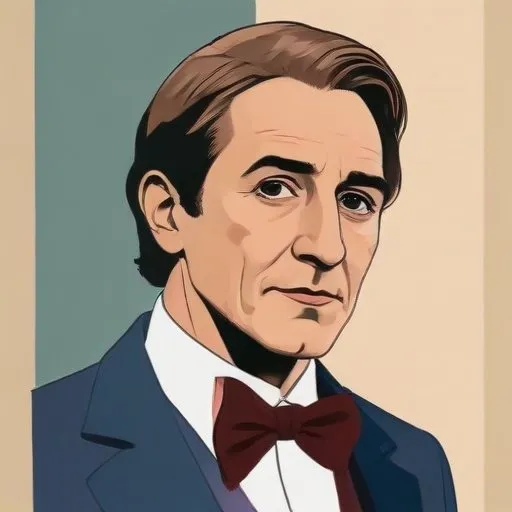
A renowned singer, playwright, and critic, known for his influential theater critiques and adaptations of Bertolt Brecht's works. His writings and performances continue to inspire new generations of artists and scholars.
Eric Bentley was a British-born American theater critic, playwright, singer, editor, and translator, best known for his blunt and outspoken style of theater criticism, which earned him both praise and criticism from the theatrical community. Throughout his illustrious career, Bentley was inducted into the American Theatre Hall of Fame in 1998 and was a member of the New York Theater Hall of Fame, recognizing his many years of cabaret performances.
Bentley was born on September 14, 1916, in Bolton, Lancashire, to Laura Evelyn and Fred Bentley. He attended University College, Oxford, where he was tutored by renowned authors J.R.R. Tolkien and C.S. Lewis, and received his degree in English in 1938. Bentley then attended Yale University, earning a B.Litt. in 1939 and a Ph.D. in 1941, where he received the John Addison Porter Prize.
Bentley taught History and Drama during the 1942 summer session at Black Mountain College and from 1943 to 1944. Beginning in 1953, he taught at Columbia University and was a theatre critic for The New Republic. As a critic, Bentley was known for his scathing reviews, which often sparked controversy and even lawsuits from playwrights such as Tennessee Williams and Arthur Miller.
In 1960, Bentley became the Charles Eliot Norton Professor at Harvard University, cementing his reputation as a leading authority on theater and drama. He was also a prolific translator and editor, working extensively on the works of Bertolt Brecht, whom he met at the University of California, Los Angeles.
Bentley's work with Brecht's plays and poetry spanned several decades, with Bentley editing the Grove Press issue of Brecht's work and recording two albums of Brecht's songs for Folkways Records, most of which had never before been recorded in English. This collaboration not only showcased Bentley's mastery of Brecht's work but also introduced American audiences to the German playwright's unique style.
In 1968, Bentley signed the Writers and Editors War Tax Protest pledge, vowing to refuse tax payments in protest against the Vietnam War. This act of defiance sparked controversy and earned Bentley both praise and criticism from his peers and the general public.
Bentley's own play, The Red, White, and Black, was produced at La MaMa Experimental Theatre Club in 1971, in collaboration with the Columbia University School of the Arts Theatre Division. This production marked a milestone in Bentley's career, as it showcased his skills as a playwright and his ability to bring complex ideas to life on stage.
Eric Bentley's contributions to the world of theater and drama are immeasurable. Through his criticism, translations, and original works, he has left an indelible mark on the theatrical community. His passion, intelligence, and unwavering commitment to his craft have inspired generations of playwrights, actors, and directors, ensuring his legacy as one of the most influential figures in American theater.
Bentley passed away on August 5, 2020, at the age of 103, leaving behind a body of work that continues to inspire and challenge audiences today.
Born in 1898
A pioneering playwright and poet who revolutionized theater with his epic style, blending politics and art to create socially conscious works that continue to influence contemporary drama.
Born in 1900
A renowned pianist and composer who blended jazz and classical music to create iconic scores for Broadway and opera, including "The Threepenny Opera" and "Mahagonny".
Born in 1898
A German-Austrian soldier and composer who wrote music for films, theater, and concert halls, and is best known for his collaborations with Bertolt Brecht and his influence on 20th-century classical music.
Born in 1874
A pioneer of atonality and 12-tone serialism, revolutionizing classical music with innovative compositions that pushed boundaries of harmony and melody.
92 Years Old
A controversial radio host and lawyer who sparked heated debates with his outspoken views, ultimately becoming a martyr for free speech after a tragic assassination.
Born in 1883
A pioneering figure in atonality and twelve-tone technique, revolutionizing classical music with concise, expressive works that explored new sounds and structures.
Born in 1892
A French composer and educator who blended jazz and classical music to create a unique sound, and is best known for his ballet scores and chamber music compositions.
Born in 1895
A renowned composer, violist, and conductor who blended traditional and modern styles, creating complex yet accessible music that resonated with audiences. His works spanned from operas to chamber music.
