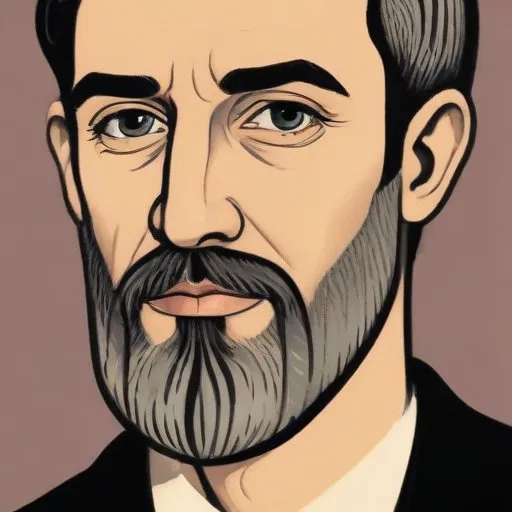
Eric Gill: The Pioneering Sculptor, Letter Cutter, and Type Designer
A Master of Multifaceted Artistry
Eric Gill was a renowned English sculptor, letter cutter, typeface designer, and printmaker, celebrated for his innovative and wide-ranging contributions to the world of art and design. With a career spanning over four decades, Gill left an indelible mark on the development of modern typography, sculpture, and printmaking, earning him the title of "the greatest artist-craftsman of the twentieth century" according to the Oxford Dictionary of National Biography.
Early Life and Training
Born on February 22, 1882, in Brighton, England, Gill grew up in Chichester, where he attended the local college. He later moved to London, becoming an apprentice with a firm of ecclesiastical architects. During this period, he took evening classes in stone masonry and calligraphy, laying the foundation for his future artistic pursuits.
Rise to Prominence
Gill's early career was marked by his apprenticeship with a firm of ecclesiastical architects, where he honed his skills in stone masonry and calligraphy. However, it was his decision to abandon architectural training and focus on cutting memorial inscriptions for buildings and headstones that marked the beginning of his journey as a master craftsman. He also began designing chapter headings and title pages for books, showcasing his exceptional talent for lettering and typography.
The Fabian Society and the Arts and Crafts Movement
As a young man, Gill was an active member of the Fabian Society, a group of socialists who campaigned for gradual, democratic reforms. However, he later resigned, disillusioned with the movement's perceived failings. Initially identifying with the Arts and Crafts Movement, Gill became a vocal critic of its limitations, advocating for a more human-centered approach to design and craftsmanship.
Catholicism and the Guild of St Joseph and St Dominic
In 1913, Gill converted to Catholicism, a decision that had a profound impact on his life and work. He established the Guild of St Joseph and St Dominic, a community of Catholic craftsmen dedicated to preserving traditional skills and techniques. The Guild's emphasis on manual labor and the importance of the human hand in the creative process resonated deeply with Gill's own artistic philosophy.
Typeface Design and Printmaking
Gill's contributions to typography are unparalleled. He designed several notable typefaces, including Perpetua, Gill Sans, and Joanna, which remain popular to this day. His innovative approach to type design, emphasizing clarity and readability, revolutionized the field of typography. As a printmaker, Gill experimented with various techniques, producing a range of works that showcased his mastery of the medium.
War Memorials and Public Commissions
Gill's experience as a letter cutter and sculptor led to numerous public commissions, including the creation of several war memorials. His work on the Chirk War Memorial in north Wales and the Trumpington War Memorial near Cambridge is particularly noteworthy, demonstrating his ability to craft emotive and dignified tributes to the fallen.
Personal Life and Controversies
Gill's personal life was marked by controversy, including allegations of sexual abuse and incest. These revelations have tarnished his legacy, and while they cannot be ignored, they do not diminish the significance of his artistic contributions.
Legacy and Impact
Despite the controversy surrounding his personal life, Eric Gill's artistic legacy remains unparalleled. His innovative approach to type design, sculpture, and printmaking continues to inspire generations of artists, designers, and craftsmen. As a pioneer of modern typography, Gill's work continues to shape the visual landscape of our contemporary world.
Major Works and Career Highlights
- Perpetua and Gill Sans typefaces
- Chirk War Memorial, north Wales
- Trumpington War Memorial, near Cambridge
- The Guild of St Joseph and St Dominic
- Capelyffin community, Wales
Inspirational Quotes
- "The only thing that matters is the thing that is being made." – Eric Gill
- "The business of the artist is to get at the truth, not to make pretty things." – Eric Gill
Historical Context and Legacy
Eric Gill's life and work are a testament to the power of human creativity and the importance of preserving traditional skills. Despite the controversies surrounding his personal life, his artistic legacy continues to inspire and influence contemporary artists, designers, and craftsmen. As a pioneer of modern typography, Gill's work remains an integral part of our visual heritage, a fitting tribute to a master craftsman.
FAQ
What was Eric Gills contribution to the development of modern typography?
Eric Gill was a renowned English sculptor and illustrator who made significant contributions to the development of modern typography. He designed several famous typefaces, including the Gill Sans font, which is still widely used today.
How did Eric Gills Catholicism influence his art and design?
Eric Gills Catholicism deeply influenced his art and design, as he saw his work as a way to express his faith and to create beauty that glorified God. His Catholicism also influenced his views on craftsmanship and the importance of human labor.
What was Eric Gills role in the revival of traditional craftsmanship?
Eric Gill was a key figure in the revival of traditional craftsmanship in the early 20th century. He believed in the importance of human labor and the value of traditional skills, and he worked to promote the work of craftsmen and artisans.
How did Eric Gills work influence modern design and architecture?
Eric Gills work had a significant influence on modern design and architecture, as his typefaces and sculptures helped to shape the aesthetic of the 20th century. His emphasis on simplicity, proportion, and beauty continues to inspire designers and architects today.
What is Eric Gills legacy in the world of art and design?
Eric Gills legacy in the world of art and design is that of a master craftsman and a pioneering designer. He is remembered for his contributions to modern typography, his beautiful sculptures, and his commitment to traditional craftsmanship.