


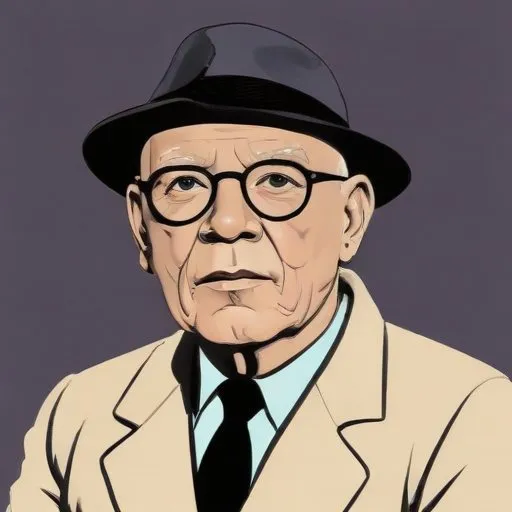
A longshoreman-turned-philosopher who wrote influential books on social and political issues, offering insights into the nature of mass movements and the psychology of fanaticism.
Eric Hoffer, the American moral and social conservative philosopher, left an indelible mark on the world of philosophy, literature, and politics. He is best known for his seminal work, The True Believer, a critically acclaimed classic that explores the psychology of mass movements and the nature of fanaticism.
Hoffer's life was a testament to human resilience and determination. Born on July 25, 1902, in The Bronx, New York City, to immigrant parents from Alsace, Germany, he faced incredible challenges from an early age. At the tender age of five, he lost his sight after falling down a flight of stairs with his mother, who unfortunately did not survive the accident. Two years later, he inexplicably regained his sight, but the experience had a profound impact on his life.
Fearing he might lose his sight again, Hoffer developed a voracious appetite for reading, devouring books on every subject imaginable. This habit stayed with him throughout his life, making him one of the most well-read individuals of his time. His remarkable recovery also led him to develop a profound appreciation for the written word, which would later shape his philosophical ideas and writing style.
After losing his father at a young age, Hoffer spent the next decade wandering across America, "dodging hunger and grieving over the world." During this period, he developed a deep understanding of human nature, observing people from all walks of life, and cultivating his philosophical thoughts. These experiences would later inform his writings, imbuing them with a sense of empathy and compassion.
Hoffer's writings have had a profound impact on modern thought, influencing scholars, politicians, and laymen alike. His philosophical contributions include:
Hoffer's contributions to philosophy and literature have been recognized with numerous awards and honors, including the Presidential Medal of Freedom, awarded to him in February 1983.
In recognition of his literary achievements, the Eric Hoffer Book Award was established to recognize excellence in writing. The University of California, Berkeley also awards an annual literary prize in his name, further solidifying his legacy in the world of literature and philosophy.
Eric Hoffer's life and work serve as a testament to the power of human resilience, curiosity, and determination. His philosophical ideas continue to inspire and provoke thought, ensuring his legacy endures for generations to come.
As Hoffer himself once said, "In times of change, learners inherit the earth; while the learned find themselves beautifully equipped to deal with a world that no longer exists."
Born in 1858
A pioneering leader who championed progressive reforms, trust-busting, and conservation, earning a Nobel Peace Prize for mediating the Russo-Japanese War. He's also famous for his rugged outdoorsmanship and "big stick" diplomacy.
Born in 1856
The 28th President of the United States, a Nobel Peace Prize winner, and a historian who played a key role in shaping international relations and global governance after World War I. He's most known for his idealistic vision of a League of Nations and his efforts to promote peace and diplomacy.
Born in 1882
Led the United States through the Great Depression and World War II, implementing a series of reforms known as the New Deal and helping to establish the country as a global superpower.
Born in 1874
The 31st President of the United States was a humanitarian and politician who led the country through the Great Depression and is known for his humanitarian efforts and infrastructure development. He's also infamous for his inability to mitigate the economic crisis.
Born in 1890
Led the Allied forces to victory in World War II and later served as President, maintaining peace and prosperity during the Cold War era. He's known for his strategic leadership and diplomatic skills.
Born in 1917
The 35th President of the United States was a charismatic leader who navigated the country through the Cuban Missile Crisis and advocated for civil rights, leaving a lasting legacy in American politics.
Born in 1913
The 37th President of the United States, a polarizing figure who led the country through significant domestic and foreign policy changes, infamous for his involvement in the Watergate scandal.
Born in 1911
The charismatic leader who championed conservative policies, helped end the Cold War, and is often credited with restoring American pride and optimism. He's also remembered for his folksy, actor-honed communication style.
