


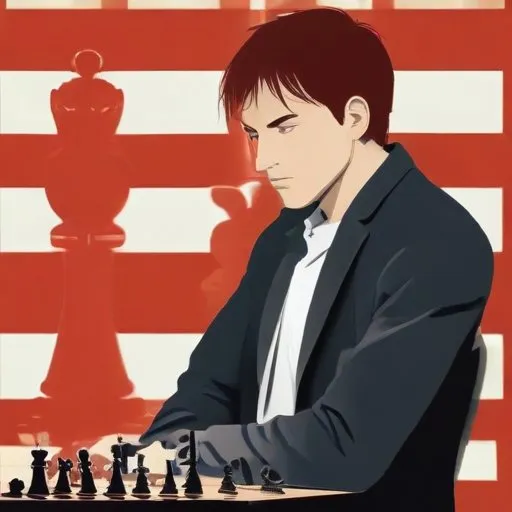
Erich Eliskases was a renowned Austrian chess player who left an indelible mark on the game, earning the title of Grandmaster in 1952. Throughout his illustrious career, he represented Austria, Germany, and Argentina in international competitions, solidifying his position as a potential contender for the World Championship in the late 1930s.
Born on February 15, 1913, in Innsbruck, Austro-Hungarian Empire, Eliskases discovered chess at the age of twelve and quickly mastered the game. By fourteen, he had won the Schlechter chess club championship, and by sixteen, he was crowned the Tyrolean Champion and joint winner of the Austrian Championship.
Eliskases' exceptional results in representing Austria at the Olympiads of 1930, 1933, and 1935 cemented his reputation as a rising star in the chess world. He went on to win the German national championship at Bad Oeynhausen in 1938 and 1939, and achieved notable victories in Budapest (1934), Linz (1934), Zurich (1935), and Milan (1937).
In 1937, Eliskases acted as a second to Alexander Alekhine during his successful world championship rematch against Max Euwe. This experience undoubtedly contributed to his subsequent tournament successes, including his victory in Noordwijk in June 1938, where he surpassed Paul Keres and Max Euwe.
Eliskases' best two years were 1938 and 1939, during which he remained undefeated in eight consecutive tournaments, including Krefeld (1938), Bad Harzburg (1939), Bad Elster (1939), and Vienna (1939). His impressive streak led to suggestions of a World Championship match with Alekhine, further solidifying his position among the chess elite.
Eliskases' remarkable achievements have left a lasting impact on the world of chess. His contributions to the game, combined with his Grandmaster title, have inspired generations of chess players and enthusiasts alike. Today, he is remembered as one of the greatest Austrian chess players of all time, and his legacy continues to influence the game he loved.
Erich Eliskases' remarkable chess career, impressive tournament victories, and Grandmaster title have cemented his place in the annals of chess history. His legacy continues to inspire and influence the game, solidifying his position as one of the greatest Austrian chess players of all time.
83 Years Old
A chess prodigy who became a grandmaster at 15 and won the World Chess Championship in 1972, known for his exceptional skill and rivalry with Boris Spassky.
63 Years Old
A Russian chess grandmaster and writer, renowned for being the world's top-ranked player for most of the 1980s and 1990s, and for his advocacy of democracy and human rights.
56 Years Old
A world chess champion, holding the title five times, and known for his creative and attacking playing style. He's a global icon in the chess world, inspiring millions of players.
51 Years Old
A Russian chess grandmaster who dominated the game for over a decade, becoming the undisputed World Chess Champion in 2006. He's renowned for his strategic and positional playing style.
75 Years Old
A Soviet chess grandmaster who dominated the game for over a decade, winning numerous championships and earning a reputation as one of the greatest players of all time.
Born in 1911
A Soviet chess grandmaster and engineer who dominated the game from the 1940s to 1960s, winning six World Chess Championships and developing the first chess-playing computer program.
Born in 1921
A renowned chess grandmaster and seventh World Chess Champion, known for his strategic and positional playing style, which earned him the title of "Chess Philosopher".
Born in 1837
A chess prodigy who dominated the game in the 19th century with his exceptional skill and innovative strategies, leaving a lasting impact on the sport.
