


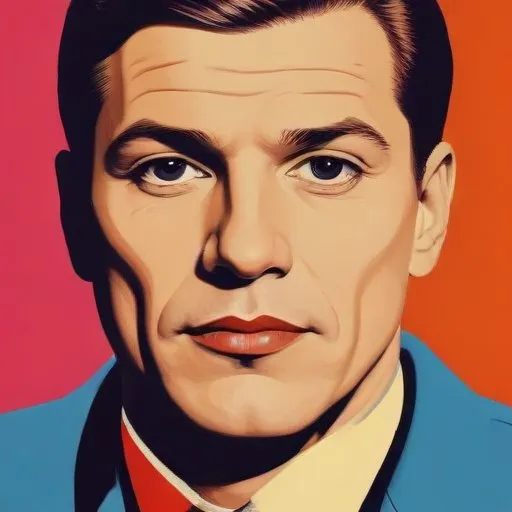
A Swedish nobleman who served as a chamberlain to King Gustav III of Sweden and was a key figure in the country's 18th-century politics. He's known for his involvement in the king's assassination plot.
As the Swedish Ambassador to France during the tumultuous years of the French Revolution, Erik Magnus Stal von Holstein navigated the treacherous landscape of international diplomacy with calculating precision, leaving an indelible mark on the era. His marriage to the illustrious Madame de Stal, daughter of the French Minister of Finance, further solidified his position as a power broker in the highest echelons of European politics.
Born on October 25, 1749, in Loddby, Sweden, as the seventh child of Mathias Gustav Stal von Holstein, Erik Magnus hailed from an ancient noble family originally from the Rhineland. His early life was marked by military service, and he participated in the 1772 coup that brought Gustav III to power. For his services, he was made a knight of the Order of the Sword and chamberlain to the Queen.
In 1783, Stal von Holstein was appointed chargé d'affaires to the Court of France, a position that showcased his charming manner, good looks, and affable disposition. His diplomacy and charisma soon impressed influential figures, including Queen Marie Antoinette herself. After five years of negotiations, he married Germaine Necker, daughter of Jacques Necker, securing a dowry of 650,000 livres and becoming permanent Swedish ambassador to the Court of Louis XVI. This union also earned him the prestigious Order of the Polar Star.
The Stal von Holstein household was a hotbed of political intrigue, with both Baron and Madame de Stal pursuing their own love interests and often at odds over politics. Despite this, they remained friendly and continued to navigate the complex web of European alliances and rivalries. As the French Revolution unfolded, Stal von Holstein walked a tightrope between his duty to Sweden and his sympathies for the French monarchy, ultimately earning him the respect and suspicion of both parties.
Stal von Holstein's legacy is a testament to his agility and cunning in the high-stakes world of 18th-century diplomacy. As a Swedish Ambassador, he played a crucial role in shaping the course of European history, particularly during the tumultuous years of the French Revolution. His marriage to Madame de Stal, a prominent writer and intellectual, further solidified his position as a key figure in the era's social and cultural landscape.
As we reflect on the life and times of Erik Magnus Stal von Holstein, we are reminded of the intricate web of alliances, rivalries, and ideologies that defined the 18th century. This enigmatic figure continues to fascinate historians and scholars, offering valuable insights into the art of diplomacy and the complexities of human relationships.
Born in 1746
King of Sweden from 1771 to 1792, known for his cultural and artistic achievements, and his assassination at a masquerade ball. He was a patron of the arts and a strong leader who modernized Sweden's government and economy.
Born in 1778
King of Sweden from 1792 to 1809, known for his disastrous foreign policy and military failures, leading to the loss of Finland to Russia.
Born in 1748
King of Sweden and Norway from 1809 to 1818, known for his role in the Finnish War and the Convention of Moss, which led to the union of Sweden and Norway.
Born in 1763
King of Sweden and Norway who ruled from 1818 to 1844, known for modernizing and liberalizing his countries' governments and economies.
Born in 1829
King of Sweden and Norway from 1872 to 1907, known for his diplomatic efforts to maintain Scandinavian unity and neutrality during the tumultuous late 19th century.
Born in 1826
King of Sweden and Norway from 1859 to 1872, known for his liberal reforms and modernization of the Swedish military.
Born in 1829
King of Sweden and Norway from 1872 to 1907, known for his diplomatic efforts to maintain Scandinavian unity and neutrality during the tumultuous late 19th century.
Born in 1858
King of Sweden from 1907 to 1950, known for his strong anti-democratic views and controversial support of Nazi Germany during World War II. He was also an accomplished tennis player.
