


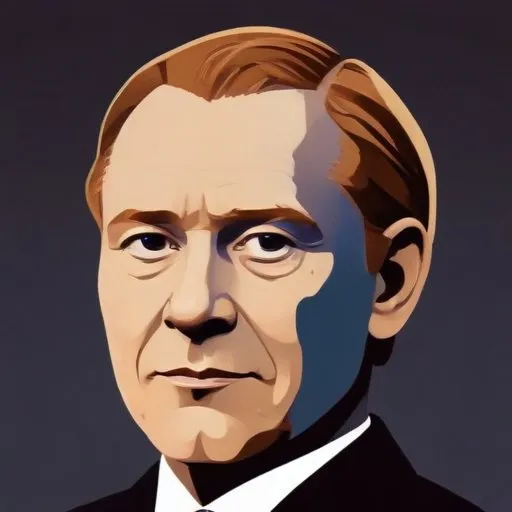
A Finnish composer who created over 150 works, including symphonies, operas, and chamber music, known for his romantic and nationalistic style. His music is still widely performed in Finland today.
Erkki Melartin, a Finnish composer, conductor, and teacher, is renowned for his lyrical and evocative compositions that blending the late Romantic and early modern styles. His symphonies, operas, and orchestral works, though often overshadowed by those of his contemporary Jean Sibelius, are a testament to his unique artistic vision.
Born on February 7, 1875, in Käkisalmi, Finland, Melartin's fascination with music began at an early age. He studied music theory and composition at the Helsinki Music College, where he later became a teacher and director. His pedagogical pursuits took him to Vyborg, where he conducted the Vyborg Orchestra from 1908 to 1911.
Melartin's oeuvre is characterized by its diversity and emotional depth. His six symphonies, including the incomplete Seventh and Eighth, showcase his mastery of orchestration and thematic development. The opera Aino, based on the Kalevala, Finland's national epic, is a nod to Richard Wagner's style. The popular Festive March, part of the incidental music for the play Sleeping Beauty, has become a beloved Finnish classic.
Melartin's impact on Finnish music is multifaceted. He was a dedicated teacher, guiding composers and conductors, including Heidi Sundblad-Halme. His performances of Gustav Mahler's music introduced Scandinavian audiences to the Austrian composer's genius.
Though he toured extensively, conducting in North Africa and India, Melartin's chronic health issues cut short his career. His untimely passing on February 14, 1937, at the age of 62, left an indelible mark on Finnish music.
While Jean Sibelius may have eclipsed him in fame, Melartin's contributions to Finnish music are undeniable. His compositions, though lesser-known, are a testament to his innovative spirit, lyrical genius, and dedication to his craft.
In the realm of Finnish music, Erkki Melartin's symphonies, operas, and orchestral works await rediscovery, offering a rich tapestry of emotions, textures, and themes that continue to resonate with audiences today.
Born in 1865
A Finnish master of classical music, renowned for his symphonies and tone poems that evoke the mystique of his native land. His iconic works, such as "Finlandia," have become synonymous with Finnish culture.
Born in 1883
A Finnish maestro who crafted a unique blend of folk and classical music, leaving an indelible mark on his country's cultural heritage.
Born in 1868
A Finnish pianist and composer who created a wide range of works, including operas, symphonies, and chamber music, known for his Romantic-era style and nationalistic themes.
97 Years Old
A renowned Finnish composer and educator, he created a wide range of works, from operas to symphonies, often blending modernism with mysticism. His music is characterized by its lyricism and dramatic flair.
91 Years Old
A renowned Finnish composer and academic, known for blending modernist and neoromantic styles in his operas and symphonies, earning him international acclaim.
Born in 1886
A Swedish Lutheran minister and hymn writer, known for his contributions to Swedish hymnology and his work as a pastor and theologian.
Born in 1921
A Finnish pianist and composer, renowned for his neoclassical and modernist works that blended folk elements with avant-garde techniques, leaving a lasting impact on Nordic classical music.
