


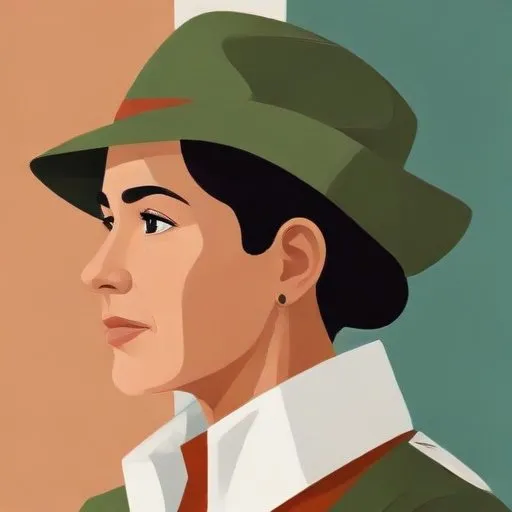
An Italian botanist and explorer who traveled extensively throughout South America, discovering and documenting numerous plant species, and contributing significantly to the field of botany.
Ernesta Di Capua was a trailblazing Italian botanist, taxonomist, and explorer who made significant contributions to the field of botany, only to be tragically executed at the Auschwitz concentration camp during World War II. Despite her untimely death, Di Capua's remarkable legacy continues to inspire generations of scientists and researchers.
Born on July 26, 1875, in Rome, Italy, Di Capua demonstrated a passion for botany from an early age. She pursued her interest in the field, earning a degree in natural sciences from the University of Rome.
Throughout her career, Di Capua was dedicated to the classification and study of plant species. Her expertise in taxonomy led to the discovery and description of numerous plant species, many of which were previously unknown. Her work took her to various parts of the world, including Africa and Asia, where she conducted extensive research and collected numerous plant specimens.
Di Capua's work was guided by a profound respect for the natural world and a deep understanding of the importance of botany in the context of human life. She believed that the study of plants held the key to unlocking many of humanity's most pressing problems, including hunger, poverty, and disease.
Di Capua's contributions to botany have had a lasting impact on modern society. Her work paved the way for future generations of botanists and researchers, inspiring new discoveries and advancements in the field. In recognition of her achievements, the species Caralluma dicapuae was named in her honor.
The standard author abbreviation "Di Capua" is used to indicate her as the author when citing a botanical name. This enduring tribute to her work serves as a testament to her lasting impact on the field of botany.
Ernesta Di Capua's story serves as a powerful reminder of the importance of perseverance, dedication, and passion in the pursuit of knowledge and discovery. Despite the darkness of her final days, her legacy continues to inspire and motivate, ensuring that her contributions to the world of botany will never be forgotten.
Born in 1608
Developed the mercury barometer, a device that measures atmospheric pressure, and made significant contributions to the study of vacuums and fluids.
Born in 1737
Pioneering researcher who discovered bioelectricity, sparking a new understanding of the human body and paving the way for modern medical advancements.
Born in 1626
An Italian physician who pioneered the study of parasites and disproved spontaneous generation, making significant contributions to the field of biology.
Born in 1628
Italian physician and biologist who discovered capillaries, the tiny blood vessels connecting arteries and veins, and is considered the father of microscopy and histology.
