


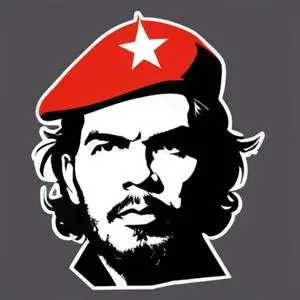
A physician-turned-revolutionary, he led Cuba's socialist revolution and became an iconic symbol of Marxism, inspiring social change worldwide. His image and ideals continue to influence modern politics and activism.
Ernesto Che Guevara, the iconic Argentine Marxist revolutionary, physician, author, guerrilla leader, diplomat, and military theorist, left an indelible mark on the world. His unwavering commitment to social justice, his unrelenting passion for equality, and his unbridled zeal for revolution have cemented his status as a countercultural symbol of rebellion, inspiring generations to challenge the status quo.
Born on June 14, 1928, in Rosario, Argentina, Guevara's early life was marked by a sense of restlessness and disillusionment with the capitalist system. As a young medical student, he embarked on a journey through South America, witnessing firsthand the ravages of poverty, hunger, and disease. This experience sparked a burning desire to overthrow the capitalist exploitation of Latin America by the United States, solidifying his political ideology.
In Mexico City, Guevara met Raul and Fidel Castro, joining their 26th of July Movement. He sailed to Cuba aboard the yacht Granma, intent on overthrowing the US-backed dictator Fulgencio Batista. Guevara's military prowess, strategic brilliance, and unwavering dedication propelled him to the forefront of the revolution. He played a pivotal role in the two-year guerrilla campaign that ultimately deposed the Batista regime.
After the Cuban Revolution, Guevara assumed key roles in the new government. He reviewed appeals and firing squads for those convicted as war criminals during the revolutionary tribunals, implemented agrarian land reform as Minister of Industries, and spearheaded a successful nationwide literacy campaign. As President of the National Bank and instructional director for Cuba's armed forces, Guevara's influence was felt far and wide.
Guevara's literary legacy is a testament to his boundless energy and creativity. His writings, including The Motorcycle Diaries, Guerrilla Warfare, and Reminiscences of the Cuban Revolutionary War, offer a glimpse into the mind of a visionary, a leader, and a human being driven by an insatiable desire for justice.
Guevara's life and legacy are not without controversy. Critics have accused him of ruthlessness, authoritarianism, and human rights abuses. Nevertheless, his unwavering commitment to social justice, his unrelenting passion for equality, and his unbridled zeal for revolution have cemented his status as a countercultural symbol of rebellion, inspiring generations to challenge the status quo.
Ernesto Che Guevara's life and legacy are intertwined with the tumultuous history of the 20th century. His untimely death on October 9, 1967, at the hands of Bolivian soldiers, has become a rallying cry for revolutionaries and social justice advocates worldwide. Today, Guevara's image adorns walls, t-shirts, and protest signs, symbolizing resistance, defiance, and the eternal flame of revolution.
Guevara's life serves as a beacon of inspiration, reminding us that even in the darkest of times, courage, conviction, and unwavering commitment to a cause can spark a revolution. His legacy challenges us to question the status quo, to stand up against oppression, and to strive for a world where equality, justice, and freedom are not mere ideals, but a tangible reality.
Born in 1926
The Cuban revolutionary who led the country from 1959 to 2008, implementing socialist policies and defying US opposition, becoming an iconic figure in modern history.
95 Years Old
The Cuban revolutionary leader who served as President of Cuba from 2008 to 2018, known for implementing economic reforms and improving relations with the US. He played a key role in shaping Cuba's socialist government and economy.
94 Years Old
A key figure in the Cuban Revolution, known for his bravery and radical ideals, who played a crucial role in overthrowing the authoritarian government. He's an iconic symbol of rebellion and social change.
72 Years Old
The charismatic leader who transformed Venezuela through socialist reforms and anti-imperialist rhetoric, leaving a lasting impact on the country's politics and economy.
66 Years Old
The first indigenous president of Bolivia, who served from 2006 to 2019 and implemented policies to reduce poverty and increase economic growth, while also being a strong advocate for indigenous rights.
80 Years Old
The former Marxist guerrilla leader who ruled Nicaragua with an iron fist, known for his authoritarian regime and controversial human rights record.
