


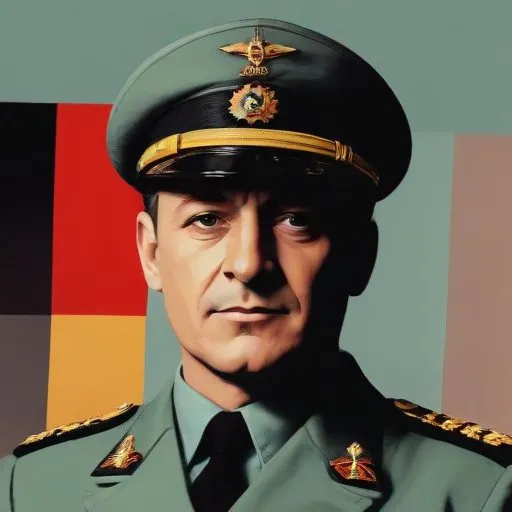
German captain and pilot who commanded the passenger airship LZ 129 Hindenburg on its final flight, which ended in a catastrophic fire that killed 36 people. He was a decorated war hero and experienced airship pilot.
Ernst A. Lehmann was a renowned German Zeppelin captain, celebrated for his exceptional piloting skills and extensive experience in airship travel. He is often regarded as the best airship pilot in the world, having commanded over 550 flights and earning a reputation for his fearless and daring maneuvers.
Born on May 12, 1886, in Ludwigshafen am Rhein, Germany, Lehmann developed an interest in shipbuilding at a young age. He pursued his passion by studying engineering at the Technische Hochschule Berlin, graduating in 1912. During his student years, he joined the German navy, attaining the rank of naval reserve lieutenant.
After completing his education, Lehmann began working at the Imperial Dockyards in Kiel. However, he soon became disillusioned with the work and, encouraged by Dr. Hugo Eckener, joined the DELAG (German Airship Travel Corporation) in 1912. Lehmann served as a pilot of the passenger airship LZ 17 Sachsen, commanding a total of 550 flights and setting a record for the most flights by a single pilot.
During World War I, Captain Lehmann played a significant role in the development of airship warfare. He commanded army and navy airships, including the Sachsen, LZ XII, LZ 90, LZ 98, and LZ 120. On August 25, 1914, Lehmann led the first bombing raid on civilians in world history, targeting Antwerp, Belgium, and killing 10 people.
After the war, Lehmann continued to be involved in commercial airship travel. In 1919, he prepared to fly the naval airship L 72 on the first transatlantic crossing of an airship, but the German government denied permission. In 1920, he spent six months in Sweden studying the economics of an airship line between Stockholm and the Mediterranean. Although these plans were never realized, Lehmann remained committed to promoting airship travel.
Tragically, Captain Lehmann's life ended in the Hindenburg disaster on May 7, 1937. As the ship caught fire while attempting to dock in Lakehurst, New Jersey, Lehmann heroically assisted in the evacuation, saving many lives. His legacy as a pioneering figure in airship travel has endured, and he is remembered for his bravery, skill, and innovative spirit.
Ernst A. Lehmann's contributions to airship travel have had a lasting impact on modern society. His pioneering work in the field has inspired generations of aeronautical engineers, pilots, and entrepreneurs. Today, his legacy serves as a testament to human innovation and the pursuit of excellence in transportation technology.
Born in 1892
A legendary fighter pilot known as the "Red Baron," credited with 80 aerial combat victories in World War I, earning him legendary status as a flying ace.
Born in 1893
A high-ranking Nazi official, he was a decorated World War I fighter pilot and later became a prominent politician, serving as Minister President of Prussia. He's infamous for his role in the Nazi regime and war crimes trials.
Born in 1876
A German naval leader who played a key role in the Kriegsmarine during World War II, overseeing the German U-boat fleet and naval operations. He was a close advisor to Adolf Hitler and implemented the German naval strategy during the war.
Born in 1891
A German naval commander who led the U-boat fleet during World War II and briefly served as President of Germany after Hitler's death, known for his role in the war and its aftermath.
Born in 1916
A highly decorated World War II pilot, credited with over 2,500 sorties and destroying over 800 tanks, earning him the nickname "The Eagle of the Eastern Front".
Born in 1913
A highly decorated Luftwaffe pilot and wing commander during World War II, credited with 115 aerial victories, and considered one of the greatest fighter pilots of all time.
Born in 1922
A highly decorated Luftwaffe night fighter pilot, credited with 121 aerial victories, and one of the top-scoring night fighter aces in World War II.
Born in 1918
A highly decorated Luftwaffe fighter pilot and general, credited with 275 aerial victories, making him the third-highest scoring fighter ace in World War II. He later served as a senior officer in the West German Air Force.
