


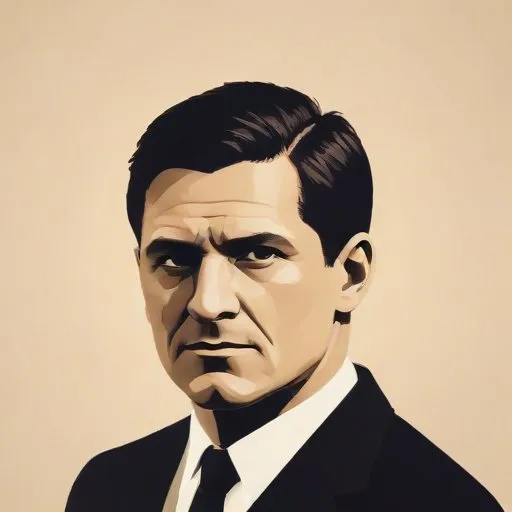
German football legend who won numerous titles as a player and coach, including six German championships and two German Cups. He's also credited with developing the " WM" formation in football.
Ernst Kuzorra is widely regarded as one of the greatest German footballers of all time, leading Schalke 04 to six national championships and one national cup during his illustrious career. As a highly athletic, technical, and prolific forward, Kuzorra is commonly regarded as the greatest Schalke player of all time alongside Fritz Szepan.
Born on October 16, 1905, in Gelsenkirchen, Germany, Kuzorra was the son of Karl Kuzorra, a coal miner from East Prussia, and his wife Bertha. He joined Schalke 04 in 1920 at the age of 14, allegedly playing his first match in his confirmation shoes after being asked to join the team while watching from the sidelines.
Three years later, Kuzorra advanced to the first team, where he soon became one of the starting players. He was part of Germany's team at the 1928 Summer Olympics, although he did not play in any matches. During the years 1930-1931, he and thirteen teammates were banned for a relatively minor infraction of the strict amateur statutes, having received ten instead of the allowed five Reichsmark as compensation for playing in an away game.
In the following years, Kuzorra, along with his brother-in-law Fritz Szepan, led Schalke to become the dominant team in German soccer, winning six national championships from 1934 to 1942. He was one of the main axes of what became known as the Schalker Kreisel, a system that used quick, short passes to confuse and overwhelm the opponent.
Despite being one of the best German players of his time, Kuzorra only had 12 appearances for the national team, a fact that is widely attributed to bad relations with national coach Otto Nerz. Nevertheless, because of his success and athletic prowess, national socialist propaganda soon took an interest in him. Great efforts were made to show that Kuzorra, despite his Slavic sounding name and mixed origin, was in fact a true German.
Kuzorra's legacy extends far beyond his impressive playing career. He is remembered as a pioneer of German football, whose unique style and flair inspired generations of players to come. Even today, he is celebrated as one of the greatest Schalke players of all time, and his name is synonymous with excellence and dedication to the beautiful game.
In conclusion, Ernst Kuzorra's impressive career, impressive skills, and lasting impact on German football make him one of the most iconic and beloved figures in the sport's history.
Born in 1897
A pioneering football manager who led West Germany to their first World Cup title in 1954, known for his innovative tactics and motivational skills.
80 Years Old
A German football legend who won the World Cup as both a player and manager, known for his innovative style and leadership on the pitch.
71 Years Old
A German politician and businessman who served as the Minister of Food, Agriculture, and Consumer Protection from 2001 to 2005, known for his efforts to promote sustainable agriculture and animal welfare.
70 Years Old
A German football legend who played for Bayern Munich and the national team, winning numerous titles, and later became a successful club executive.
74 Years Old
A legendary German midfielder who won the 1974 World Cup and is renowned for his attacking prowess and iconic hairstyle. He's a football legend and cultural icon of the 1970s.
74 Years Old
A German footballer and manager who played for several clubs, including Bayern Munich, and later coached teams like Inter Milan and Bayern Munich, winning multiple championships. He's known for his attacking style of play and success in European competitions.
96 Years Old
The first unified Germany's leader, who oversaw the country's reunification after the Berlin Wall's fall, and is credited with creating a strong, stable economy.
