


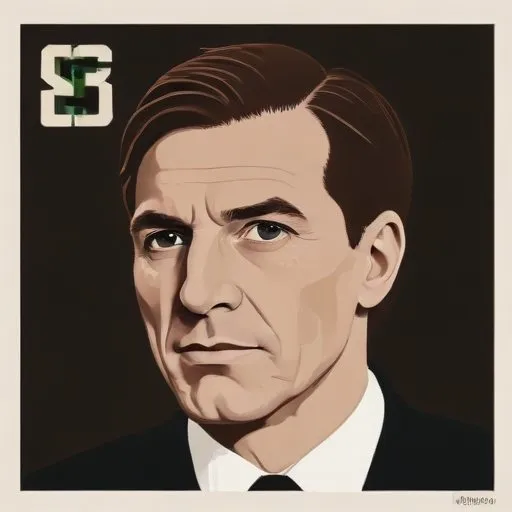
A pioneering football manager who led West Germany to their first World Cup title in 1954, known for his innovative tactics and motivational skills.
Sepp Herberger is synonymous with one of the greatest upsets in football history - the 1954 FIFA World Cup final, where his West German team defeated the formidable Hungarian Golden Team 3-2 in the rain-soaked final in Bern, Switzerland. This monumental victory etched Herberger's name in the annals of football history, cementing his status as a tactical genius and one of the most successful coaches of all time.
Born on March 28, 1897, in Mannheim, Germany, Herberger grew up in a poor Catholic family of farmers, who later moved to Mannheim to work in the Saint-Gobain glass factory. His early life was marked by hardship, but he found solace in football, and his talent on the pitch earned him three caps for the German national team between 1921 and 1925.
Herberger transitioned into coaching, serving as an assistant to Otto Nerz in 1932. After Germany's disappointing quarterfinal exit at the 1936 Olympics, Herberger succeeded Nerz as national coach. He had a brief stint as interim coach with Eintracht Frankfurt before being recalled as national team coach in 1950, a position he held until 1964.
The 1954 World Cup final was Herberger's crowning achievement. Hungary's Golden Team, undefeated in four years, was expected to steamroll West Germany. But Herberger's tactical masterclass and his team's gritty determination upset the odds, as West Germany came from behind to win 3-2 in a thrilling match. This historic victory not only sealed Herberger's legacy but also revitalized German football, ushering in a new era of success.
Herberger's coaching philosophy emphasized discipline, teamwork, and adaptability. He was known for his meticulous preparation, innovative tactics, and ability to inspire his players. His influence extended beyond the pitch, as he helped rebuild German football in the post-war era, paving the way for future successes.
Sepp Herberger passed away on April 28, 1977, at the age of 80, but his legacy continues to inspire generations of football coaches and enthusiasts. His name is synonymous with the Miracle of Bern, and his coaching philosophy remains a benchmark for success in the beautiful game.
80 Years Old
A German football legend who won the World Cup as both a player and manager, known for his innovative style and leadership on the pitch.
70 Years Old
A German politician and businessman who served as the Minister of Food, Agriculture, and Consumer Protection from 2001 to 2005, known for his efforts to promote sustainable agriculture and animal welfare.
96 Years Old
The first unified Germany's leader, who oversaw the country's reunification after the Berlin Wall's fall, and is credited with creating a strong, stable economy.
70 Years Old
A German football legend who played for Bayern Munich and the national team, winning numerous titles, and later became a successful club executive.
74 Years Old
A legendary German midfielder who won the 1974 World Cup and is renowned for his attacking prowess and iconic hairstyle. He's a football legend and cultural icon of the 1970s.
