


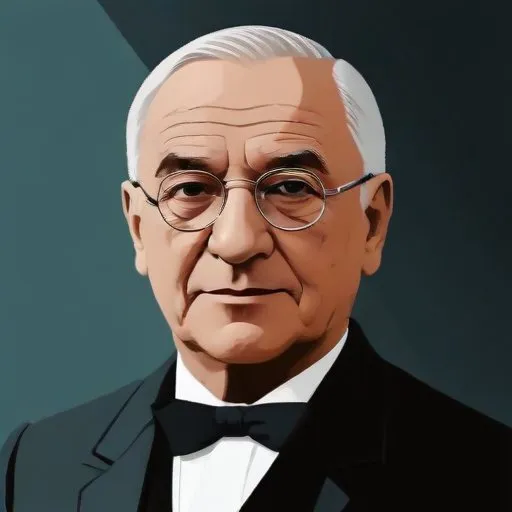
A pioneering composer and songwriter who blended classical and popular music styles, creating iconic film scores and chamber music works. Known for his eclectic and innovative approach to composition.
Ernst Toch was a renowned Austrian composer of European classical music and film scores, who introduced new approaches to music throughout his life. Born on December 7, 1887, in Leopoldstadt, Vienna, Toch's innovative style and compositions left an indelible mark on the music world.
Toch was born into a humble Jewish family of a leather dealer. Despite the challenging financial circumstances, his parents encouraged his musical talent from an early age. He studied philosophy at the University of Vienna, medicine at Heidelberg, and music at the Hoch Conservatory in Frankfurt from 1909 to 1913.
Toch's musical career took off in the early 1900s, with his first compositions dating back to around 1900. His pastiches in the style of Mozart quartets and album verses for piano showcased his exceptional talent. His first quartet was performed in Leipzig in 1908, and his sixth Opus 12 was performed in 1909. This led to him winning the Frankfurt-Main Mozart prize in 1909.
Toch's compositions earned him numerous awards, including:
Toch shared his knowledge and expertise with others, teaching piano and composition at the College of Music in Mannheim in 1913. One of his notable pupils was Hugo Chaim Adler. He continued to teach at the Mannheim Conservatory, inspiring a new generation of musicians.
Following Hitler's seizure of power in 1933, Toch went into exile, first to Paris and then to London. He eventually settled in the United States, where he continued to compose and influence American music. Toch passed away on October 1, 1964, leaving behind a legacy of innovative compositions that continue to inspire musicians and music lovers alike.
Toch's music was deeply rooted in his philosophical beliefs. He sought to introduce new approaches to music, often blending traditional styles with modern techniques. His compositions reflected his fascination with the human experience, exploring themes of love, life, and mortality.
Toch's contributions to classical music have had a lasting impact on modern society. His innovative style and compositions have inspired generations of composers, including notable figures such as Igor Stravinsky and Arnold Schoenberg. His music continues to be performed and admired around the world, a testament to his enduring legacy.
Some of Toch's most notable works include:
Ernst Toch's life and work serve as a testament to the power of innovation and creativity. His compositions continue to inspire and influence musicians, ensuring his legacy as one of the most important composers of the 20th century.
Born in 1874
A pioneer of atonality and 12-tone serialism, revolutionizing classical music with innovative compositions that pushed boundaries of harmony and melody.
92 Years Old
A controversial radio host and lawyer who sparked heated debates with his outspoken views, ultimately becoming a martyr for free speech after a tragic assassination.
Born in 1883
A pioneering figure in atonality and twelve-tone technique, revolutionizing classical music with concise, expressive works that explored new sounds and structures.
Born in 1892
A French composer and educator who blended jazz and classical music to create a unique sound, and is best known for his ballet scores and chamber music compositions.
Born in 1897
A child prodigy turned Hollywood legend, he composed iconic film scores, including the swashbuckling adventures of Errol Flynn, and is revered for his lush, romantic music.
Born in 1906
A renowned composer and conductor, best known for scoring iconic Hollywood films, including "Rebecca," "Sunset Boulevard," and "The Bride of Frankenstein," earning him multiple Academy Awards.
Born in 1882
A Russian master of music, renowned for revolutionizing classical music with bold, avant-garde compositions that blended traditional and modern elements. His iconic works, such as "The Rite of Spring," continue to inspire and influence artists across genres.
Born in 1881
A Hungarian musical genius who merged folk melodies with modernist techniques, creating a unique sound that transformed classical music.
