


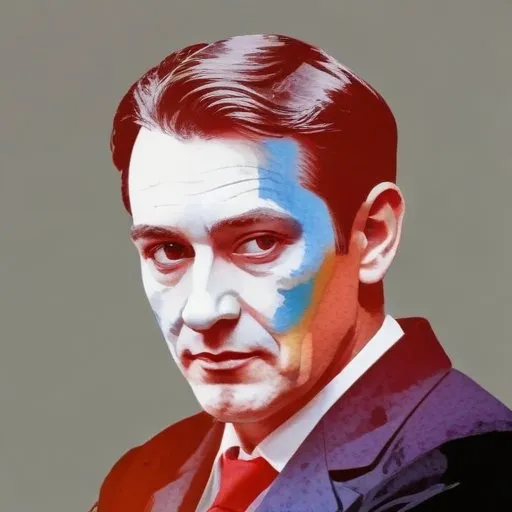
A Czech composer and pianist who blended jazz and classical music, creating innovative and provocative works that challenged traditional norms. Known for his eclectic and avant-garde style.
Erwin Schulhoff was a Czech composer and pianist who shook the foundations of classical music with his avant-garde style, infusing jazz rhythms and Dadaist ideology into his work. He is known for his innovative compositions that defied convention and challenged the established norms of his time.
Schulhoff was born on June 8, 1894, in Prague, into a German family of Ashkenazi Jewish ancestry. His great-uncle, Julius Schulhoff, was a renowned pianist and composer, and his father, Gustav Schulhoff, was a successful wool merchant.
Schulhoff's musical journey began at the Prague Conservatory, where he studied composition and piano from the age of 10. He later continued his studies in Vienna, Leipzig, and Cologne, under the guidance of esteemed musicians such as Claude Debussy, Max Reger, Fritz Steinbach, and Willi Thern.
Schulhoff's talent was recognized early on, and he was awarded the Mendelssohn Prize twice – in 1913 for piano and in 1918 for composition.
During World War I, Schulhoff served on the Russian front in the Austro-Hungarian army and was wounded. He was imprisoned in an Italian prisoner-of-war camp when the war ended. This experience had a profound impact on his music, as he began to explore new sounds and styles upon his return to Prague.
Schulhoff was one of the first classical composers to draw inspiration from jazz music, which was then a relatively new genre. He was fascinated by its rhythmic energy and incorporated elements of jazz into his compositions.
He was also drawn to the avant-garde ideology of Dadaism, which rejected traditional notions of art and culture. Schulhoff saw music as a powerful tool for revolution and social change, and his compositions reflected this philosophy.
In 1923, Schulhoff returned to Prague and joined the faculty of the conservatory in 1929. He went on to teach a new generation of musicians, spreading his innovative ideas and inspiring others to push the boundaries of classical music.
Despite his tragic death in 1942, Schulhoff's music continued to inspire and influence generations of composers and musicians. His legacy as a pioneer of avant-garde music remains unrivaled, and his compositions continue to be performed and celebrated around the world.
"Absolute art is revolution, it requires additional facets for development, leads to overthrow coups in order to open new paths...and is the most powerful in music."
Born in 1881
A Hungarian musical genius who merged folk melodies with modernist techniques, creating a unique sound that transformed classical music.
Born in 1882
A Hungarian composer, conductor, and musicologist who developed a unique style blending folk and classical music, and is renowned for his contributions to music education and ethnomusicology.
Born in 1854
A Czech composer and theorist who created innovative, folk-inspired operas and orchestral works that explored the human experience, often with a focus on social justice and morality.
Born in 1890
A Czech-American pianist and composer who blended neoclassicism and surrealism, creating innovative works that merged classical music with jazz and avant-garde elements.
Born in 1921
A Czech-American composer and conductor, known for blending modernist and neoromantic styles, creating works that are both accessible and innovative. His music often explores themes of freedom, morality, and the human condition.
Born in 1899
A Czech composer who blended folk elements with modernist techniques, creating a unique sound that reflected his country's cultural heritage. His music is characterized by its lyricism, humor, and dramatic flair.
