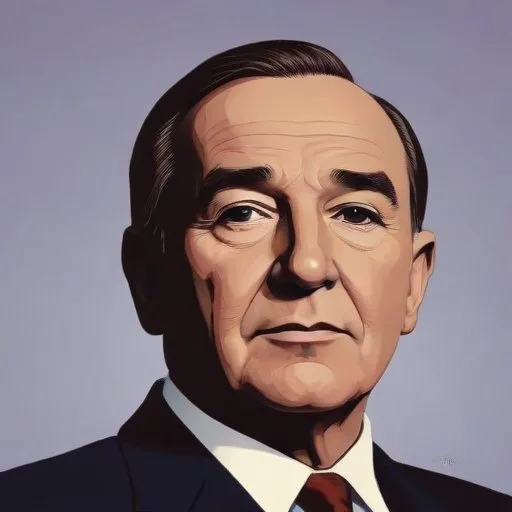
The Unyielding Voice of Dissent: Eugene McCarthy's Quest for Peace and Justice
A Champion of Anti-War Efforts
Eugene McCarthy, an American politician, writer, and academic from Minnesota, is renowned for his unwavering stance against the Vietnam War, which became a defining characteristic of his political career. His courageous challenge to incumbent President
Lyndon B. Johnson in the 1968 Democratic presidential primaries elevated him to national prominence as a champion of anti-war efforts.
Early Life and Academic Pursuits
Born on March 29, 1916, in Watkins, Minnesota, McCarthy pursued a career in academia, earning a graduate degree from the University of Minnesota. He served as an economics professor before being drawn into the world of politics. During World War II, McCarthy worked as a code breaker for the United States Department of War, an experience that would later inform his views on international relations.
Rise to Prominence
McCarthy's political career began in 1948 when he was elected to the United States House of Representatives, where he served for 11 years. In 1958, he was elected to the United States Senate, representing Minnesota for 13 years. Throughout his congressional career, McCarthy was a strong advocate for liberal causes, including civil rights and labor unions.
The Anti-War Candidate
McCarthy's opposition to the Vietnam War culminated in his decision to challenge President Johnson in the 1968 Democratic primaries. His campaign, fueled by grassroots support and anti-war sentiment, surprised many by finishing a strong second in the New Hampshire primary. This show of strength emboldened
Robert F. Kennedy to enter the race, which ultimately led to Johnson's decision not to seek reelection. Although Kennedy's assassination in June 1968 derailed his campaign, McCarthy's courageous stance against the war had already cemented his place in American political history.
Post-Politics and Legacy
After leaving the Senate in 1971, McCarthy continued to write and teach, publishing several books on politics and history. He remained active in politics, running for president four more times, although unsuccessfully. McCarthy's legacy as a champion of peace and justice has endured, inspiring generations of politicians and activists to speak truth to power.
Personal Milestones and Key Life Events
- March 29, 1916: Born in Watkins, Minnesota
- 1948: Elected to the United States House of Representatives
- 1958: Elected to the United States Senate
- 1968: Challenged President Lyndon B. Johnson in the Democratic presidential primaries
- December 10, 2005: Passed away at the age of 89
Philosophical Contributions and Beliefs
McCarthy's commitment to social justice, civil liberties, and anti-militarism defined his political philosophy. He believed in the power of grassroots movements to effect change and was willing to challenge the status quo to promote peace and justice.
FAQ
What was Eugene McCarthys most famous poem?
Eugene McCarthys most famous poem is arguably Groundhog Day, which was published in 1962 and explores themes of nature, mortality, and the human condition.
Did Eugene McCarthy have a career in politics?
Yes, Eugene McCarthy had a distinguished career in politics, serving as a US Senator from Minnesota from 1959 to 1971 and running for president in 1968.
What was Eugene McCarthys role in the anti-war movement?
Eugene McCarthy was a vocal critic of the Vietnam War and played a key role in the anti-war movement, helping to galvanize opposition to the war.
Did Eugene McCarthy have any notable literary awards?
Yes, Eugene McCarthy was awarded the Pulitzer Prize for Poetry in 1962 for his collection Groundhog Day.
What was Eugene McCarthys legacy in American poetry?
Eugene McCarthy was a respected figure in American poetry, known for his unique style and exploration of themes related to nature, politics, and the human condition.