


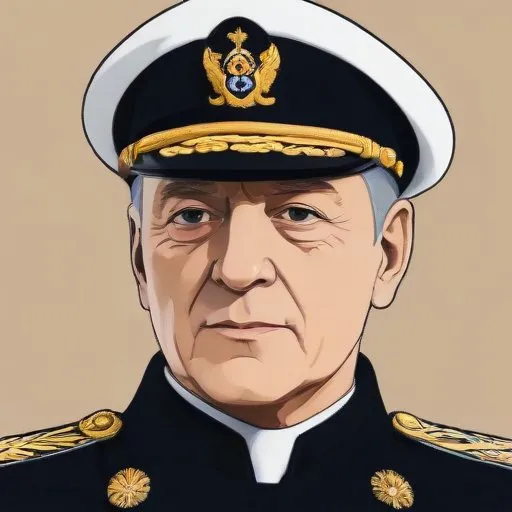
Led the development of the world's first nuclear-powered submarine, the USS Nautilus, and played a crucial role in the Cold War naval strategy. He was a pioneer in submarine warfare and nuclear energy.
Eugene P. Wilkinson is renowned for being the first commander of the world's first nuclear-powered submarine, the USS Nautilus, which he led on its maiden voyage in 1954. This groundbreaking achievement marked a significant milestone in the advancement of submarine technology, earning Wilkinson a permanent place in the annals of naval history.
Born on August 10, 1918, in Long Beach, California, Wilkinson's fascination with the sea began at a young age. He graduated from the United States Naval Academy in 1940, and his early career was marked by service on various ships, including destroyers and aircraft carriers, during World War II.
Wilkinson's most notable achievement came when he was assigned to command the USS Nautilus, a revolutionary submarine powered by a nuclear reactor. On January 21, 1954, the Nautilus embarked on its maiden voyage, successfully completing a 10,000-mile journey from New London, Connecticut, to San Juan, Puerto Rico. This feat demonstrated the capability of nuclear-powered submarines to operate for extended periods, transforming the naval warfare landscape.
Wilkinson's leadership philosophy emphasized innovation, adaptability, and teamwork. He believed that the success of the Nautilus and the development of nuclear-powered submarines relied on the collective efforts of scientists, engineers, and sailors working together to overcome extraordinary challenges.
Wilkinson's pioneering work on the Nautilus paved the way for the development of modern nuclear-powered submarines, significantly enhancing the United States' naval capabilities and contributing to the country's national security. His legacy extends beyond the military, as his leadership and innovation served as a model for private industry and inspired future generations of engineers and scientists.
Eugene P. Wilkinson's remarkable career spanned a transformative period in naval history, from the dawn of nuclear power to the height of the Cold War. His vision, leadership, and innovative spirit continue to inspire and influence the development of modern naval technology, ensuring his place as a titan of American naval history.
The USS Nautilus and Wilkinson's achievements have been featured in various films, books, and documentaries, including the 1959 film "The Atomic Submarine" and the 2010 documentary "The Nautilus: 50 Years Under the Sea."
In reflecting on his remarkable career, Wilkinson often emphasized the importance of teamwork and innovation. As he once said, "The Nautilus was a demonstration of what could be accomplished when a group of people worked together towards a common goal." Today, Eugene P. Wilkinson's pioneering spirit and leadership continue to inspire new generations of naval officers, scientists, and engineers, ensuring his legacy as a trailblazing figure in American history.
Born in 1900
A pioneering naval officer who played a crucial role in developing the US Navy's nuclear submarine program, revolutionizing underwater warfare and national defense.
Born in 1901
A decorated naval officer who served as Chief of Naval Operations during the Cold War, known for modernizing the US Navy and playing a key role in several international crises.
Born in 1885
Led the U.S. Pacific Fleet to victory in World War II, playing a crucial role in defeating Japan and ending the war. He was a highly respected and decorated naval leader.
Born in 1886
A highly decorated naval officer who played a crucial role in several key battles in World War II, including the Battle of Midway, and later served as a diplomat.
Born in 1890
Led the Allied forces to victory in World War II and later served as President, maintaining peace and prosperity during the Cold War era. He's known for his strategic leadership and diplomatic skills.
