


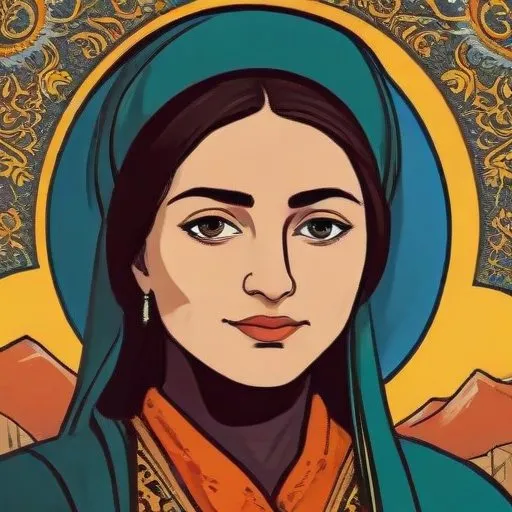
A 17th-century Ottoman explorer and writer who traveled extensively throughout the Middle East, Europe, and Africa, documenting his journeys and cultural observations in a 10-volume book. He is most known for his vivid descriptions of people, places, and customs, providing valuable insights into the social and cultural history of the time.
Evliya Çelebi, a 17th-century Ottoman explorer, is renowned for his extraordinary journeys across the Ottoman Empire and beyond, meticulously recording his experiences in a 10-volume travelogue, the Seyahatname (Book of Travel). This remarkable work chronicles his 40-year odyssey, offering a unique glimpse into the cultural, social, and geographical landscape of the empire during its zenith.
Born in 1611 in Istanbul to a wealthy family from Kütahya, Evliya's parents were attached to the Ottoman court. His father, Dervish Mehmed Zilli, was a jeweler, while his mother was an Abkhazian relation of the grand vizier Melek Ahmed Pasha. Evliya received a court education from the Imperial ulama scholars and may have joined the Gulshani Sufi order, demonstrating an intimate knowledge of their khanqah in Cairo.
Evliya was a skilled musician, having studied vocal and instrumental music under the renowned Khalwati dervish Umar Gulshani. His musical gifts earned him great favor at the Imperial Palace, impressing even the chief musician Amir Guna. He was also trained in the theory of music, known as ilm al-musiqi.
In 1640, Evliya began taking notes on buildings, markets, customs, and culture in Istanbul, which eventually evolved into his travelogue. He refused employment that would keep him from traveling, and instead, embarked on a series of expeditions, recording his experiences and observations in meticulous detail. The resulting work provides an unparalleled account of the Ottoman Empire's diversity, richness, and complexity.
Evliya was a devout Muslim who opposed fanaticism, and his travels allowed him to engage with various cultures and traditions. He could recite the Quran from memory and often joked freely about Islam. His encounters with diverse populations and landscapes fostered a deep understanding of the empire's cultural heritage.
Evliya Çelebi's Seyahatname is an invaluable resource for historians, scholars, and enthusiasts alike. His work offers a firsthand account of the Ottoman Empire's cultural zenith, providing insight into its institutions, customs, and daily life. As a testament to his legacy, Evliya's travelogue remains an essential part of Ottoman and Turkish cultural heritage, continuing to inspire and educate generations to come.
_"I have traversed the lands of the world, from the land of the Franks to the land of the Persians, and I have not seen a more majestic city than Istanbul."_ - Evliya Çelebi
Evliya's remarkable journey, as recorded in his Seyahatname, offers a unique perspective on the Ottoman Empire and its cultural significance. His legacy continues to inspire and fascinate, providing a window into a bygone era of exploration, discovery, and cross-cultural exchange.
Born in 1304
A medieval traveler and scholar who explored much of the Islamic world, documenting his journeys and cultural observations in a famous travelogue.
Born in 1254
Traveled extensively throughout Asia, documenting his journeys and discovering new trade routes, which greatly influenced European exploration and commerce.
Born in 1911
A veteran character actor with a distinctive voice, he appeared in numerous films and TV shows, often playing authority figures or villains.
Born in 1394
A Portuguese prince who sponsored and organized numerous expeditions to explore and map the west coast of Africa, leading to the discovery of new trade routes and territories. He played a crucial role in the Age of Exploration.
Born in 1567
French explorer who mapped much of eastern North America, establishing trade and settlement in what is now Canada and the northeastern United States.
