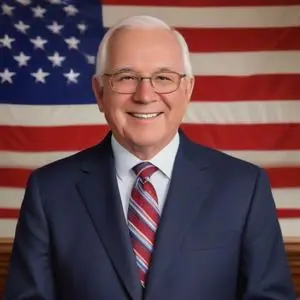
Ezra Taft Benson: A Life of Faith, Service, and Leadership
A Trailblazer in Agriculture and Religion
Ezra Taft Benson was a multifaceted individual who left an indelible mark on American history, serving as the 15th United States Secretary of Agriculture during both presidential terms of
Dwight D. Eisenhower and later as the 13th President of the Church of Jesus Christ of Latter-day Saints (LDS Church). He was a devoted farmer, government official, and religious leader, dedicating his life to the betterment of his community and the world at large.
Early Life and Education
Born on August 4, 1899, in Whitney, Idaho, Benson was the oldest of eleven children. He was the great-grandson of Ezra T. Benson, a prominent figure in the LDS Church who was appointed as a member of the Quorum of the Twelve Apostles in 1846. When his father was called as a missionary to the midwestern United States, 12-year-old Benson took on the responsibility of running the family farm, showcasing his leadership skills from a young age.
Benson pursued his academic interests at the Oneida Stake Academy in Preston, Idaho, graduating in 1918. He then attended Utah State Agricultural College (USAC), where he met his future wife, Flora Smith Amussen. Alternating quarters between USAC and working on the family farm, Benson developed a strong foundation in agriculture, which would serve him well in his future endeavors.
Spiritual Calling and Missionary Work
In 1921, Benson embarked on an LDS Church mission to Britain, where he spent two years spreading the gospel and gaining invaluable experience. It was during this mission that he came to realize the centrality of the Book of Mormon in the church's message and its role in converting people to the faith. This epiphany deepened his commitment to the church and prepared him for future leadership roles.
Upon his return, Benson completed his bachelor's degree at
Brigham Young University in 1926. That same year, he married Flora Smith Amussen, and they went on to have six children together.
Public Service and Agricultural Leadership
In 1953, Benson was appointed as the 15th United States Secretary of Agriculture by President Dwight D. Eisenhower. During his tenure, he implemented policies that promoted agricultural development, invested in rural infrastructure, and supported American farmers. His leadership earned him recognition as one of the most effective Secretaries of Agriculture in American history.
Presidency of the LDS Church
In 1985, Benson was called as the 13th President of the LDS Church, a position he held until his passing in 1994. Under his presidency, the church experienced significant growth, with the number of members increasing by over 2 million. President Benson emphasized the importance of family, morality, and faith, inspiring countless individuals around the world.
Philosophical Contributions and Beliefs
Throughout his life, Benson remained steadfast in his faith and convictions. He was a strong advocate for individual freedom, limited government intervention, and the importance of family and morality. His unwavering commitment to his beliefs earned him the respect of people from all walks of life.
Legacy and Impact
Ezra Taft Benson's life was a testament to his unwavering dedication to his faith, family, and community. As a farmer, government official, and religious leader, he left an indelible mark on American history. His legacy continues to inspire generations, serving as a shining example of the power of faith, hard work, and service to others.
- 'Faith is the moving cause of all reform and improvement.' - Ezra Taft Benson
- 'The Lord is not impressed with what we have, but with what we are willing to give up for Him.' - Ezra Taft Benson
Born on August 4, 1899, in Whitney, Idaho, Ezra Taft Benson lived a life of purpose and devotion, passing away on May 30, 1994. His remarkable journey serves as a beacon of inspiration, encouraging us to live lives of faith, service, and leadership.
FAQ
What is Ezra Taft Bensons role in the LDS Church?
Ezra Taft Benson served as the 13th President of The Church of Jesus Christ of Latter-day Saints from 1985 until his death in 1994. He was a prominent figure in the church and played a significant role in shaping its doctrine and policies.
What were Ezra Taft Bensons views on patriotism?
Ezra Taft Benson was a strong advocate for patriotism and believed that the values of freedom and liberty were essential to American society. He often spoke about the importance of defending the Constitution and upholding the principles of the Founding Fathers.
What is Ezra Taft Bensons legacy in agriculture?
Before becoming the President of the LDS Church, Ezra Taft Benson served as the United States Secretary of Agriculture under President Dwight D. Eisenhower. During his tenure, he implemented policies to promote agricultural development and strengthen the farming industry.
How did Ezra Taft Bensons leadership impact the LDS Church?
Under Ezra Taft Bensons leadership, the LDS Church experienced significant growth and expansion. He emphasized the importance of missionary work, temple building, and family history research, which led to an increase in church membership and a strengthened sense of community.
What is Ezra Taft Bensons most famous book?
Ezra Taft Benson wrote several books, but his most famous one is The Constitution: A Heavenly Banner, which explores the connection between the Constitution and Latter-day Saint theology. The book is considered a classic in LDS literature and is still widely read today.