


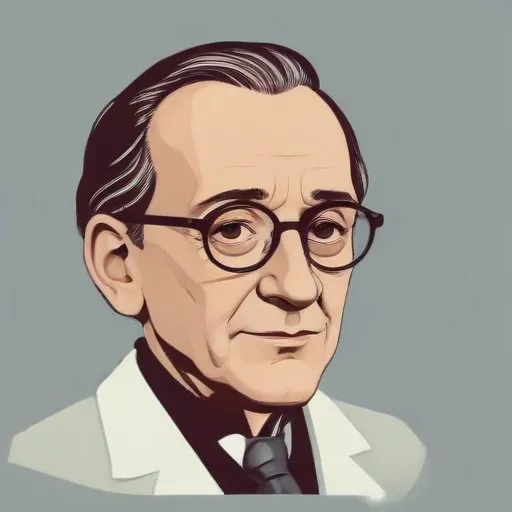
Developed groundbreaking theories on transition metal complexes and pioneered the field of organometallic chemistry, earning a Nobel Prize in Chemistry in 1981.
F. Albert Cotton, a renowned American chemist, left an indelible mark on the field of transition metal chemistry. He is best known for his groundbreaking research on the chemistry of transition metals, which led to the discovery of quadruple bonds and the development of a new nomenclature for metal-metal bonded species.
Born on April 9, 1930, in Philadelphia, Pennsylvania, Cotton attended local public schools before pursuing higher education at Drexel University and Temple University. He earned his Bachelor of Arts degree from Temple University in 1951 and went on to earn his Ph.D. from Harvard University in 1955, under the guidance of Sir Geoffrey Wilkinson.
Cotton's illustrious career was marked by several milestones, including becoming the youngest person to receive a full professorship at Massachusetts Institute of Technology (MIT) at the age of 31. He emphasized both electronic structure and chemical synthesis in his research, pioneering the study of multiple bonding between transition metal atoms.
Cotton's work was influenced by his passion for understanding the intricacies of molecular structure and his commitment to rigorous scientific inquiry. He believed in the importance of fundamental research, stating, "The most important thing is to do good science, and the applications will follow."
Cotton's personal life was marked by a strong sense of dedication to his work and a love for classical music. He was a talented pianist and enjoyed playing chamber music in his spare time.
Cotton's research has had a profound impact on modern society, contributing to the development of new materials and technologies. His work on transition metal chemistry has influenced fields such as catalysis, energy storage, and biomedical applications.
Cotton received numerous awards and honors for his contributions to chemistry, including the National Medal of Science, the Priestley Medal, and the Welch Award in Chemistry.
F. Albert Cotton's legacy extends beyond his own research, inspiring generations of scientists to explore the complexities of transition metal chemistry. His work continues to shape our understanding of molecular structure and inform the development of new technologies.
Cotton passed away on February 20, 2007, leaving behind a rich legacy of scientific discovery and a lasting impact on the field of chemistry.
Born in 1901
Pioneering chemist and peace activist who won two unshared Nobel Prizes, one for chemistry and one for peace, for his groundbreaking work on the nature of the chemical bond and his tireless efforts to promote nuclear disarmament.
Born in 1917
Pioneering organic chemist who synthesized complex natural products and developed new methods, earning a Nobel Prize in Chemistry. His work revolutionized the field of organic chemistry.
97 Years Old
Developed innovative synthetic methods, transforming organic chemistry and enabling the creation of complex molecules with precise structures.
88 Years Old
A Nobel Prize-winning chemist who pioneered the field of organic chemistry and introduced the concept of orbital symmetry, revolutionizing our understanding of chemical reactions.
Born in 1893
A pioneering scientist who discovered deuterium, a heavy isotope of hydrogen, and later contributed to the discovery of many other elements, revolutionizing our understanding of the universe.
Born in 1881
Developed groundbreaking theories on surface chemistry and discovered neon lighting, revolutionizing industries like advertising and entertainment.
Born in 1884
A Nobel Prize-winning physicist and chemist who pioneered work in molecular structure, quantum mechanics, and X-ray diffraction, making significant contributions to our understanding of molecular interactions.
Born in 1881
Developed groundbreaking theories on polymers, revolutionizing the field of organic chemistry, and was awarded the Nobel Prize in Chemistry in 1953.
