


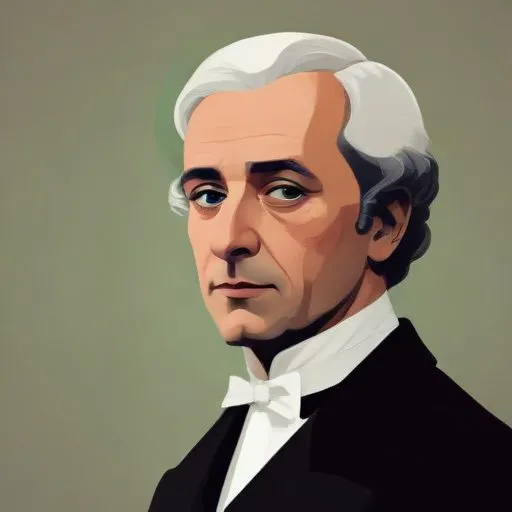
An 18th-century master of opera and sacred music, known for his innovative compositions that blended Italian and German styles. His works were highly regarded by Mozart and Haydn.
Ferdinando Paer, an Italian composer of Austrian descent, left an indelible mark on the world of opera with his extensive repertoire of melodies that captivated audiences across Europe in the late 18th and early 19th centuries. Known for his sublime operas, including Orphe et Euridice, Circe, and Leonora, Paer's music continues to inspire and influence generations of composers and music enthusiasts alike.
Born on June 1, 1771, in Parma, Italy, Paer came from a musical family of Austrian descent. His grandfather, Michael Pr, was a regimental band member, while his father, Giulio Paer, was a trumpeter with the Ducal Bodyguards who also performed at church and court events. Paer's mother, Francesca Cutica, instilled in him a love for music from a young age.
Under the guidance of violinist Gasparo Ghiretti, a pupil of the renowned Conservatorio della Pietà dei Turchini in Naples, Paer studied music theory and honed his craft. This solid foundation laid the groundwork for his future success as a composer.
Paer's first stage work, Orphe et Euridice, premiered in 1791 to great acclaim, marking the beginning of a fruitful career as a composer. His subsequent Italian opera, Circe, debuted during the Carnival of Venice in 1792, cementing his reputation as a rising talent in the opera world.
At the tender age of 20, Paer became choirmaster in Venice, a testament to his rapid ascent in the musical sphere. In 1797, he relocated to Vienna, where his future wife, soprano Francesca Riccardi, had secured an engagement.
In Vienna, Paer became music director of the Krntnertortheater, where he produced a string of operas, including Camilla (1799) and Achille (1801). He also enjoyed the patronage of Empress Marie Therese, composing several works for her private concerts.
In 1802, Paer was appointed composer to the court theatre at Dresden, the Morettisches Opernhaus, where his wife was also engaged as a singer. Two years later, Elector Frederick August bestowed upon him a lifetime appointment as Court Kapellmeister.
Paer's opera Leonora (1804), based on the same story as Beethoven's Fidelio, first produced as Leonora the following year, remains one of his most celebrated works. Beethoven, a contemporary and admirer of Paer, once jestingly remarked, "I am not the only one who can write operas."
Paer's contributions to the world of opera are immense, and his music continues to inspire generations of composers and performers. Despite being overshadowed by contemporaries like Beethoven and Mozart, Paer's legacy as a master of opera remains untarnished.
Today, his operas continue to be performed and appreciated by audiences worldwide, a testament to the enduring power of his music and the timeless appeal of his artistry.
These operas, among many others, form the cornerstone of Paer's oeuvre, a testament to his boundless creativity and innovation in the world of opera.
Ferdinando Paer's life was a testament to his passion for music and his dedication to the art of opera. His legacy continues to inspire and influence generations of composers, performers, and music enthusiasts alike.
Born in 1770
A musical genius who expanded the possibilities of classical music, creating iconic symphonies and piano sonatas that continue to inspire and influence generations of artists.
Born in 1756
A child prodigy and master of classical music, he composed over 600 works, including symphonies, operas, and chamber music, that continue to inspire and influence musicians today.
Born in 1792
Operatic mastermind behind iconic comedies like "The Barber of Seville" and "William Tell," crafting catchy, witty, and playful music that still delights audiences today.
Born in 1797
A renowned composer of symphonies, operas, and chamber music, particularly famous for his emotional and expressive lieder (art songs) that showcased his mastery of melody and harmony.
Born in 1797
A renowned Italian composer of the Romantic era, best known for his operas, particularly "L'elisir d'amore" and "Don Pasquale", which are still widely performed today.
Born in 1801
Operatic mastermind behind bel canto classics like "Norma" and "La Sonnambula", renowned for their beautiful, expressive melodies and dramatic flair.
Born in 1749
An 18th-century Italian composer and educator, known for his operas and sacred music, particularly his comic operas that showcased his mastery of melody and harmony.
Born in 1782
A virtuosic violinist and composer who revolutionized the instrument's technical possibilities, leaving an indelible mark on classical music.
