


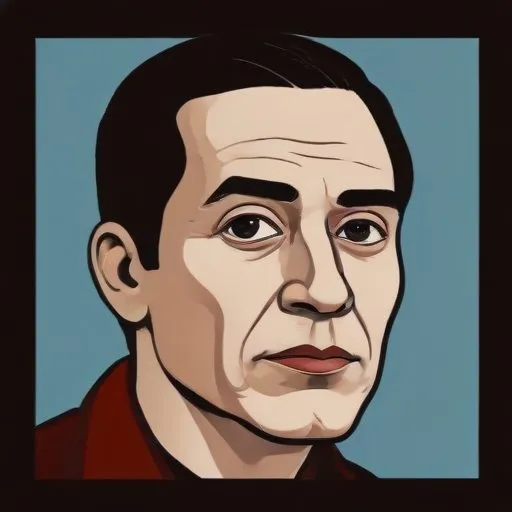
A prominent Peruvian artist, known for blending indigenous and European styles to create vibrant, abstract works that explore the country's cultural heritage. His sculptures and paintings often feature bold, geometric forms and a rich color palette.
Fernando de Szyszlo, a Peruvian painter, sculptor, printmaker, and teacher, was a driving force behind the advancement of abstract art in Latin America since the mid-1950s. As one of the leading plastic artists in Peru, Szyszlo's unique fusion of European influences and Latin American cultural identity revolutionized the art world.
Born on July 5, 1925, in Lima, Peru, to a Peruvian mother of Spanish-Indian descent and a Polish geographer father, Szyszlo's cultural heritage would later shape his artistic vision. He initially pursued architecture at the National University of Engineering but soon shifted his focus to the School of Plastic Arts at the Pontifical Catholic University of Peru, where he graduated in 1948.
Between 1948 and 1955, Szyszlo traveled to Europe, immersing himself in the works of masters like Rembrandt, Titian, and Tintoretto. He absorbed the influences of Cubism, Surrealism, Informalism, and abstraction, refining his artistic language. During this period, he befriended prominent Latin American intellectuals, including Octavio Paz and Andrés Breton, at Paris's renowned Café de Flore.
Upon his return to Peru, Szyszlo became a catalytic force for artistic renewal. He broke new ground by expressing Peruvian subject matter in a non-representational style, sparking a new wave of artistic innovation in his country.
In 1962, Szyszlo became a professor of art at Cornell University, and later, a visiting lecturer at Yale University in 1965. These appointments solidified his reputation as a leading authority on abstract art, garnering international recognition for his work.
Szyszlo was married to the Peruvian poet Blanca Varela, with whom he had two children. Tragedy struck in 1996 when his son, Juan Lorenzo, was killed in a plane crash at the age of 36. This devastating loss deeply affected Szyszlo, but he continued to create, driven by his passion for art.
Fernando de Szyszlo's innovative approach to abstract art has left an indelible mark on the Latin American art scene. His tireless pursuit of artistic excellence and cultural preservation has inspired generations of artists, solidifying his position as a pioneer of modern Peruvian art.
Fernando de Szyszlo passed away on October 9, 2017, leaving behind a rich legacy of innovative art, academic achievements, and a continued inspiration to the art world.
90 Years Old
A Nobel Prize-winning writer and politician who explored the complexities of Peruvian society through his novels and essays, and later ran for president. His works often blended politics, history, and fiction.
71 Years Old
A renowned fashion and portrait photographer celebrated for capturing iconic, intimate, and provocative images of celebrities and royals, defining the aesthetic of luxury brands and publications.
Born in 1892
A pioneering poet who revolutionized Spanish-language literature with innovative, avant-garde styles and socially conscious themes. His works explored the human condition, politics, and social justice.
Born in 1911
A Peruvian anthropologist, author, and poet who explored the cultural heritage of indigenous peoples through his literature, blending traditional Andean storytelling with modernist techniques. He's most known for his novels that give voice to the marginalized and oppressed.
