


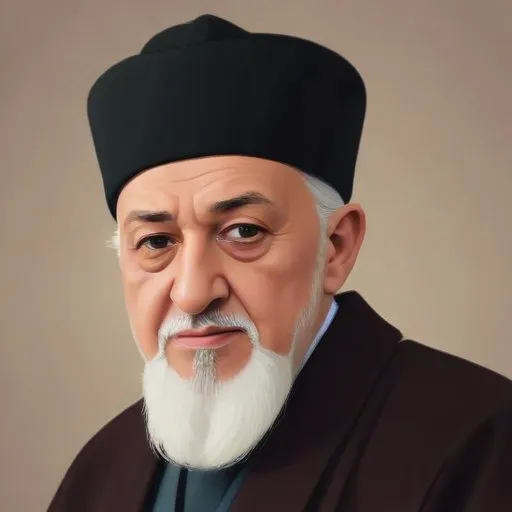
A Turkish Islamic scholar who promotes a moderate, pro-democratic brand of Islam, and is known for his vast network of schools and cultural institutions around the world.
Fethullah Glen, a Turkish Muslim scholar, preacher, and social critic, is arguably one of the most influential figures of modern Turkey, with a following of millions worldwide. As the de facto leader of the Glen movement, his ideas and teachings have had a profound impact on Turkish politics, society, and culture.
Born on April 27, 1941, in Erzurum, Turkey, Glen began his religious education at a young age and eventually became a local state imam in 1959. He continued to serve in this role until 1981, during which time he developed his unique theological perspective, blending traditional Islamic values with modern democratic principles.
Glen's teachings emphasize the importance of faith, morality, and high ethical principles in individual and societal development. He rejects Islamist political philosophy, instead advocating for the full participation of religious and secular individuals in professions, society, and political life, with a focus on secular rule in Muslim-majority countries and beyond.
In the 1990s, Glen's movement gained significant momentum, with his followers, known as "Gulenists," infiltrating key sectors of Turkish society, including education, media, and politics. In 2003, some Gulenists allied with the ruling Justice and Development Party (AKP), providing crucial support to Prime Minister Recep Tayyip Erdogan. However, this alliance fractured in 2011, and Glen became a vocal critic of Erdogan's government.
Glen's critics accuse him of attempting to overthrow the Turkish government, allegedly directing corruption investigations and instigating the 2016 coup attempt. He has denied these accusations, but a Turkish criminal court issued an arrest warrant for him in 2016, and Turkey has demanded his extradition from the United States, where he has lived in self-exile since 1999.
Despite the controversies surrounding him, Glen's movement has had a significant impact on modern Turkish society. His emphasis on education, interfaith dialogue, and social activism has inspired a new generation of Turks to engage in civic life and community service. His followers have established numerous schools, universities, and cultural institutions, promoting a more tolerant and inclusive understanding of Islam.
"We are not after power, nor are we after position. We are after serving humanity, serving the country, serving the nation."
"The most important thing in this world is to stop saying 'I wish' and start saying 'I will'."
Fethullah Glen's legacy is complex and multifaceted, reflecting both the promise and perils of modern Turkey. His movement has inspired millions to work towards a more just and compassionate society, while his critics see him as a manipulative figure who has exploited religious sentiment for political gain. Ultimately, Glen's story serves as a reminder of the ongoing struggle for power, identity, and values in modern Turkey.
For a comprehensive visual timeline of Fethullah Glen's life and achievements, click here.
72 Years Old
The 12th President of Turkey, a dominant figure in Turkish politics, known for his Islamist roots and authoritarian leadership style, shaping Turkey's modern political landscape.
76 Years Old
The 11th President of Turkey, a politician and academic who played a key role in shaping Turkey's modern politics and foreign policy, known for his efforts to strengthen Turkey's ties with the EU.
67 Years Old
Turkish political scientist, academic, and politician who served as the 37th Prime Minister of Turkey, known for his role in shaping the country's foreign policy and advocating for a more active role in regional and global affairs.
78 Years Old
A Turkish lawyer and politician who served as Deputy Prime Minister of Turkey, known for his role in shaping the country's political landscape and economy.
