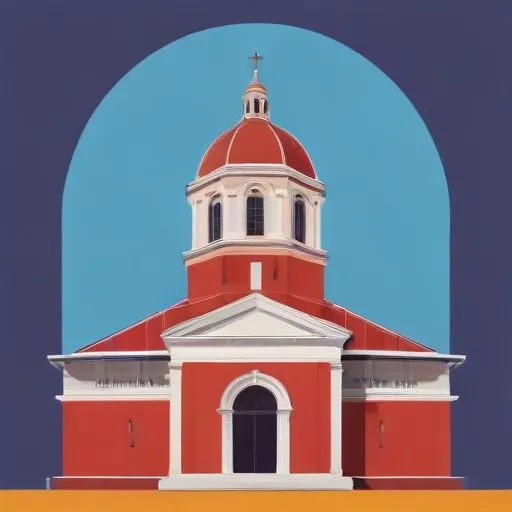
Filippo Juvarra: The Mastermind Behind Late Baroque Architecture
Filippo Juvarra was a renowned Italian architect, scenographer, engraver, and goldsmith, whose works epitomized the essence of late Baroque architecture. With a career spanning over three decades, Juvarra left an indelible mark on the architectural landscape of Italy, Spain, and Portugal, leaving behind a legacy of breathtaking structures that continue to awe and inspire.
Early Life and Influences
Born on March 7, 1678, in Messina, Sicily, Juvarra hailed from a family of goldsmiths and engravers. His formative years were spent working in the family shop, where he honed his skills as a draughtsman. Simultaneously, he studied for the priesthood, receiving ordination in 1703. During this period, Juvarra's fascination with architecture grew, and he began studying independently, relying on books by Vitruvius and Vignola.
The Move to Rome and Rise to Prominence
In 1704, Juvarra made the pivotal decision to move to Rome, where he studied architecture under the tutelage of Carlo and Francesco Fontana. This marked the beginning of his independent career, which was initially focused on designing ceremonies and celebrations, as well as set designs for theatres. Juvarra's innovative approach to set design, known as the
scena per angolo, or "scenes at an angle," revolutionized the art of stage design. This style, though later attributed to Ferdinando Galli Bibiena, was patented by Juvarra in his treatise
Architettura Civile in 1711.
Theatre and Set Design
Juvarra's involvement in theatre design was extensive, with his sets gracing the stages of prominent Roman theatres. His work under the patronage of Cardinal Ottoboni led to the rebuilding of the Cardinal's private theatre in the Palazzo della Cancelleria. Additionally, Juvarra designed sets for operas performed within the theatre. His designs redefined the art of stagecraft, introducing novel elements such as perspective and optical illusions to create visually stunning experiences.
Major Works and Legacy
Juvarra's architectural prowess is evident in his stunning creations, including:
- The Basilica of Superga, a majestic church complex in Turin, Italy, featuring an iconic elliptical dome.
- The Royal Palace of Madrid, a grandiose structure that showcases Juvarra's mastery of Baroque design.
- The St. Clara Church in Stresa, Italy, a testament to his innovative use of materials and spatial arrangements.
Juvarra's contributions to architecture and set design have had a lasting impact on modern society, influencing generations of artists, architects, and designers. His legacy continues to inspire awe and admiration, cementing his place as one of the most significant figures in the history of late Baroque architecture.
Personal Milestones and Key Life Events
Throughout his life, Juvarra was marked by his independence and determination. A few notable milestones and events that shaped his life and career include:
- 1701: Designed festive settings for the coronation of Philip V of Spain and Sicily, an event that showcased his talent and presaged his future success.
- 1704: Moved to Rome, a decision that catapulted him to the forefront of architectural innovation.
- 1711: Published Architettura Civile, a treatise that codified his approach to set design and solidified his reputation as a master of the craft.
Juvarra's remarkable life and career serve as a testament to the power of creativity, innovation, and determination. As we continue to marvel at his breathtaking creations, we are reminded of the profound impact one individual can have on the world of art and architecture.
FAQ
What was Filippo Juvarras contribution to Baroque architecture?
Filippo Juvarra was a prominent Italian architect of the Baroque period, known for his innovative and ornate designs. He made significant contributions to the development of Baroque architecture, particularly in his native Turin.
What are some of Filippo Juvarras notable works?
Some of Filippo Juvarras notable works include the Basilica of Superga, the Palace of Stupinigi, and the Royal Church of San Lorenzo. He also designed several other buildings and monuments in Turin and elsewhere in Italy.
What was Filippo Juvarras relationship with the royal court of Savoy?
Filippo Juvarra had a close relationship with the royal court of Savoy, serving as the official architect to the Duke of Savoy. He worked closely with the duke and his successors to design and build several important projects in Turin and elsewhere.
What were Filippo Juvarras innovations in architectural design?
Filippo Juvarra was known for his innovative use of elliptical shapes and curved lines in his designs. He also experimented with new materials and techniques, such as the use of iron and concrete.
How did Filippo Juvarras work influence later architects?
Filippo Juvarras work had a significant impact on later architects, particularly those of the Rococo period. His innovative designs and use of ornate decoration influenced architects such as Bernini and Borromini, among others.