


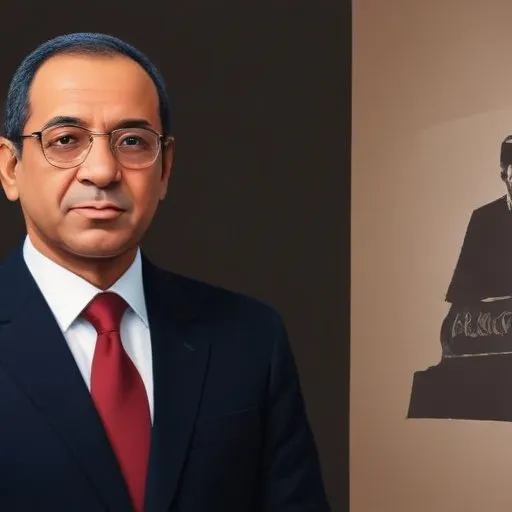
Egyptian Minister of Interior who played a key role in shaping the country's internal security and politics during a tumultuous period. He's known for his efforts to maintain stability and order amidst political unrest.
Fouad Serageddin was a stalwart of Egyptian politics, known for his unwavering commitment to democracy, liberalism, and secularism. As the leader of Egypt's Wafd Party, he navigated the treacherous landscape of Middle Eastern politics, leaving an indelible mark on the country's history.
Serageddin's political career spanned over five decades, during which he held various positions, including minister of interior and finance. By his early thirties, he had already established himself as a shrewd politician, earning the respect and admiration of his peers.
The Wafd Party, founded in 1919, was the standard-bearer of Egypt's nationalist movement. Serageddin, as the party's leader, remained faithful to its founding principles of democracy, liberalism, and secularism. Despite attempts to undermine the party's influence, Serageddin's leadership ensured its continued relevance in Egyptian politics.
When President Hosni Mubarak allowed the Wafd Party to re-emerge in 1984, Serageddin seized the opportunity to revitalize the party. He launched the Al-Wafd newspaper, which quickly gained popularity for its hard-hitting exposés on corruption and mismanagement. This shrewd move catapulted Serageddin back into the forefront of Egyptian politics.
Serageddin's unyielding stance against authoritarianism led to his imprisonment in 1952 and again in 1981. However, he never wavered in his commitment to the principles of democracy and freedom. His periods of detention only served to galvanize his resolve to challenge the status quo.
Serageddin's decision to court the Muslim Brotherhood has been the subject of much controversy. Critics argue that this move compromised the Wafd Party's liberal credentials, while others see it as a pragmatic attempt to broaden the party's appeal.
Fouad Serageddin's legacy is a testament to his unwavering commitment to democracy and human rights. Despite facing numerous challenges and setbacks, he remained steadfast in his pursuit of a more just and equitable society. As a champion of Egypt's Wafd Party, he leaves behind a rich legacy that continues to inspire generations of Egyptians and beyond.
Through his life and times, Fouad Serageddin embodies the essence of a true statesman: courageous, principled, and dedicated to the betterment of humanity.
Born in 1918
Led Egypt through a period of rapid modernization and nationalism, becoming a symbol of Arab unity and resistance to Western influence. He nationalized the Suez Canal and implemented socialist reforms.
98 Years Old
The authoritarian leader who ruled Egypt for nearly three decades, suppressing opposition and maintaining a tight grip on power, while also maintaining a delicate balance of power in the Middle East. He's infamous for his regime's human rights abuses and corruption.
71 Years Old
Egypt's sixth president, a military leader who seized power in a coup, known for his authoritarian rule and human rights abuses. He has dominated Egyptian politics since 2013.
84 Years Old
Egypt's first Vice President and Nobel Peace Prize winner, known for leading the International Atomic Energy Agency and advocating for nuclear disarmament and democracy.
Born in 1922
The first Arab to lead the United Nations, he played a key role in shaping international relations and global governance during a tumultuous period in the 1990s. He's also known for his efforts to reform the UN and promote peacekeeping operations.
