


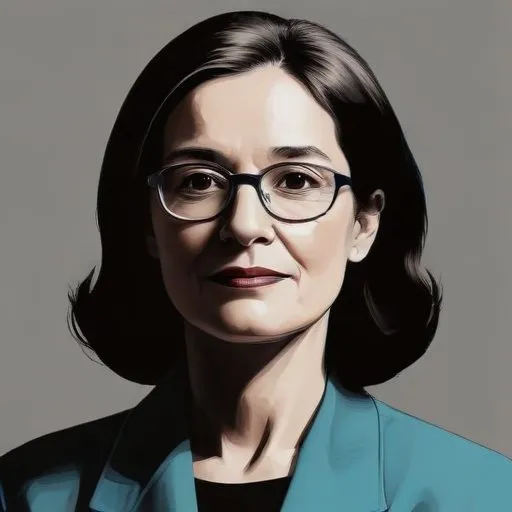
Pioneering author and activist who challenged conventional thinking on hunger, poverty, and the environment, inspiring a new wave of sustainable food systems and social justice movements.
Frances Moore Lapp is a renowned American researcher and author, best known for her groundbreaking work in the field of food and democracy policy. Her 1971 book, Diet for a Small Planet, has been hailed as one of the most influential political tracts of the time, selling an impressive 2.5 million copies worldwide.
Born on February 10, 1944, in Pendleton, Oregon, Lapp grew up in Fort Worth, Texas, with her parents John and Ina Moore. She graduated from Earlham College in 1966 and went on to briefly attend the University of California at Berkeley for graduate studies in social work.
Lapp's work has been centered around the idea that world hunger is not caused by a lack of food, but rather by the inability of hungry people to access the abundance of food that exists in the world. She has argued that our current democracy creates a maldistribution of power and resources, leading to waste and artificial scarcity of essentials for sustainable living.
Throughout her career, Lapp has co-founded three organizations that explore the roots of hunger, poverty, and environmental crises, as well as solutions emerging worldwide through what she calls "living democracy". Her latest work includes a report entitled Crisis of Trust: How Can Democracies Protect Against Dangerous Lies, alongside Max Boland and Rachel Madison.
Lapp has written 20 books, including:
Her work has been recognized globally, with the Right Livelihood Award in 1987 for revealing the political and economic causes of world hunger and how citizens can help to remedy them.
Lapp's work has had a significant impact on modern society, inspiring a new generation of researchers, policymakers, and activists to work towards creating a more equitable and sustainable food system.
Her ideas have influenced the way we think about food, poverty, and democracy, and have contributed to a growing movement towards a more just and equitable world.
In 1967, Lapp married toxicologist and environmentalist Dr. Marc Lapp, with whom she has two children, Anthony and Anna Lapp.
Lapp's work is rooted in a deep commitment to social justice and democracy. She believes that by empowering citizens and creating a more just and equitable society, we can overcome the root causes of hunger, poverty, and environmental degradation.
Frances Moore Lapp's work has left an indelible mark on the world. Her tireless advocacy for a more just and equitable food system has inspired countless individuals and organizations to work towards creating a better world for all.
As we move forward in the 21st century, Lapp's work serves as a beacon of hope, reminding us that a world free from hunger and poverty is not only possible but necessary for human survival.
92 Years Old
A pioneering consumer advocate and presidential candidate, known for his tireless crusade against corporate greed and government negligence, particularly in the areas of environmental protection and product safety.
97 Years Old
Developed groundbreaking theories on language acquisition and universal grammar, and is a prominent critic of power and propaganda in modern society.
Born in 1922
A pioneering historian and activist who challenged traditional narratives, offering a people's perspective on American history, and inspiring social change through his influential writings.
95 Years Old
A whistleblower who leaked the Pentagon Papers, exposing government secrets about the Vietnam War, and a prominent anti-war activist.
86 Years Old
A pioneering African woman who fought to protect the environment and promote democracy, earning her the Nobel Peace Prize for her groundbreaking efforts.
Born in 1854
A German physician and biologist who discovered the first effective treatment for syphilis and developed the concept of chemotherapy, earning a Nobel Prize in Physiology or Medicine in 1908.
Born in 1917
A pioneer in the field of ecology, he warned about the dangers of environmental pollution and nuclear fallout, advocating for a more sustainable future. His work greatly influenced the modern environmental movement.
