


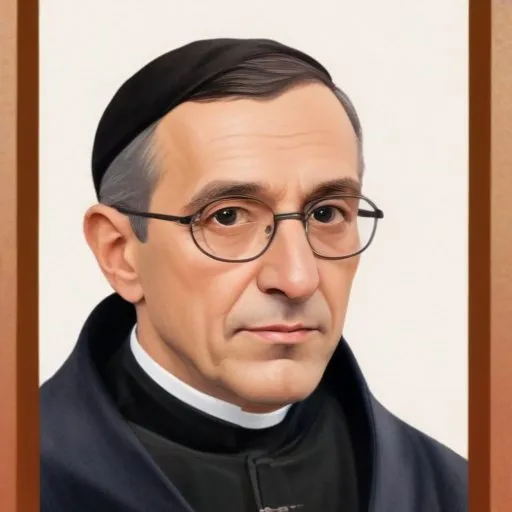
An Italian priest who made significant contributions to zoology and mathematics, particularly in the fields of ornithology and entomology, and wrote several influential scientific books.
Francesco Cetti, an Italian Jesuit priest, is renowned for his groundbreaking contributions to the fields of zoology and mathematics. His magnum opus, "Storia Naturale di Sardegna" (Natural History of Sardinia), is a three-volume masterpiece that showcases his meticulous observations and discoveries about the island's diverse wildlife.
Born on August 9, 1726, in Mannheim, Germany, to parents of Como origin, Cetti was educated in Lombardy and later at the Jesuit college in Monza. His academic pursuits laid the foundation for his future endeavors in the natural sciences.
In 1765, Cetti was sent to Sardinia to improve the island's education system. A year later, he was appointed Chair of Mathematics at the University of Sassari, a position he held until his death in 1778. During his time on the island, Cetti embarked on numerous excursions, meticulously documenting his findings about Sardinia's flora and fauna.
Cetti's most notable work is the three-volume "Storia Naturale di Sardegna," published between 1774 and 1777. This comprehensive treatise covers mammals, birds, and amphibians, as well as fishes, providing an unparalleled insight into Sardinia's natural world. A supplementary volume on mammals was published in 1777.
Cetti's contributions to the field of zoology are immortalized in the name of the Cetti's Warbler (Cettia cetti), a bird species collected on Sardinia by Alberto della Marmora.
Through his tireless efforts, Francesco Cetti has left an indelible mark on our understanding of Sardinia's natural world, inspiring generations of scientists and naturalists to continue exploring the wonders of our planet.
Born in 1707
Developed the system of binomial nomenclature, which is still used today to classify and name living organisms. This system has had a profound impact on the fields of biology, ecology, and conservation.
Born in 1744
A French soldier, biologist, and academic who developed a theory of inheritance of acquired characteristics, proposing that organisms adapt to their environment and pass on those traits to their offspring.
Born in 1769
Founded the field of comparative anatomy, establishing extinction as a fact and creating a framework for understanding the natural world through fossil records.
Born in 1743
Father of modern chemistry, discovered oxygen, and developed a systematic method of chemical nomenclature. He laid the foundation for modern chemistry and paved the way for future scientific discoveries.
Born in 1745
Italian physicist who invented the first electrical battery, revolutionizing the field of electricity and paving the way for countless technological advancements.
Born in 1682
An Italian anatomist and pathologist who pioneered the field of pathology by performing detailed autopsies to understand the causes of diseases, and is considered the father of modern anatomical pathology.
