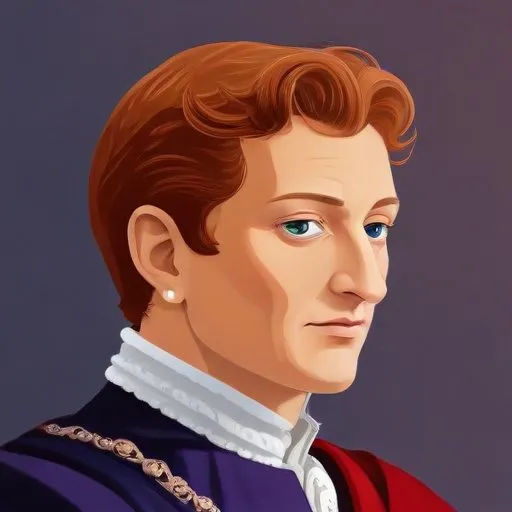
Francesco I de Medici: The Grand Duke of Tuscany and Renaissance Patron
A Renaissance Powerhouse
Francesco I de Medici was a man of uncompromising vision and unwavering passion, renowned for his patronage of the arts and his role as the second Grand Duke of Tuscany. As a champion of Renaissance culture, he left an indelible mark on the world of art, science, and literature, earning him a place among the most influential figures of the 16th century.
A Life of Luxury and Intrigue
Born on March 25, 1541, in Florence, Italy, Francesco was the eldest son of Cosimo I de Medici, the first Grand Duke of Tuscany. From a young age, he was groomed for greatness, receiving an education fit for a king, with a focus on literature, philosophy, and the arts. His life was marked by opulence and extravagance, with lavish parties, grand ceremonies, and elaborate festivals becoming the norm.
Patron of the Arts
Francesco's love for the arts knew no bounds. He was a fierce supporter of artists, writers, and thinkers, providing patronage to the likes of
Galileo Galilei, Giambologna, and Jacopo da Pontormo. His court became a hub for creatives, with the grand duke himself dabbling in alchemy, mathematics, and engineering. His passion for innovation led to the establishment of the Uffizi Gallery, which would later become a treasure trove of Renaissance art.
A Grand Duke's Controversies
Despite his many accomplishments, Francesco's life was not without controversy. His marriage to Johanna of Austria, a Habsburg princess, was marred by rumors of infidelity and power struggles. His dealings with the powerful and ambitious Bianca Cappello, his mistress and eventual wife, sparked whispers of scandal and intrigue. Furthermore, his aggressive expansionist policies and conflicts with neighboring states threatened the stability of Tuscany.
Legacy of the Grand Duke
Francesco I de Medici's impact on modern society cannot be overstated. His patronage of the arts helped shape the Renaissance, while his architectural legacy can be seen in the grand palaces and gardens that dot the Tuscan landscape. His scientific curiosity and support for innovation paved the way for future generations of thinkers and inventors. As a testament to his enduring influence, the grand duke's legacy continues to captivate art lovers, historians, and scholars to this day.
Personal Milestones and Key Life Events
- Marriage to Johanna of Austria (1565)
- Assassination attempt (1575)
- Death of Johanna of Austria (1578)
- Marriage to Bianca Cappello (1579)
- Death (1587)
Philosophical Contributions and Beliefs
Francesco's fascination with alchemy and the occult led him to explore the mysteries of nature and the human condition. His philosophical leanings were shaped by the teachings of Aristotle and Plato, and he saw himself as a champion of humanism and intellectual inquiry.
Influence on Pop Culture
The grand duke's larger-than-life persona has inspired countless works of art, literature, and film. From operas and plays to novels and films, Francesco I de Medici remains a captivating figure, embodying the essence of Renaissance grandeur and intrigue.
Visual Timeline and Milestones
| 1541 |
Born on March 25th in Florence, Italy |
| 1565 |
Marries Johanna of Austria |
| 1575 |
Survives assassination attempt |
| 1578 |
Johanna of Austria dies |
| 1579 |
Marries Bianca Cappello |
| 1587 |
Dies on October 19th in Pisa, Italy |
Trivia and Fun Facts
* Francesco I de Medici was known for his love of lavish jewelry and ornate accessories.
* He was a skilled alchemist and owned an extensive collection of alchemical texts.
* The grand duke's love of engineering led him to design and build several innovative machines and devices.
By delving into the life and times of Francesco I de Medici, we gain a deeper understanding of the Renaissance's complexities, extravagances, and passions. As a champion of art, science, and innovation, the grand duke remains an enduring figure, inspiring generations to come.
FAQ
Who was Francesco I de Medici, Grand Duke of Tuscany?
Francesco I de Medici, Grand Duke of Tuscany was an Italian ruler who lived in the 16th century. He was a member of the powerful Medici family and ruled Tuscany from 1574 to 1587.
What was Francesco I de Medici, Grand Duke of Tuscanys family background?
Francesco I de Medici, Grand Duke of Tuscany was the son of Cosimo I de Medici, Grand Duke of Tuscany, and Eleonora of Toledo. He was part of a powerful and influential family that dominated Florentine politics.
What were Francesco I de Medici, Grand Duke of Tuscanys policies towards the arts?
Francesco I de Medici, Grand Duke of Tuscany was a patron of the arts, supporting several prominent artists and writers, including Girolamo Maggi and Agnolo Bronzino.
What were Francesco I de Medici, Grand Duke of Tuscanys foreign policy achievements?
Francesco I de Medici, Grand Duke of Tuscany achieved significant foreign policy successes, including the conclusion of a treaty with Spain and the formation of an alliance with the Holy Roman Empire.
How did Francesco I de Medici, Grand Duke of Tuscanys reign impact Tuscany?
Francesco I de Medici, Grand Duke of Tuscanys reign had a significant impact on Tuscany, promoting economic growth, cultural development, and artistic innovation.