


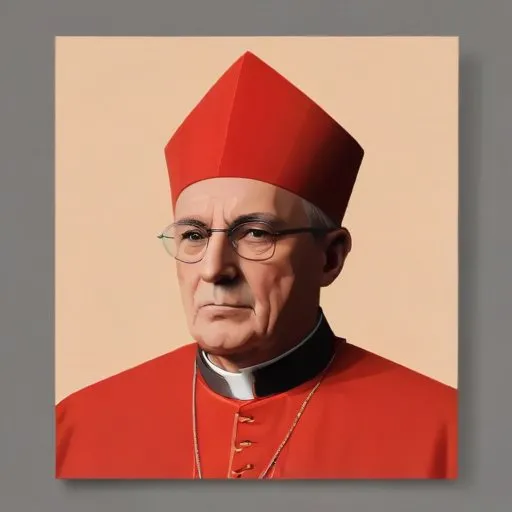
A 17th-century Catholic cardinal who played a significant role in the papal conclave of 1644 and was a patron of the arts, particularly music. He was a strong advocate for the reform of the Catholic Church.
Francesco Maria Brancaccio is known for his unwavering courage in the face of royal authority, which led to his rise as a prominent figure in the Catholic Church. Born on 15 April 1592, in Canneto, near Bari, Brancaccio's life was marked by a series of conflicts with the Kingdom of Naples, which ultimately paved the way for his elevation to the rank of cardinal.
Brancaccio was born into a noble family, the son of Baron Muzio II Brancaccio, governor of Apulia. He received his education from the Jesuits in Naples, which laid the foundation for his future in the Catholic Church.
In 1619, Brancaccio was ordained as a priest in Naples, marking the beginning of his rapid ascent through the ecclesiastic ranks. He became the Bishop of Capaccio in 1627, a position that would test his mettle in the face of royal authority.
As Bishop of Capaccio, Brancaccio clashed with the local foot guards over issues of ecclesiastic jurisdiction. The conflict escalated into armed violence, resulting in the death of the captain of the guard. The Vice-King of Naples ordered Brancaccio to stand trial, but instead, he fled to Rome and sought the protection of Pope Urban VIII.
Pope Urban VIII absolved Brancaccio of any crime and ordered his return to Capaccio. However, the Vice-King opposed this, and Brancaccio was eventually elevated to the rank of cardinal in 1633. This promotion made him a powerful figure in the Catholic Church, and he became a loyal supporter of the Barberini cause.
As a cardinal, Brancaccio's influence grew, and he played a significant role in shaping the Church's policies. He remained in Rome until his death on 9 January 1675, leaving behind a legacy of courage and conviction in the face of adversity.
Brancaccio's unwavering commitment to the Catholic Church and his refusal to yield to royal authority reflect his strong sense of conviction and moral principles. His actions demonstrate a deep understanding of the importance of the Church's autonomy and its role in guiding the faithful.
Brancaccio's story serves as an inspiration to those who dare to challenge authority in the pursuit of justice and truth. His courage and conviction continue to inspire generations, reminding us of the importance of standing up for our beliefs and values.
Francesco Maria Brancaccio's life is a testament to the power of conviction and courage. His story serves as a reminder of the importance of standing up for what one believes in, even in the face of opposition from those in power.
Born in 1652
The 18th-century Pope who banned Freemasonry and reformed the Roman Curia, leaving a lasting impact on the Catholic Church's governance and relations with secret societies.
Born in 1611
Led the Catholic Church during a tumultuous period, reforming the Church's finances and combating corruption, while also opposing the French monarch's attempts to exert control over the Church.
Born in 1652
The 18th-century Pope who banned Freemasonry and reformed the Roman Curia, leaving a lasting impact on the Catholic Church's governance and relations with secret societies.
Born in 1659
A prominent painter of the late Baroque period, known for his vivid and emotive works that blended classical and contemporary styles. His frescoes and altarpieces adorn many Italian churches and palaces.
Born in 1598
A renowned Baroque master who crafted exquisite sculptures and paintings that captivated 17th-century Rome, leaving an indelible mark on the art world.
Born in 1598
A renowned Baroque sculptor, famous for his intricate and emotionally charged marble works, particularly his dramatic high-relief sculptures that capture the essence of ancient Greek and Roman art.
Born in 1596
A prominent Baroque painter who created elaborate, dramatic, and emotive works that adorned the ceilings of Roman palaces and churches, influencing the development of 17th-century art.
Born in 1642
A 17th-century Jesuit Brother who excelled as an architect and painter, creating stunning Baroque trompe l'oeil ceilings that seemed to defy gravity. His works continue to inspire artists and architects today.
