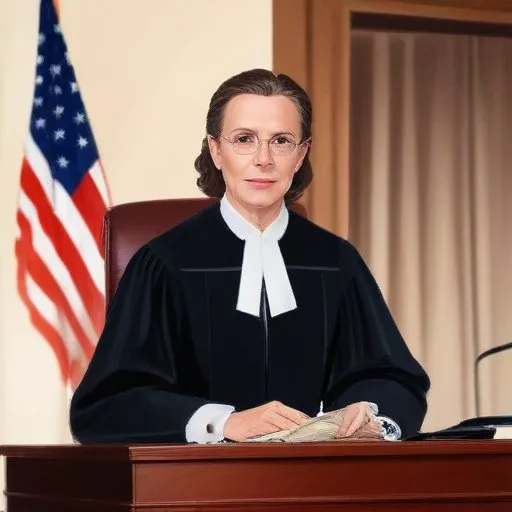
Francis Biddle: The Unwavering Judge of Nuremberg
A Legacy of Justice and Integrity
Francis Biddle, a stalwart figure in American law and politics, is best known for his pivotal role as the primary American judge during the Nuremberg trials following World War II. As the United States Attorney General during this tumultuous period, Biddle played a crucial part in shaping the course of international justice and upholding humanity's moral fabric.
Early Life and Education
Born on May 9, 1886, in Paris, France, to Frances Brown and Algernon Sydney Biddle, Francis was part of a distinguished family of lawyers and academics. His great-great-grandfather, Edmund Randolph, was a notable figure in American history, serving as the seventh Governor of Virginia, the second United States Secretary of State, and the first United States Attorney General. Francis' education was marked by excellence, graduating from Groton School, where he was an avid boxer, and later earning a Bachelor of Arts degree from Harvard College in 1909 and a Bachelor of Laws from Harvard Law School in 1911.
Early Career and World War I
Biddle began his legal career as a private secretary to Supreme Court Justice Oliver Wendell Holmes Jr. from 1911 to 1912. He then practiced law in Philadelphia, Pennsylvania, for nearly three decades, earning a reputation as a skilled and dedicated lawyer. During World War I, Francis enlisted in the United States Army, serving as a Private from October 23 to November 30, 1918. Although the war ended before he saw active combat, his brief stint in the military reflected his commitment to public service.
Rise to Prominence: The Roosevelt Administration
The 1930s marked a significant turning point in Biddle's career. President
Franklin D. Roosevelt nominated him as Chairman of the National Labor Relations Board in 1934, a testament to his growing influence in Washington. On February 9, 1939, Roosevelt nominated Biddle to the United States Court of Appeals for the Third Circuit, a position he held until 1940.
Nuremberg Trials and International Justice
Biddle's most notable achievement came when he was appointed as the primary American judge during the Nuremberg trials in 1945. Alongside judges from the United Kingdom, the Soviet Union, and France, Biddle played a crucial role in prosecuting high-ranking Nazi officials for their role in World War II and the Holocaust. His unwavering commitment to justice and human rights helped establish the principles of international law and paved the way for future war crimes tribunals.
Philosophical Contributions and Beliefs
Francis Biddle's judicial philosophy was rooted in a strong belief in the importance of individual rights and the rule of law. Throughout his career, he advocated for the protection of civil liberties, labor rights, and social justice. Biddle's commitment to these values earned him respect and admiration from his peers and the public alike.
Legacy and Impact
Francis Biddle's contributions to American law, international justice, and human rights are immeasurable. His unwavering dedication to the principles of justice and his commitment to upholding the moral fabric of society have left an indelible mark on history. As a testament to his legacy, Biddle's name is synonymous with integrity, fairness, and a steadfast commitment to the pursuit of justice.
Personal Milestones and Key Life Events
- Born on May 9, 1886, in Paris, France
- Graduated from Groton School
- Earned a Bachelor of Arts degree from Harvard College in 1909
- Earned a Bachelor of Laws from Harvard Law School in 1911
- Served as Private in the United States Army during World War I
- Nominated as Chairman of the National Labor Relations Board in 1934
- Nominated to the United States Court of Appeals for the Third Circuit in 1939
- Served as primary American judge during the Nuremberg trials in 1945
- Passed away on October 4, 1968
Quotes and Memorable Sayings
"The law is not a series of abstract principles, but a living, growing, and dynamic force that must be adapted to the needs of humanity."
Francis Biddle's words continue to inspire generations of lawyers, judges, and human rights advocates, serving as a reminder of the importance of upholding justice and protecting human dignity.
FAQ
What was Francis Biddles career in law and politics?
Francis Biddle was an American lawyer and judge who served as the 58th United States Attorney General. He had a long and distinguished career in law and politics, serving in various roles in the federal government.
What were some of Francis Biddles notable achievements as Attorney General?
Francis Biddles notable achievements as Attorney General include prosecuting Japanese Americans for their loyalty during World War II, advocating for civil rights and civil liberties, and playing a key role in the Nuremberg Trials.
How did Francis Biddles experience in World War I influence his politics?
Francis Biddles experience in World War I influenced his politics by shaping his views on nationalism, international cooperation, and human rights. He was a strong advocate for international law and cooperation.
What was Francis Biddles approach to justice and the law?
Francis Biddles approach to justice and the law was characterized by a strong commitment to fairness, equality, and human rights. He believed in the importance of upholding the Constitution and protecting individual liberties.
What is Francis Biddles legacy in American law and politics?
Francis Biddles legacy in American law and politics is that of a dedicated public servant who worked tirelessly to promote justice, equality, and human rights. He is remembered for his integrity, courage, and commitment to the rule of law.