


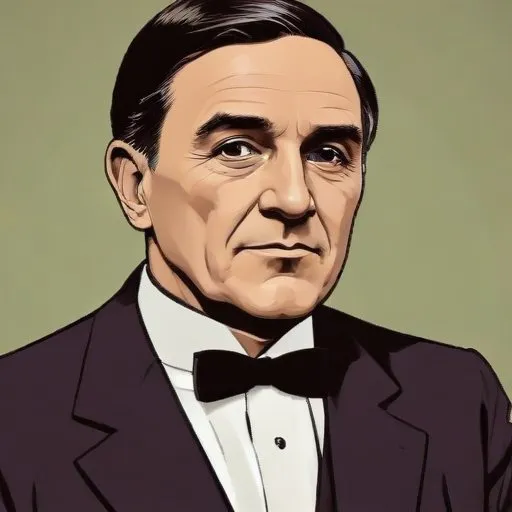
American businessman and diplomat who played a key role in shaping international relations and economic policies, particularly in the early 20th century. He was a prominent figure in the formation of the Council on Foreign Relations.
Francis L. Kellogg was a distinguished American diplomat who played a crucial role in shaping the country's foreign policy during the Nixon and Ford Administrations. As a special assistant to Secretaries of State William P. Rogers and Henry Kissinger, Kellogg's expertise and charisma earned him a prominent position in the world of international diplomacy.
Born on January 5, 1917, in Manhattan, Francis Leonard Kellogg was the son of Frank Leonard Kellogg and Emily Baker. His father, an executive vice president of the Electric Storage Battery Company, instilled in him a strong sense of diplomacy and public service. Kellogg graduated from Choate School and Princeton University, and later served in the United States Army during World War II.
Kellogg's diplomatic career spanned over two decades, during which he worked closely with some of the most influential figures in American politics. As Special Assistant to Secretaries of State William P. Rogers and Henry Kissinger, he played a key role in shaping the country's foreign policy. He also worked for the Central Intelligence Agency, further solidifying his reputation as a trusted advisor and strategist.
In 1942, Kellogg married Fernanda Wanamaker Munn, a great-granddaughter of John Wanamaker. The couple had two children, Fernanda Kellogg Henckels and Christopher Gage Kellogg, before divorcing in 1971. He later married Mercedes Tavacoli, who would later marry Sid Bass after their divorce in 1988.
Francis L. Kellogg's contributions to American foreign policy and diplomacy are undeniable. His expertise and charisma earned him a reputation as a trusted advisor and strategist, and his work continues to shape the country's international relations to this day. As a prominent socialite in New York City, Kellogg's social circle was a who's who of American politics and society.
While Kellogg's public statements were often shrouded in diplomacy, his private correspondence and conversations reveal a witty and insightful individual. In a letter to a friend, he once wrote, "Diplomacy is not about being liked, but about being respected."
In the tumultuous world of 20th-century politics, Francis L. Kellogg's steady hand and diplomatic prowess helped navigate some of the most significant international crises of the time. His legacy serves as a testament to the power of diplomacy and the importance of building strong relationships between nations.
Francis L. Kellogg passed away on April 6, 2006, at the age of 89, leaving behind a legacy that continues to inspire and inform American foreign policy to this day.
Born in 1863
Founded the pioneering automobile manufacturing company that revolutionized the industry with the assembly line production method, making cars more affordable and accessible to the masses.
Born in 1839
Founded the Standard Oil Company, revolutionizing the oil industry and amassing vast wealth, which he later used for philanthropic efforts. He's remembered for his business acumen and generosity.
Born in 1835
A self-made industrialist who amassed a vast fortune in the steel industry, then donated most of it to fund over 2,500 public libraries and other philanthropic endeavors.
Born in 1837
Founded a powerful banking dynasty and dominated corporate finance, shaping the American economy through strategic investments and mergers.
Born in 1858
A pioneering leader who championed progressive reforms, trust-busting, and conservation, earning a Nobel Peace Prize for mediating the Russo-Japanese War. He's also famous for his rugged outdoorsmanship and "big stick" diplomacy.
