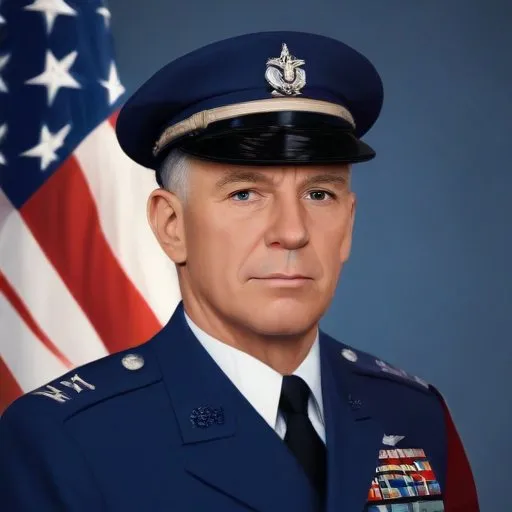
Francis W. Nye: The Distinguished Combat Pilot of World War II
A Legacy of Bravery and Innovation
Francis W. Nye was a renowned United States Air Force major general, celebrated for his exceptional combat piloting skills and pioneering achievements in the skies of World War II. As a B24 Liberator and B29 Superfortress combat pilot, Nye left an indelible mark on the history of military aviation, earning him a place among the most revered figures of the war.
Early Life and Education
Born on June 29, 1918, Nye graduated from Barton Academy in Vermont in 1936 and later earned a Bachelor of Science degree from the University of Vermont in 1941. His passion for flight led him to enlist as an Army Air Corps flight cadet, marking the beginning of his illustrious career.
Combat Missions and the Kickapoo II
Nye's remarkable combat record includes 36 missions with the 98th Bombardment Group, flying B17s and B24s from bases in Palestine, Egypt, and North Africa. His crew's aircraft, the Kickapoo II, was one of the first B29s to depart from Salina, Kansas, and arrive at Kharagpur, India, with stops in Presque Isle, Maine, Marrakech, Morocco, Cairo, Egypt, and Karachi, India. This aircraft was part of the original crew that flew several operational "over-the-hump" missions to Pengshan A7, a forward base in China.
Pioneering Feats and Milestones
- Nye flew the first mission by B29s to Bangkok, Thailand from Kharagpur on June 5, 1944.
- He flew the first mission from Pengshan A7 to Yawata, Japan on June 15, 1944.
- In August 1944, Nye flew the longest B29 mission over 4,000 miles (6,400 km) in World War II by any type of aircraft to Palembang, Sumatra, from a forward base at China Bay, Ceylon.
Post-War Career and Legacy
After the war, Nye continued to serve in the Air Force, ultimately becoming the commander of the Field Command, Defense Atomic Support Agency, at Sandia Base, New Mexico. His remarkable career was marked by numerous awards and honors, cementing his status as a legendary figure in military aviation.
Personal Milestones and Key Life Events
Nye's life was filled with significant milestones, including his graduation from the University of Vermont, his commission as a second lieutenant in 1942, and his eventual promotion to major general. His remarkable journey serves as an inspiration to future generations of military personnel and aviation enthusiasts alike.
Influence on Modern Society
Francis W. Nye's pioneering achievements in combat aviation have had a profound impact on modern society. His bravery and innovative spirit paved the way for future generations of military pilots, while his legacy continues to inspire new generations of aviation enthusiasts.
FAQ
What was Francis W. Nyes role in the United States Air Force?
Francis W. Nye served as a major general in the United States Air Force, playing a key role in the development of the countrys air defense system. He commanded the Air Defense Command and later served as the Deputy Commander of the North American Air Defense Command.
What were Francis W. Nyes contributions to air defense strategy?
Francis W. Nye made significant contributions to air defense strategy, developing and implementing innovative tactics and systems to protect the United States from aerial threats.
What awards did Francis W. Nye receive for his military service?
Francis W. Nye received numerous awards for his military service, including the Distinguished Service Medal, the Legion of Merit, and the Air Force Commendation Medal.
What was Francis W. Nyes role in the development of the F-106 Delta Dart?
Francis W. Nye played a key role in the development of the F-106 Delta Dart, an interceptor aircraft designed to counter Soviet bombers. He oversaw the testing and implementation of the aircraft, which became a vital component of the United States air defense system.
What was Francis W. Nyes view on the role of air power in modern warfare?
Francis W. Nye believed that air power was a crucial component of modern warfare, arguing that it provided a decisive advantage on the battlefield. He advocated for the development of advanced air defense systems and the integration of air power into overall military strategy.