


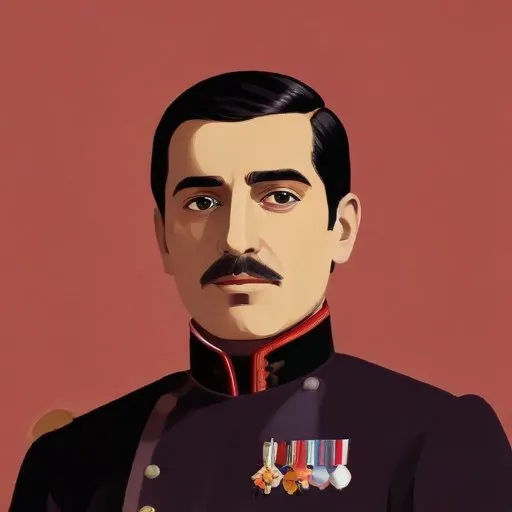
A Spanish nobleman and military leader who served as Viceroy of New Spain and played a key role in the Spanish colonization of the Americas. He's remembered for his administrative and military skills, which helped maintain Spanish control in the region.
Francisco Fernndez de la Cueva, 2nd Duke of Alburquerque, is renowned for his unwavering dedication to the Catholic Monarchs, Isabella I of Castile and Ferdinand V of Aragon, during the pivotal Wars of Granada.
As a skilled military commander and strategist, he fought alongside his father, Don Beltrn de la Cueva, 1st Duke of Alburquerque, to reclaim the Iberian Peninsula from the Moorish kingdom of Granada.
Born on August 25, 1467, Francisco was the son of Don Beltrn de la Cueva and Doa Menca Hurtado de Mendoza y Luna.
Through his marriage to Dona Francisca Alvarez de Toledo, daughter of Garca lvarez de Toledo, 1st Duke of Alba, he had four children, including his eldest daughter, Dona Menca de la Cueva y Alvarez de Toledo, who would go on to marry Don Pedro Fajardo y Chacn Manrique de Lara, 1st Marquess of los Vlez.
Francisco's military prowess earned him the respect of his contemporaries and the gratitude of the monarchs.
He played a crucial role in the conquest of the Moorish kingdom, participating in several key battles, including the siege of Mlaga and the capture of the Alhambra.
As the 2nd Duke of Alburquerque, Francisco held various titles and estates, including the counties of Ledesma and Huelma, as well as the lordship of Cullar, Mombeltrn, and Pedro Bernardo.
Francisco's legacy extends beyond his military achievements, as he is also the paternal grandfather of Don Francisco de la Cueva y Tllez-Girn, Alvarez de Toledo y de la Vega, who would become the 1st Marquess of Cullar in 1562.
Through his descendants, Francisco's name continues to be associated with nobility, military service, and dedication to the Spanish crown.
Francisco Fernndez de la Cueva, 2nd Duke of Alburquerque, lived during a tumultuous period in Spanish history, marked by the Reconquista and the consolidation of power by the Catholic Monarchs.
His life and achievements serve as a testament to the endurance and loyalty of the Spanish nobility during this transformative era.
Born in 1587
A powerful and influential advisor to King Philip IV of Spain, he implemented significant reforms and centralization policies, shaping the country's politics and economy.
Born in 1599
A renowned Spanish painter and educator, known for his masterful use of chiaroscuro and his iconic portraits of royalty, particularly the Spanish royal family.
Born in 1598
A master of chiaroscuro, he created dramatic, emotionally charged paintings of monks, saints, and still-life compositions that evoke a sense of quiet contemplation. His works are characterized by intense light and shadow, imbuing his subjects with a sense of spirituality.
