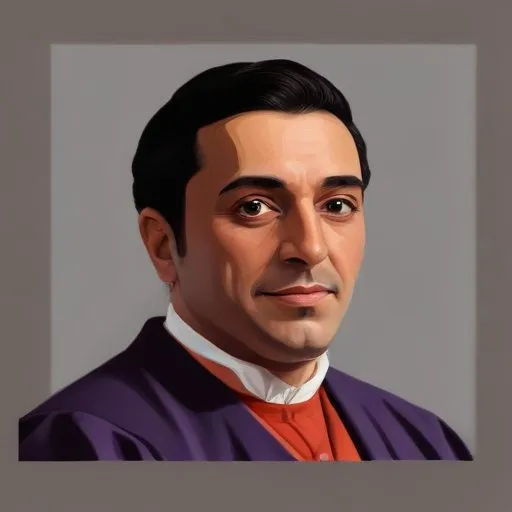
Francisco de Zurbarán

Francisco de Zurbarán

Francisco de Zurbarán was born on November 7th, 1598

Full Name: Francisco de Zurbarán
Place of Birth: Fuente de Cantos, Spain
Zodiac Sign: Leo
Profession: Painter
Style: Baroque
Notable Works: Still Life with Lemons, Oranges and a Rose
Influences: Caravaggio, Velázquez

A master of chiaroscuro, he created dramatic, emotionally charged paintings of monks, saints, and still-life compositions that evoke a sense of quiet contemplation. His works are characterized by intense light and shadow, imbuing his subjects with a sense of spirituality.

Written by: Isabel Sanchez Isabel Sanchez

  • Still Life with Lemons, Oranges, and a Rose (1633) - a stunning example of Zurbarn's ability to capture the play of light on everyday objects
  • The Crucifixion of Saint Peter (1627) - a powerful depiction of the martyrdom of Saint Peter, showcasing Zurbarn's mastery of chiaroscuro
  • Saint Bonaventura (1626) - a magnificent portrait of the saint, highlighting Zurbarn's skill in capturing the subtleties of human expression

Timeline
1598
Born in Fuente de Cantos
Francisco de Zurbarán was born on November 7, 1598, in Fuente de Cantos, Spain.
1614
Apprentices with Pedro Díaz
Zurbarán began his artistic training with Pedro Díaz de Villanueva in Seville.
1626
Establishes Workshop
He established his own workshop in Seville, producing works for the Spanish royal court.
1634
Paints The Apotheosis of St. Thomas
Zurbarán created his masterpiece, The Apotheosis of St. Thomas, showcasing his skill in tenebrism.
1664
Death in Madrid
Francisco de Zurbarán died on August 27, 1664, in Madrid, Spain.
Francisco de Zurbarán

Francisco de Zurbarán Quiz

What artistic technique is Francisco de Zurbarán known for mastering?

Score: 0/5
FAQ
What is Francisco de Zurbaráns most notable work?
Francisco de Zurbaráns most notable work is his series of paintings depicting the life of Saint Francis of Assisi, which are considered some of the greatest works of Spanish Baroque art.
What is Francisco de Zurbaráns painting style?
Francisco de Zurbaráns painting style is characterized by a dramatic use of light and shadow, intense emotionalism, and a strong sense of realism, which set him apart from his contemporaries.
Which artists influenced Francisco de Zurbarán?
Francisco de Zurbarán was influenced by several artists, including Caravaggio, Rembrandt, and Velázquez, whose work he studied and emulated in his own paintings.
What is Francisco de Zurbaráns contribution to Spanish art?
Francisco de Zurbaráns contribution to Spanish art is significant, as he helped to establish the countrys artistic identity and paved the way for future generations of Spanish painters.
How does Francisco de Zurbaráns work reflect his faith?
Francisco de Zurbaráns work reflects his deep Catholic faith, which is evident in the devotional intensity and sense of spirituality that permeate his paintings.

Related People:

Diego Velázquez

Born in 1599

A renowned Spanish painter and educator, known for his masterful use of chiaroscuro and his iconic portraits of royalty, particularly the Spanish royal family.

Francisco Goya

Born in 1746

A visionary artist who pioneered Romanticism, capturing the human experience through bold, emotionally charged paintings and sculptures that continue to inspire and unsettle.

Peter Paul Rubens

Born in 1577

A renowned Flemish painter and diplomat, famous for his vivid and emotive Baroque-style masterpieces, particularly his lush nudes and dramatic altarpieces.

Rembrandt

Born in 1606

A master of light and shadow, this 17th-century artist is renowned for his emotionally charged and deeply human portraits, landscapes, and biblical scenes that continue to captivate art lovers worldwide.