


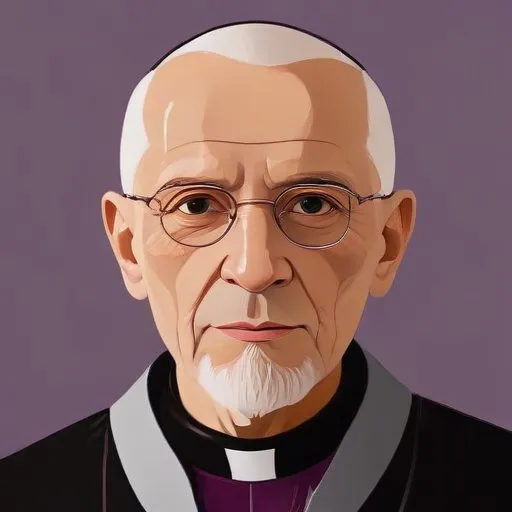
A Polish priest who founded the Light-Life Movement, a Catholic renewal movement that emphasized spiritual growth and evangelization, and was recognized by the Vatican for his heroic virtues.
Franciszek Blachnicki was a Polish Roman Catholic priest who founded the LightLife movement, also known as the Oasis Movement, and the Secular Institute of the Immaculate Mother of the Church. Through his tireless efforts, he addressed a range of social and ethical issues, including antialcoholism and human rights, leaving an indelible mark on Poland's spiritual landscape.
Born on March 24, 1921, in Upper Silesia, Germany, Franciszek was the seventh child of Józef Blachnicki and Maria Miller. He finished school in 1938 and soon found himself at the forefront of Poland's struggle against the invading German forces during World War II.
In September 1939, Franciszek participated in the campaign against the German army, but his involvement led to his arrest by the Gestapo on June 24, 1940. He was thrown into the notorious Auschwitz concentration camp as prisoner 1201, where he faced unimaginable hardships. Later, he was transferred to prisons in Zabrze and Katowice, where he was investigated and eventually sentenced to death on March 30, 1942, for conspiring against the Nazi regime.
Franciszek's experiences during World War II had a profound impact on his life and shaped his future mission. After the war, he began organizing retreats for altar servers and families, which eventually evolved into the LightLife movement. This movement addressed various social and ethical issues, including antialcoholism and human rights, which were critical concerns in Poland during the communist era.
Through his movements, Franciszek aimed to promote a culture of life, human dignity, and social responsibility. He founded several other religious congregations and movements, which continue to thrive today, inspiring countless individuals to work towards creating a more just and compassionate society.
Franciszek's concern for human rights was deeply rooted in his experiences during World War II. As a prisoner of war, he witnessed firsthand the atrocities perpetrated by the Nazi regime. This experience instilled in him a profound respect for human life and a commitment to promoting human dignity.
Throughout his life, Franciszek worked tirelessly to raise awareness about various social and ethical issues, including human rights, which were severely curtailed during the communist era in Poland. His movements provided a platform for people to come together, share their concerns, and work towards creating a more just and equitable society.
In the 1990s, Franciszek's beatification process began in Poland. On September 30, 2015, Pope Francis confirmed his heroic virtue, and he was titled Venerable. This recognition is a testament to Franciszek's unwavering commitment to his faith and his selfless service to humanity.
Today, Franciszek Blachnicki's legacy continues to inspire generations of Poles and people around the world. His movements remain a beacon of hope, promoting a culture of life, human dignity, and social responsibility. As we reflect on his life and works, we are reminded of the power of faith, compassion, and perseverance in the face of adversity.
"The most beautiful thing in life is to do good to others, because that is the essence of love."
"We must learn to love ourselves, not because we are good, but because we are loved by God."
These words, spoken by Franciszek Blachnicki, continue to inspire and guide us on our own journeys of faith and service.
Franciszek Blachnicki's life was a testament to the power of faith, compassion, and perseverance. As we reflect on his remarkable journey, we are reminded of the importance of promoting a culture of life, human dignity, and social responsibility.
Born in 1920
Leader of the Catholic Church from 1978 to 2005, known for helping to end communism in Poland and being a charismatic advocate for human rights and social justice.
Born in 1923
The last communist leader of Poland, who imposed martial law in 1981, but later helped transition the country to democracy. He's a symbol of Poland's complex political past.
96 Years Old
A prominent Catholic Church leader who served as the Archbishop of Warsaw and Gniezno, known for his influential role in Poland's transition from communism to democracy.
