


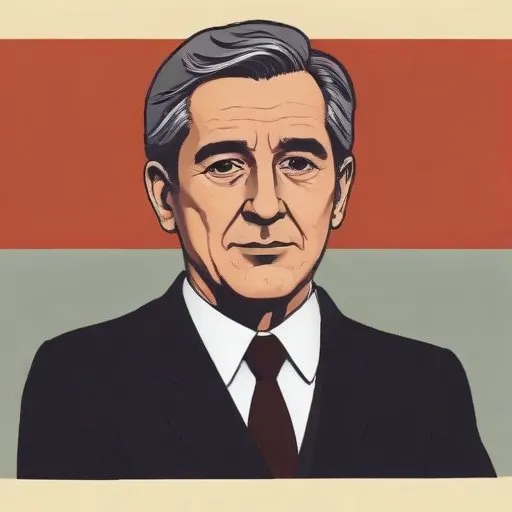
Australian lawyer and politician who investigated organized crime and corruption, leading to significant reforms in the country's law enforcement and judiciary.
Frank Costigan, a renowned Australian lawyer, and Royal Commissioner, is best known for presiding over the Costigan Commission into organized crime, which uncovered the dark underbelly of corruption and crime that plagued Australia in the 1980s. His tireless efforts to expose the truth and bring criminals to justice earned him a reputation as a champion of social justice.
Born on January 14, 1931, in Preston, a suburb of Melbourne, Costigan was one of eight children. He received his education from the Jesuits at St Patrick's College, East Melbourne, and later at the University of Melbourne, where he obtained a law degree.
The Costigan Commission, which ran from 1980 to 1984, was a royal commission established to investigate organized crime in Australia. As the commissioner, Costigan led the inquiry, which exposed widespread corruption and criminal activity, including links between organized crime and high-ranking government officials.
Costigan was the twin brother of Michael Costigan, a writer and editor, and an older brother of Peter Costigan, Lord Mayor of Melbourne from 1999 to 2001. He was described by Dally Messenger as a "truly decent person who persevered in the cesspool of politics because that is where the most good can be done for the most people."
Costigan's work on the Costigan Commission reflected his strong belief in the importance of social justice and his determination to expose corruption and bring criminals to justice. His efforts highlighted the need for greater transparency and accountability in government and the importance of protecting the rights of individuals.
Frank Costigan's legacy is that of a champion of social justice, who fearlessly took on the powerful and corrupt to bring about change. His work on the Costigan Commission paved the way for reforms in the Australian justice system and inspired a new generation of lawyers and social activists to fight for justice and accountability.
96 Years Old
Leader of the Australian Labor Party who served as Prime Minister from 1983 to 1991, known for his charismatic leadership and economic reforms.
82 Years Old
The 24th Prime Minister of Australia, a Labor Party leader who implemented significant economic reforms, including deregulation and privatization, and is known for his bold and charismatic leadership style.
64 Years Old
The first female Prime Minister of Australia, serving from 2010 to 2013, known for her progressive policies and leadership during a period of significant economic reform.
68 Years Old
The 26th Prime Minister of Australia, a diplomat, and leader who apologized to the Indigenous Australians for past injustices and played a key role in shaping the country's climate change policies.
68 Years Old
The 28th Prime Minister of Australia, a conservative leader who served from 2013 to 2015, known for his tough stance on immigration and climate change skepticism. He's also a Rhodes Scholar and athlete.
71 Years Old
Australian journalist and politician who served as the 29th Prime Minister of Australia, known for his leadership during a tumultuous period in Australian politics and his advocacy for progressive policies.
73 Years Old
A British singer-songwriter and pianist known for his emotive, poetic lyrics and soaring melodies, crafting introspective and atmospheric indie-pop soundscapes.
Born in 1916
The 21st Prime Minister of Australia, a lawyer, and lieutenant who introduced sweeping social and economic reforms, including universal healthcare and free education, and played a significant role in shaping the country's modern identity.
