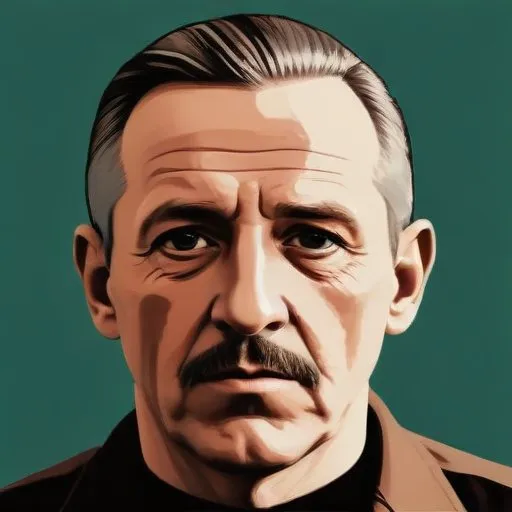
Frank Stagg: The Unwavering Irish Republican and Hunger Striker
A Life of Sacrifice and Conviction
Frank Stagg, a devoted Irish republican from County Mayo, Ireland, is remembered for his unrelenting commitment to the cause of Irish independence and his ultimate sacrifice through a 62-day hunger strike in 1976. As one of the 22 Irish republicans to die on hunger strike in the 20th century, Stagg's story is a testament to the enduring spirit of Irish nationalism.
Early Life and Influences
Born on October 4, 1941, in Hollymount, County Mayo, Stagg was the seventh child in a family of thirteen. His father, Henry, and uncle had fought in the Irish War of Independence and Irish Civil War, instilling in him a strong sense of patriotism and republicanism from a young age. Stagg's educational background consisted of primary schooling at Newbrook Primary School and secondary education at CBS Ballinrobe. After completing his education, he worked as an assistant gamekeeper with his uncle before emigrating to England in search of work.
The Road to Hunger Strike
In England, Stagg gained employment as a bus conductor in North London and later became a bus driver. It was during this period that he met and married Bridie Armstrong, a fellow Mayo native, in 1970. In 1972, Stagg joined the Luton cumann of Sinn Féin and soon became a volunteer in the Provisional Irish Republican Army (IRA). In April 1973, he was arrested along with six others, accused of planning bombing attacks in Coventry. Stagg was tried at Birmingham Crown Court, where he was found guilty of criminal damage and conspiracy to commit arson, receiving a ten-year sentence.
The Hunger Strike and Legacy
On February 12, 1976, Frank Stagg died in Wakefield Prison, West Yorkshire, England, after 62 days on hunger strike. His selfless act was a testament to his unwavering commitment to the cause of Irish independence and his refusal to be silenced by the British government. Stagg's sacrifice has become an iconic symbol of Irish republicanism, inspiring generations to continue the fight for freedom and self-determination.
Personal Milestones and Key Life Events
- 1941: Born on October 4th in Hollymount, County Mayo, Ireland
- 1970: Married Bridie Armstrong, a fellow Mayo native
- 1972: Joined the Luton cumann of Sinn Féin and became a volunteer in the Provisional IRA
- 1973: Arrested and sentenced to ten years in prison for criminal damage and conspiracy to commit arson
- 1976: Died on February 12th in Wakefield Prison, West Yorkshire, England, after 62 days on hunger strike
Influence on Modern Society
Frank Stagg's sacrifice has had a profound impact on modern Irish society, galvanizing support for the republican movement and inspiring a new generation of activists to continue the fight for Irish independence. His legacy serves as a powerful reminder of the enduring spirit of Irish nationalism and the importance of standing up against oppression.
Quotes and Memorable Sayings
"I will not be intimidated or broken by the British government's attempts to silence me."
— Frank Stagg, in a statement before his hunger strike
Historical Context and Legacy
Frank Stagg's story is set against the backdrop of the Troubles, a period of sectarian conflict and political unrest in Northern Ireland that spanned from the late 1960s to the late 1990s. His sacrifice, along with that of other Irish republicans, played a significant role in shaping the course of Irish history and continues to inspire and motivate those fighting for Irish independence today.
Comparative Analysis with Contemporaries
Frank Stagg's unwavering commitment to the cause of Irish independence and his ultimate sacrifice through hunger strike are reminiscent of the bravery and conviction of other notable Irish republicans, such as
Bobby Sands and
Michael Gaughan. While each of these individuals has their own unique story, they are united in their shared commitment to the cause of Irish freedom and self-determination.
FAQ
What is Frank Staggs background in Irish politics?
Frank Stagg was an Irish republican and hunger striker who was involved in the Irish independence movement in the late 1960s and early 1970s.
What was Frank Staggs role in the Irish hunger strikes?
Frank Stagg was one of the leaders of the Irish hunger strikes in the early 1970s, demanding better treatment and political status for Irish republican prisoners.
What was the outcome of Frank Staggs hunger strike?
Frank Staggs hunger strike ultimately resulted in his death in 1976, after 62 days without food. His sacrifice was seen as a significant event in the Irish republican movement and helped to galvanize support for the cause.
What was Frank Staggs view on the Irish republican movement?
Frank Stagg believed in the need for a united Ireland and was committed to the use of non-violent resistance to achieve this goal. He was a strong advocate for the rights of Irish republican prisoners and worked to raise awareness about their plight.
How is Frank Stagg remembered in Irish history?
Frank Stagg is remembered as a martyr and a hero in Irish history, symbolizing the struggle for Irish independence and self-determination. His sacrifice is still commemorated today, and he is seen as an inspiration to many in the Irish republican movement.