


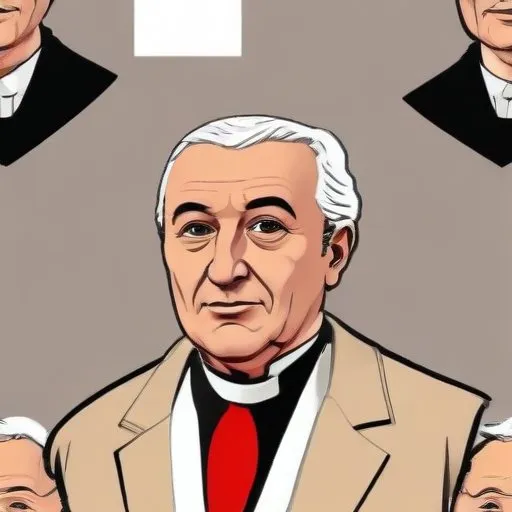
A French politician and diplomat who served as Minister of the Interior under King Louis XVI and later as ambassador to several European countries, known for his efforts to reform the French monarchy and his role in the French Revolution.
François Emmanuel Guignard, comte de Saint-Priest, was a renowned French politician and diplomat who played a pivotal role in the Ancien Régime and French Revolution. He is best known for his tenure as an ambassador to the Ottoman Empire, where he sponsored the reconstruction of Saint Pierre Han, a commercial facility for French and other European merchants.
Born on March 12, 1735, in Grenoble, Saint-Priest was admitted as a chevalier to the Order of Malta at the tender age of five. He went on to enter the army at fifteen and rose to the rank of colonel by 1763. After leaving active service, he represented the court of France in Portugal for four years.
In 1768, Saint-Priest was sent as an ambassador to the Ottoman Empire, a position he held with brief interruptions until 1784. During his tenure, he married Wilhelmina von Ludolf, the daughter of the ambassador of the Kingdom of Naples to the Sublime Porte. His experiences in the Ottoman Empire led him to write Mémoires sur l'ambassade de France en Turquie et le commerce des Français dans le Levant, which was published posthumously in 1877.
In 1788, Saint-Priest joined the ministry of Jacques Necker as a minister without portfolio. However, he was dismissed from his post in July 1789, only to be reinstated as the secrétaire d'état of the royal household, the Maison du Roi, in Necker's subsequent second cabinet. Later, in August 1790, he was appointed as the Ministre de l'Intérieur.
Saint-Priest's diplomatic career and writings provide valuable insights into the politics and commerce of the 18th century. His experiences in the Ottoman Empire and his observations on the French Revolution offer a unique perspective on a tumultuous period in history. Although he did not leave a lasting legacy in terms of philosophical contributions or public perception, his diplomatic work and writings remain an important part of French history.
Born in 1754
A master diplomat and strategist who navigated the treacherous waters of French politics during the Revolution and Napoleon's rise to power, shaping European history through cunning and wit.
Born in 1769
A French military leader who rose to prominence during the French Revolution and became Emperor of France, known for his military conquests and reorganization of Europe. He is also famous for his Napoleonic Code, which remains a foundation of modern law.
Born in 1767
Radical Jacobin leader during the French Revolution, known for his extreme views and role in the Reign of Terror.
Born in 1755
A key figure in the French Revolution, leading the coup that overthrew Maximilien Robespierre and later serving as a key advisor to Napoleon Bonaparte. He played a crucial role in shaping French politics during a tumultuous period.
Born in 1758
Radical leader of the French Revolution, instrumental in the Reign of Terror, and advocate for the execution of King Louis XVI.
Born in 1759
A leading figure of the French Revolution, instrumental in the overthrow of the monarchy and establishment of the First French Republic, known for his radical Jacobin ideology.
Born in 1760
French journalist and politician who sparked the French Revolution with his impassioned speeches and writings, advocating for democracy and social reform.
