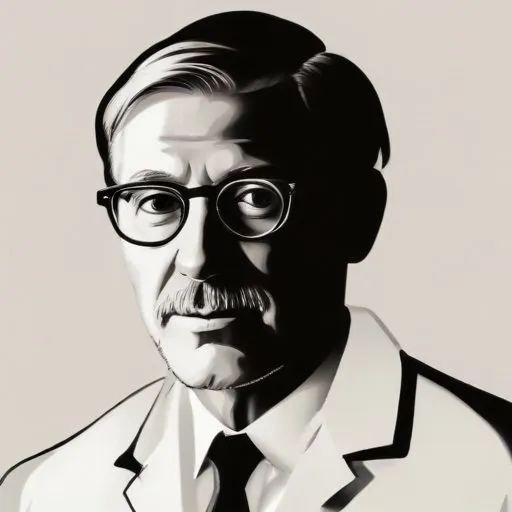
Fred Conrad Koch: Pioneering Biochemist and Endocrinologist
A Legacy of Discovery in Male Sex Hormones and Testicular Function
Fred Conrad Koch, a renowned American biochemist and endocrinologist, left an indelible mark on the scientific community with his groundbreaking research on male sex hormones and testicular function. His pioneering work in this field earned him recognition as a leading authority, and his contributions continue to influence modern scientific understanding.
Early Life and Education
Born on May 16, 1876, in Chicago, Illinois, Koch graduated from the University of Illinois in 1899. His academic pursuits laid the foundation for a distinguished career that would span several decades.
Academic Affiliations and Career Highlights
Koch's affiliation with the University of Chicago commenced in 1912, where he served as chairman of the department of biochemistry from 1936 to 1941. He retired as professor emeritus, and later became the director of biomedical research at Armour and Company. This illustrious career was punctuated by numerous accolades, including his tenure as the 19th president of the Endocrine Society.
Research Contributions and Impact
Koch's research focus on male sex hormones and testicular function led to significant breakthroughs, shedding light on the intricacies of human physiology. His work in this area has had a lasting impact on our understanding of human biology and has paved the way for further research.
The Fred Conrad Koch Lifetime Achievement Award
In 1957, the Endocrine Society established the Fred Conrad Koch Lifetime Achievement Award, the society's highest honor, in recognition of his exceptional contributions to the field. This award serves as a testament to Koch's enduring legacy, inspiring future generations of scientists to pursue excellence in endocrinology.
Legacy and Historical Context
Koch's contributions to the field of biochemistry and endocrinology occur within the broader context of early 20th-century scientific advancements. His work parallels the discoveries of contemporaries, such as
Ernest Starling and
Edward Calvin Kendall, who also made significant strides in understanding hormones and their functions.
Personal Milestones and Key Life Events
Koch's life was marked by several key milestones, including his retirement as professor emeritus in 1941 and his subsequent directorship of biomedical research at Armour and Company. He passed away on January 26, 1948, leaving behind a legacy of scientific inquiry and discovery.
Influence on Modern Society
Koch's research has far-reaching implications for modern society, influencing fields such as medicine, biology, and pharmacology. His work has contributed to the development of treatments for hormonal disorders and has informed our understanding of human physiology.
Quotes and Memorable Sayings
Although there are no recorded quotes from Koch, his life's work speaks to his dedication to scientific inquiry and his passion for advancing human knowledge.
Trivia and Fun Facts
- Koch's affiliation with the University of Chicago spanned nearly three decades.
- He served as the director of biomedical research at Armour and Company, a prominent food and pharmaceutical company.
Conclusion
Fred Conrad Koch's remarkable career has left an indelible mark on the scientific community. His pioneering research in male sex hormones and testicular function has paved the way for future generations of scientists, ensuring his legacy as a trailblazer in the field of biochemistry and endocrinology.
FAQ
What was Fred Conrad Kochs most significant discovery in biochemistry?
Fred Conrad Kochs most significant discovery in biochemistry was the isolation and characterization of insulin, a hormone that regulates blood sugar levels.
What was Fred Conrad Kochs role in the development of endocrinology?
Fred Conrad Koch was a leading figure in the development of endocrinology, making significant contributions to our understanding of hormone biology and their role in human health.
What was Fred Conrad Kochs work on the thyroid gland about?
Fred Conrad Kochs work on the thyroid gland involved the isolation and characterization of thyroid hormones, including thyroxine and triiodothyronine.
What was Fred Conrad Kochs relationship with the University of Chicago?
Fred Conrad Koch was a professor of biochemistry at the University of Chicago, where he conducted much of his research and taught several generations of students.
What is Fred Conrad Kochs legacy in biochemistry and medicine?
Fred Conrad Kochs legacy in biochemistry and medicine is one of innovation, perseverance, and a commitment to advancing our understanding of human physiology and disease.