


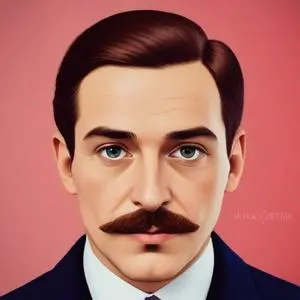
Discovered hormones of the adrenal gland, including cortisone, and developed a treatment for rheumatoid arthritis. His work revolutionized the field of endocrinology and saved countless lives.
Edward Calvin Kendall, a renowned American biochemist, is best known for his groundbreaking work on the hormones of the adrenal glands, which earned him the prestigious Nobel Prize in Physiology or Medicine in 1950. Alongside Swiss chemist Tadeusz Reichstein and Mayo Clinic physician Philip S. Hench, Kendall's pioneering research paved the way for a deeper understanding of the human body's intricate hormonal balance.
Born on March 8, 1886, in South Norwalk, Connecticut, Kendall's fascination with science led him to pursue higher education at Columbia University. He earned his Bachelor of Science degree in 1908, followed by a Master of Science degree in Chemistry in 1909, and finally, a Ph.D. in Chemistry in 1910.
Kendall's research career spanned several decades, with his first job at Parke, Davis and Company, where he isolated the hormone associated with the thyroid gland. He continued his research at St. Luke's Hospital in New York until 1914, before joining the Graduate School of the Mayo Foundation as the Head of the Biochemistry Section. In 1915, he became the Director of the Division of Biochemistry, a position that allowed him to delve deeper into his passion for biochemistry.
Kendall's most notable achievements include:
Kendall's outstanding contributions to biochemistry and medicine earned him the Nobel Prize in Physiology or Medicine in 1950. In addition to this prestigious award, Kendall Elementary School in Norwalk, Connecticut, was named in his honor.
After retiring from the Mayo Foundation, Kendall joined the faculty at Princeton University, where he remained until his passing on May 4, 1972. Throughout his life, Kendall's dedication to biochemistry and medicine left an indelible mark on the scientific community, inspiring future generations of researchers and scientists.
Kendall's legacy extends beyond his scientific achievements, as his work continues to influence modern medicine and our understanding of the human body. His pioneering spirit and passion for discovery serve as a testament to the power of human curiosity and the importance of advancing scientific knowledge.
Born in 1897
A Polish-Swiss chemist and academic who discovered vitamin C and developed a method for its industrial production, earning a Nobel Prize in Physiology or Medicine in 1937.
66 Years Old
An American wrestler who won an Olympic gold medal in freestyle wrestling at the 1904 Summer Olympics. He was a dominant force in the sport during the early 20th century.
Born in 1906
A Croatian-Swiss chemist and academic who pioneered research in organic chemistry, particularly in the field of stereochemistry, and was awarded the Nobel Prize in Chemistry in 1975.
Born in 1918
Organic chemist and Nobel laureate who developed a new way to synthesize complex molecules, revolutionizing the field of chemistry. His work led to the creation of new medicines and materials.
Born in 1897
A Norwegian chemist and academic who pioneered the study of molecular structure, particularly the three-dimensional shape of molecules, and was awarded the Nobel Prize in Chemistry in 1969.
Born in 1912
A renowned chemist and academic who discovered and isolated ten transuranic elements, including plutonium, and was a leading figure in the development of nuclear energy. His work had a profound impact on our understanding of the periodic table and the properties of atomic nuclei.
Born in 1901
Pioneering chemist and peace activist who won two unshared Nobel Prizes, one for chemistry and one for peace, for his groundbreaking work on the nature of the chemical bond and his tireless efforts to promote nuclear disarmament.
