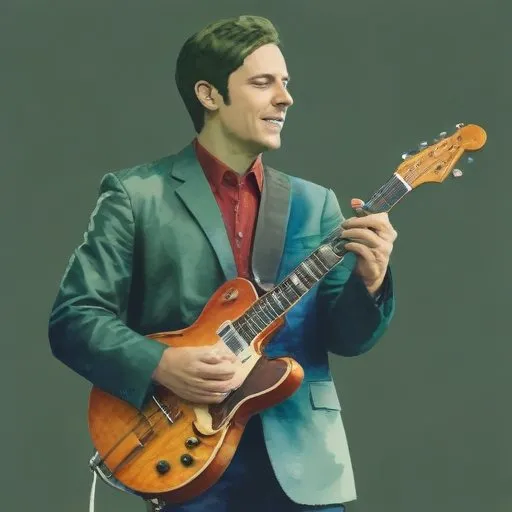
The Rhythm Master: Freddie Green's Enduring Legacy in Jazz
The Pivotal Fixure of the Count Basie Band
Freddie Green, the American swing jazz guitarist, is renowned for his exceptional skill in playing rhythm guitar, accompanying other musicians, and rarely taking solos. His remarkable timing and flowing sense of harmony helped establish the role of the rhythm guitar as an essential part of every rhythm section, making him an indispensable component of the
Count Basie Orchestra for nearly five decades.
Early Life and Education
Born on March 31, 1911, in Charleston, South Carolina, Green was exposed to music from a young age. He learned the banjo before picking up the guitar in his early teenage years. A family friend,
Sam Walker, taught Freddie to read music and encouraged him to continue playing the guitar. This early start laid the foundation for his future success.
The Move to New York City
After his parents' passing, Green moved to New York City to live with his aunt and pursue his education. This relocation opened up a new musical world to him, and he began playing in clubs around the city, earning a reputation and income.
Discovery by John H. Hammond
Green's talent was soon noticed by the legendary talent scout John H. Hammond, who introduced him to Count Basie. In 1937, Basie attended one of Green's gigs and was immediately impressed, offering him a job on the spot. Except for a brief interruption, Freddie Green remained a pivotal fixture of the Count Basie Band for the next fifty years.
Philosophy and Approach
Green's approach to music was unique. He believed that "you should never hear the guitar by itself. It should be part of the drums, so it sounds like the drummer is playing chords... like the snare is in A or the hi-hat in D minor." This philosophy guided his playing style, blending seamlessly with the rhythm section to create a rich, harmonious sound.
Career Highlights
Throughout his long and illustrious career, Green played with some of the greatest jazz musicians of all time, including
Duke Ellington,
Benny Goodman, and
Ella Fitzgerald. His collaborations with Basie resulted in numerous iconic recordings, such as "April in Paris" and "One O'Clock Jump."
Influence on Modern Society
Freddie Green's contributions to jazz have had a profound impact on modern society. His work has inspired generations of musicians, from legends like
Wes Montgomery to modern virtuosos like
Pat Metheny. His legacy continues to shape the sound of jazz, rock, and pop music today.
Awards and Honors
Green's remarkable career has been recognized with numerous awards and honors, including a Grammy Lifetime Achievement Award and induction into the Jazz Hall of Fame.
Personal Milestones
Despite his immense talent and success, Green remained humble and dedicated to his craft. He continued to play and record with the Count Basie Orchestra until his passing on March 1, 1987, leaving behind a rich legacy that continues to inspire and influence musicians to this day.
Quotes and Memorable Sayings
- "You should never hear the guitar by itself. It should be part of the drums, so it sounds like the drummer is playing chords... like the snare is in A or the hi-hat in D minor."
Historical Context and Legacy
Freddie Green's contributions to jazz have earned him a place among the pantheon of great guitarists. His dedication to his craft and his commitment to the Count Basie Orchestra have left an indelible mark on the genre. As a testament to his legacy, Green's music continues to be celebrated and enjoyed by audiences around the world.