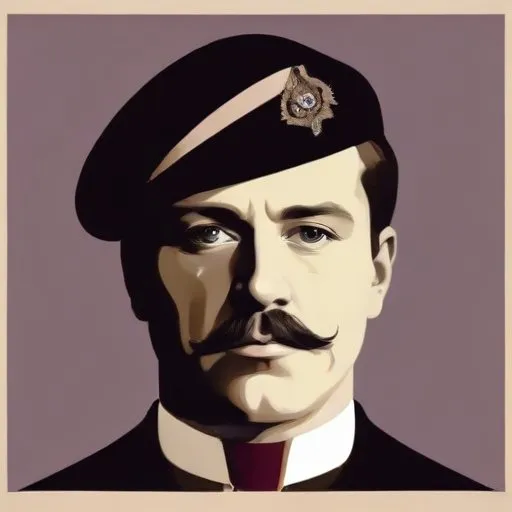
Frederick Adolf: The Visionary Swedish Explorer
A Life of Adventure and Discovery
Frederick Adolf, a Swedish explorer and naval officer, is best known for his remarkable journey as the first European to navigate the Amazon River from source to sea. This extraordinary feat, accomplished in 1756, marked a significant milestone in the history of exploration and opened up new avenues for scientific discovery.
Early Life and Career
Born on May 18, 1731, in Stockholm, Sweden, Adolf demonstrated a keen sense of adventure from an early age. He joined the Swedish Navy at 15 and quickly rose through the ranks, becoming a lieutenant by the age of 20. His naval career took him to various parts of the world, including the Mediterranean and the Caribbean, where he gained valuable experience and knowledge that would later serve him well on his Amazonian expedition.
The Amazonian Odyssey
In 1754, Adolf set out on his historic journey, commissioned by the Swedish government to explore the Amazon River and gather information on its geography, native populations, and natural resources. Accompanied by a small team of men, he navigated the treacherous waters of the Amazon, overcoming countless obstacles and challenges along the way. The expedition took almost two years to complete, during which time Adolf and his team collected vast amounts of data, including maps, botanical specimens, and anthropological observations.
Cartographic Contributions
Adolf's expedition produced some of the most accurate and detailed maps of the Amazon River and its tributaries. His cartographic work was instrumental in shaping the understanding of the region's geography and played a significant role in the development of modern navigation. Today, his maps are still studied by historians and geographers, providing valuable insights into the region's history and evolution.
Legacy and Impact
Frederick Adolf's expedition had far-reaching consequences, not only for the scientific community but also for the indigenous populations of the Amazon region. His writings and observations provide a unique glimpse into the lives of the native peoples he encountered, offering valuable insights into their cultures, customs, and ways of life. Adolf's legacy extends beyond his own lifetime, inspiring generations of explorers, scientists, and adventurers to follow in his footsteps.
- Adolf's expedition marked the beginning of a new era in Amazonian exploration, paving the way for future expeditions and scientific studies.
- HIs work influenced the development of modern navigation, contributing to the creation of more accurate maps and navigation tools.
- His observations on the indigenous populations of the Amazon region provided valuable insights into their cultures and ways of life, contributing to a greater understanding of the region's rich cultural heritage.
Personal Milestones and Key Life Events
* 1731: Born on May 18th in Stockholm, Sweden
* 1746: Joined the Swedish Navy at the age of 15
* 1754: Set out on his historic Amazonian expedition
* 1756: Completed his expedition, becoming the first European to navigate the Amazon River from source to sea
* 1760: Published his account of the expedition, which became a bestseller in Europe
Philosophical Contributions and Beliefs
Adolf's expedition and writings reflect his deep curiosity about the natural world and his commitment to scientific inquiry. He believed in the importance of exploration and discovery, recognizing that these pursuits could lead to a greater understanding of the world and its many wonders. His work embodies the spirit of adventure and inquiry that defines the era of Enlightenment.
Influence on Modern Society
Frederick Adolf's expedition and legacy continue to inspire people around the world. His contributions to cartography, geography, and anthropology have had a lasting impact on our understanding of the Amazon region and its indigenous populations. Today, his story serves as a testament to the power of human curiosity and the importance of exploration and discovery.
In conclusion, Frederick Adolf's remarkable journey and achievements have left an indelible mark on the history of exploration and scientific discovery. His legacy continues to inspire and motivate people to this day, reminding us of the importance of pushing beyond the boundaries of human knowledge and understanding.