


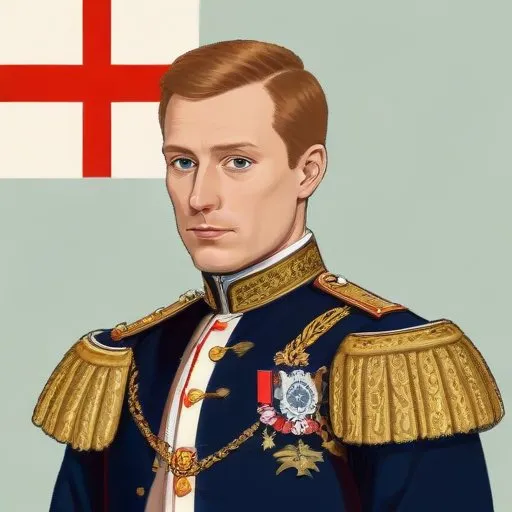
King of Denmark and Norway from 1559 to 1588, known for his military campaigns and territorial expansions, including the Livonian War. He strengthened the Danish monarchy and established a strong economy.
Known for his military prowess, architectural innovations, and passion for learning, Frederick II of Denmark was a ruler who left an indelible mark on the history of Scandinavia. He reigned as King of Denmark and Norway from 1559 until his death in 1588, and his legacy continues to inspire and fascinate historians and enthusiasts alike.
Born on July 1, 1534, Frederick II was a member of the House of Oldenburg, a powerful dynasty that ruled Denmark and Norway. He inherited the throne at the tender age of 24, following the death of his father, King Christian III. The young king was determined to make his mark, and he began his reign by launching a successful campaign to reconquer Dithmarschen, a region that had long been a thorn in the side of Danish monarchs.
Fredrick II's military campaigns were marked by a mix of belligerence and prudence. He was driven by a sense of national pride and a desire to expand Denmark's borders, but he was also aware of the limitations of his resources and the need for caution. The Northern Seven Years War, which lasted from 1563 to 1570, was a costly and bloody conflict that drained Denmark's treasury and forced Frederick to reevaluate his foreign policy. He eventually adopted a more cautious approach, focusing on diplomacy and strategic alliances rather than military conquest.
Fredrick II was a Renaissance man, with a deep love for architecture, science, and the arts. He was a patron of the learned and a supporter of the sciences, and his court attracted scholars and intellectuals from across Europe. During his reign, he commissioned numerous building projects, including the magnificent Kronborg Castle at Elsinore and Frederikborg Castle at Hillerød. These grand structures, with their intricate stonework and ornate decorations, continue to inspire wonder and awe to this day.
In 1572, Frederick II married his cousin, Sophie of Mecklenburg, and the couple had a happy and fulfilling relationship. The king was known for his loyalty and generosity towards his friends and family, and he was particularly close to his son, Christian IV, who would go on to become one of Denmark's most beloved monarchs.
Fredrick II's reign was marked by a period of relative tranquility, during which Denmark experienced a period of economic growth and cultural flourishing. He was a just and fair ruler, who worked tirelessly to promote the welfare of his people and to strengthen the institutions of the state. Despite his reputation for being hot-headed and impulsive, Frederick II was a shrewd and intelligent leader, who left a lasting legacy that continues to shape the destiny of Scandinavia.
For centuries, Frederick II was maligned by historians, who portrayed him as a brutish and inebriated ruler. However, recent scholarship has revealed a more nuanced and complex figure, who was driven by a passion for learning and a desire to promote the welfare of his people. This reappraisal has shed new light on the reign of Frederick II, and has helped to cement his place as one of Denmark's most important and influential monarchs.
In conclusion, Frederick II of Denmark was a multifaceted and fascinating figure, who left an indelible mark on the history of Scandinavia. His military campaigns, architectural innovations, and passion for learning continue to inspire and fascinate, and his legacy serves as a reminder of the power of visionary leadership and the importance of promoting the welfare of the people.
Born in 1749
King of Denmark and Norway from 1766 to 1808, known for his mental health issues and scandals, which led to a regency that ruled in his place.
Born in 1609
King of Denmark and Norway from 1648 to 1670, known for establishing absolute monarchy and modernizing Denmark's administration.
Born in 1818
The King of Denmark who unified the country and founded the modern Danish monarchy, known for his strong leadership and family ties to European royal houses.
Born in 1818
The King of Denmark who unified the country and founded the modern Danish monarchy, known for his strong leadership and family ties to European royal houses.
Born in 1416
King of Denmark, Norway, and Sweden in the 15th century, known for uniting Scandinavian countries under a single rule. He played a crucial role in shaping the region's politics and history.
