


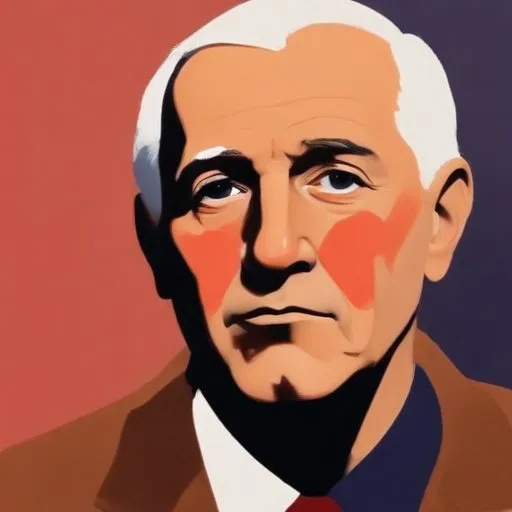
A Swiss-American painter known for his vivid depictions of American landscapes and seascapes, particularly in the Hudson River School style. His works often featured serene, idyllic scenes of nature.
Frederick Ruple, a Swiss-American painter, is renowned for his vibrant portraits and breathtaking murals that transport viewers to the heart of American history. His most iconic work, "The Spirit of '89," captures the essence of the Oklahoma Land Run of 1889, a pivotal moment in the country's westward expansion.
Born on September 19, 1871, in Unterhallau, Switzerland, Ruple's early life was marked by turmoil. His parents, Hermann Rupli and Barbara Neukomm, divorced when he was just three years old. In 1885, his mother relocated to Basel, where Ruple became an apprentice to an artificial limb manufacturer at the tender age of 14.
However, his passion for art soon took hold, and he began training as a photographer with Emil Gassler in Basel. This experience laid the foundation for his future success as a painter.
In 1891, Ruple immigrated to America with his mother, where he settled in Cincinnati and began to hone his craft as a painter. His big break came when an art dealer discovered his work, recognizing the young artist's talent and potential.
Ruple's rise to prominence was marked by his commissions to paint Confederate Civil War battle scenes and murals. His work took him to Arkansas and Oklahoma, where he studied American Indians and early settlers in the Midwest. These experiences greatly influenced his art, imbuing it with a deep sense of historical context and authenticity.
Ruple's murals, often commissioned by builders and decorators, adorned public buildings across America. His work in this medium was among the most prominent in the country, earning him recognition as a master of his craft.
One of his most famous murals, "The Spirit of '89," is a testament to his skill and artistry. This magnificent piece captures the energy and excitement of the Oklahoma Land Run, a pivotal moment in American history.
Frederick Ruple's contributions to American art are undeniable. His paintings and murals have preserved the country's rich history, making it accessible to generations to come.
Through his work, Ruple has inspired countless artists, historians, and enthusiasts alike. His legacy serves as a reminder of the power of art to capture the essence of human experience and to transcend time.
Frederick Ruple's remarkable life and artistry have left an indelible mark on American history. His paintings and murals continue to inspire and educate, ensuring his legacy as a master artist and historian.
Born in 1840
A founder of Impressionism, capturing fleeting light and color in dreamy landscapes and water scenes, revolutionizing modern art.
Born in 1841
A pioneer of Impressionism, creating vibrant, intimate portraits and landscapes that capture the beauty of everyday life. His works evoke a sense of joy and warmth, celebrating the human experience.
Born in 1830
A Danish-French Impressionist painter who captured the beauty of landscapes and cityscapes with vivid colors and bold brushstrokes, influencing the development of modern art.
Born in 1839
A post-Impressionist pioneer, he's famous for his still-life compositions and landscapes that laid the groundwork for Cubism, influencing 20th-century art.
Born in 1869
A pioneering artist who revolutionized modern art with bold, expressive, and colorful works that blurred the lines between painting and sculpture, creating a new language of form and color.
Born in 1881
A pioneering artist who transformed modern art with pioneering Cubist works, creating a new visual language that continues to inspire and influence art, design, and culture.
Born in 1904
A renowned surrealist master of bizarre, dream-like paintings and sculptures that blur reality and fantasy, known for iconic works like "The Persistence of Memory" and "The Elephants".
Born in 1898
A Belgian surrealist painter who challenged perceptions by depicting everyday objects in unexpected contexts, creating thought-provoking and witty visual paradoxes.
