


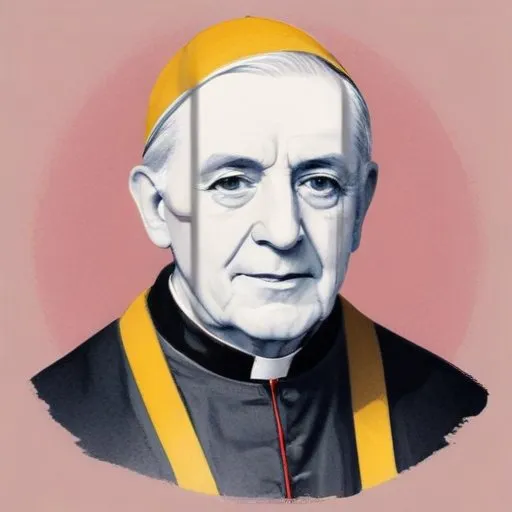
An influential figure in the Church of England, he served as Archbishop of Canterbury and was a prominent academic, known for his contributions to Christian theology and education.
Frederick Temple, a renowned English academic, teacher, and churchman, left an indelible mark on the Anglican Church and the world of education. He served as Bishop of Exeter, Bishop of London, and eventually, Archbishop of Canterbury, cementing his position as a prominent figure in the ecclesiastical hierarchy.
Born on November 30, 1821, in Santa Maura, one of the Ionian Islands, Temple's early life was shaped by his family's strong roots in the Church of England. His grandfather, William Johnson Temple, was a rector, and his father, Major Octavius Temple, later became the lieutenant-governor of Sierra Leone. Temple's parents envisioned a life of farming for their son, but his academic prowess led him to Blundells School, Tiverton, where he excelled in both academics and physical activities like walking.
Temple's intellectual curiosity earned him a Blundell scholarship at Balliol College, Oxford, before he turned 17. At Oxford, he was drawn to the Oxford Liberal Movement, which was heavily influenced by the Tractarian Movement. In 1842, he achieved a double first and was elected fellow of Balliol, as well as lecturer in mathematics and logic. His interest in theology led him to be ordained in 1846.
Temple's career was marked by his passion for education and his commitment to improving the lives of the poor. In 1850, he became the head of Kneller Hall, a college established to train masters of workhouses and penal schools. Although the experiment was short-lived, it laid the groundwork for his future endeavors. Temple then served as a school inspector until 1858, when he joined Rugby School as a teacher.
During his tenure at Rugby, Temple's reputation as a dedicated educator and theologian grew. He attracted the attention of Prince Albert of Saxe-Coburg-Gotha, who appointed him Chaplain-in-Ordinary in 1856. This appointment marked the beginning of Temple's rapid ascension through the ranks of the Anglican Church.
In 1869, Temple was consecrated as Bishop of Exeter, a position he held until 1885. He then served as Bishop of London from 1885 to 1896, before being enthroned as Archbishop of Canterbury in 1896. During his tenure, Temple championed various causes, including education, social reform, and ecumenism.
Temple's later life was marked by his tireless efforts to promote Christian unity and social justice. He played a crucial role in the formation of the Lambeth Conferences, which sought to bring together bishops from around the world to discuss pressing issues facing the Church.
Frederick Temple's legacy extends far beyond his impressive career trajectory. He was a champion of education, a passionate advocate for the poor, and a devoted servant of the Church. Through his writings, teachings, and leadership, Temple inspired generations of clergy, educators, and social reformers.
In recognition of his contributions, Temple was awarded numerous honors, including a Doctor of Divinity degree from Oxford University. His life serves as a testament to the power of faith, education, and leadership, inspiring future generations to follow in his footsteps.
"The Church is not a castle, but a camp; not a place of shelter, but a place of conquest."
"The Gospel is not a theory, but a fact; not a speculation, but a revelation."
These quotes, among others, capture the essence of Temple's theology and his commitment to spreading the message of Christ.
Born in 1821
An influential figure in the Church of England, he served as Archbishop of Canterbury and was a prominent academic, known for his contributions to Christian theology and education.
Born in 1848
Scottish archbishop who served as the Archbishop of Canterbury from 1903 to 1928, playing a key role in shaping the Church of England's response to social and theological issues.
Born in 1909
The 101st Archbishop of York, a prominent figure in the Church of England, known for his efforts to modernize the church and his role in the ordination of women as priests.
