


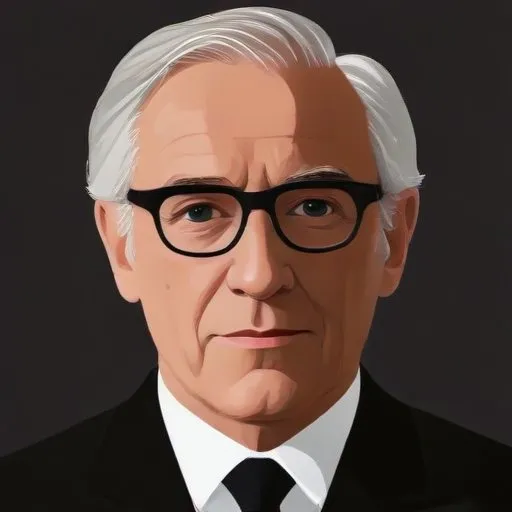
The 5th Prime Minister of New Zealand, serving from 1863 to 1864, known for his role in shaping the country's early government and politics. He was a prominent lawyer and politician in his time.
Sir Frederick Whitaker is renowned for his dual premierships of New Zealand and his six stints as Attorney-General, leaving an indelible mark on the country's political landscape. With a career spanning multiple decades, Whitaker's tenacity and dedication to public service earned him a revered position in New Zealand's history.
Born on April 23, 1812, at the Deanery Manor House, Bampton, Oxfordshire, England, Whitaker was the son of Frederick Whitaker and Susanna Whitaker (née Humfrey). He undertook a legal education, becoming a solicitor and attorney at the age of 27. A year later, he set sail for Australia and eventually New Zealand, where he would shape the nation's political destiny.
Whitaker's political ascent began when he was appointed a County Court judge, a position he held until its abolition in 1844. He then returned to his law practice, only to be appointed to the General Legislative Council in 1845. This marked the beginning of his illustrious career, which would see him hold multiple offices, including the Auckland Provincial Council and the Legislative Council of New Ulster Province.
In 1856, Whitaker became the first Attorney-General of New Zealand in the Sewell Ministry, led by Henry Sewell. He went on to serve in this position under multiple ministries, including the Stafford Ministry. His dual role as Attorney-General and Premier cemented his status as a shrewd politician, capable of navigating the complexities of New Zealand's early government.
Whitaker's extensive public service has had a lasting impact on New Zealand's development. His contributions to the country's early government and legal system have shaped the nation's institutional framework. His legacy extends beyond politics, with his influence still felt in the country's social and cultural fabric.
Whitaker's commitment to public service and his country's development reflects his dedication to the principles of democracy and the rule of law. His lengthy career is a testament to his unwavering belief in the importance of effective governance and the role of politics in shaping society.
Sir Frederick Whitaker's remarkable career has earned him a revered place in New Zealand's history. His contributions to the country's development, coupled with his dedication to public service, have left an indelible mark on the nation's political landscape.
Today, Whitaker's legacy serves as a beacon for future generations of politicians and public servants, inspiring them to emulate his commitment to democracy, governance, and the welfare of society.
Born in 1819
A Scottish-New Zealand educator and politician who served as the 3rd Prime Minister of New Zealand, known for his contributions to the country's early development and education system.
Born in 1879
Founded the Fox Film Corporation and Fox Theatres, a pioneering figure in the early days of Hollywood, revolutionizing the film industry with innovative production and distribution techniques. He played a crucial role in shaping the cinematic landscape.
Born in 1807
First Prime Minister of New Zealand, instrumental in the country's early development and self-governance. He played a key role in shaping the nation's constitution and parliamentary system.
Born in 1823
The 6th Prime Minister of New Zealand, a pioneering figure in the country's early development, known for his role in shaping its governance and economy. He played a crucial part in the abolition of provincial governments, centralizing power and modernizing the nation.
