


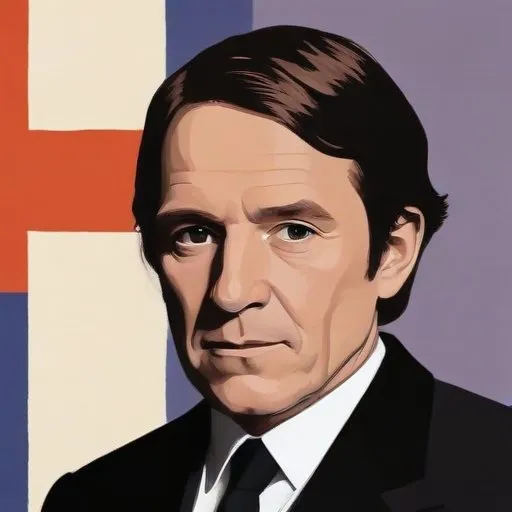
The 6th Prime Minister of New Zealand, a pioneering figure in the country's early development, known for his role in shaping its governance and economy. He played a crucial part in the abolition of provincial governments, centralizing power and modernizing the nation.
Sir Frederick Aloysius Weld is renowned for his remarkable career as a politician and colonial administrator, serving as the sixth Prime Minister of New Zealand, Governor of Western Australia, Governor of Tasmania, and Governor of the Straits Settlements.
Throughout his illustrious career, Weld demonstrated an unwavering commitment to the development and progress of the colonies, earning him a revered status in the annals of Oceania and Southeast Asian history.
Born on May 9, 1823, near Bridport, Dorset, England, Weld was the product of a distinguished Roman Catholic family. His mother, Christina Maria Clifford, was the daughter of Baron Clifford of Chudleigh, while his father, Humphrey Weld of Chideock, belonged to the esteemed Weld family.
Weld's early years were spent in the Restored Kingdom of France, where he developed a strong foundation in the Roman Catholic faith. He later received a solid education at Stonyhurst College, followed by studies in philosophy, chemistry, European languages, and law at the University of Fribourg in Switzerland.
In 1844, Weld arrived in Wellington, Colony of New Zealand, where he established a partnership with his cousin, Charles Clifford. Together, they founded several successful sheep stations, and Weld's business acumen earned him a reputation as a prosperous entrepreneur.
However, Weld soon grew disenchanted with the mundane life of agricultural management and became actively involved in politics. He passionately campaigned against discrimination against Roman Catholics in New Zealand and lobbied for representative government in the colony.
Sir Frederick Aloysius Weld's remarkable career left an indelible mark on the development of Oceania and Southeast Asia. His tireless efforts to promote progress, equality, and representative government continue to inspire generations of leaders and citizens alike.
Weld's unwavering commitment to his faith, his people, and his colonies has cemented his place as one of the most distinguished figures in colonial history.
Sir Frederick Aloysius Weld's contributions to the development of Oceania and Southeast Asia continue to shape the modern socio-political landscape of these regions. His commitment to representative government, equality, and progress remains an inspiration to leaders and citizens today.
As we reflect on Weld's remarkable legacy, we are reminded of the profound impact one individual can have on the course of history.
Born in 1835
A pioneering journalist and politician who played a key role in shaping New Zealand's early history, particularly in the fields of education and women's suffrage.
Born in 1813
The 9th Prime Minister of New Zealand, serving from 1876 to 1882, known for his efforts to strengthen the country's economy and infrastructure. He implemented policies to promote trade, immigration, and public works.
Born in 1812
A Portuguese-New Zealand soldier, explorer, and politician who served as the 11th Prime Minister of New Zealand, known for his governance and exploration of the country. He played a significant role in shaping New Zealand's early history.
Born in 1819
A Scottish-New Zealand educator and politician who served as the 3rd Prime Minister of New Zealand, known for his contributions to the country's early development and education system.
Born in 1879
Founded the Fox Film Corporation and Fox Theatres, a pioneering figure in the early days of Hollywood, revolutionizing the film industry with innovative production and distribution techniques. He played a crucial role in shaping the cinematic landscape.
Born in 1807
First Prime Minister of New Zealand, instrumental in the country's early development and self-governance. He played a key role in shaping the nation's constitution and parliamentary system.
Born in 1812
The 5th Prime Minister of New Zealand, serving from 1863 to 1864, known for his role in shaping the country's early government and politics. He was a prominent lawyer and politician in his time.
