


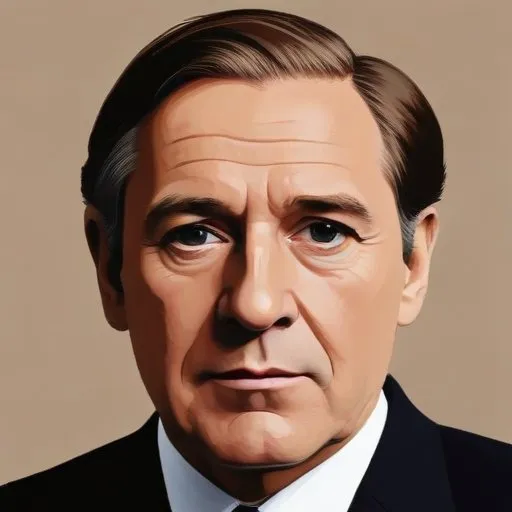
A pioneering journalist and politician who played a key role in shaping New Zealand's early history, particularly in the fields of education and women's suffrage.
As the eighth premier of New Zealand, Sir Julius Vogel left an indelible mark on the country's history, steering it towards a path of progress and development. He is best remembered for his bold initiative to issue bonds to fund railway construction and other public works, a move that transformed the nation's infrastructure.
Vogel was born in London on February 24, 1835, and received his early education at University College School in University College, Gower Street, London. He later studied chemistry and metallurgy at the Royal School of Mines, later part of Imperial College London.
In 1852, Vogel emigrated to Victoria, Australia, where he worked as the editor of several newspapers on the goldfields, including the Inglewood Advertiser and the Maryborough and Dunolly Advertiser. His journalistic career took him to Otago in 1861, where he became a journalist for the Otago Witness and later founded the Otago Daily Times, becoming its first editor.
Vogel's foray into politics began in 1862, when he won election to the provincial council of Otago. Four years later, he became the head of the provincial government, a post he held until 1869. His political career was marked by his vision for New Zealand, which he saw as a potential "Britain of the South Seas," strong in both agriculture and industry, and inhabited by a large and flourishing population.
On March 19, 1867, Vogel married Mary Polly Clayton, the daughter of architect William Henry Clayton, in Dunedin. The couple had three sons and one daughter. Vogel's personal life was marked by his strong sense of determination and imagination, traits that would serve him well in his political career.
Vogel's administration may have been marked by controversy and recklessness, but his vision for New Zealand has had a lasting impact on the country's development. He was an excellent policymaker who recognized the importance of infrastructure development in shaping the nation's future. His legacy continues to inspire New Zealanders to strive for greatness.
"I see New Zealand as a potential Britain of the South Seas, strong both in agriculture and in industry, and inhabited by a large and flourishing population." - Sir Julius Vogel
Vogel's words continue to inspire and motivate New Zealanders, reminding them of the importance of striving for greatness and working towards a better future.
Born in 1879
Founded the Fox Film Corporation and Fox Theatres, a pioneering figure in the early days of Hollywood, revolutionizing the film industry with innovative production and distribution techniques. He played a crucial role in shaping the cinematic landscape.
Born in 1812
The 5th Prime Minister of New Zealand, serving from 1863 to 1864, known for his role in shaping the country's early government and politics. He was a prominent lawyer and politician in his time.
Born in 1819
A Scottish-New Zealand educator and politician who served as the 3rd Prime Minister of New Zealand, known for his contributions to the country's early development and education system.
Born in 1811
A 19th-century poet and politician who served as New Zealand's Prime Minister, known for his literary works and contributions to the country's early development.
Born in 1807
First Prime Minister of New Zealand, instrumental in the country's early development and self-governance. He played a key role in shaping the nation's constitution and parliamentary system.
Born in 1824
The 7th Prime Minister of New Zealand, serving from 1872 to 1873, known for his brief but significant tenure during a period of rapid colonization and development in the country. He played a key role in shaping New Zealand's early years.
