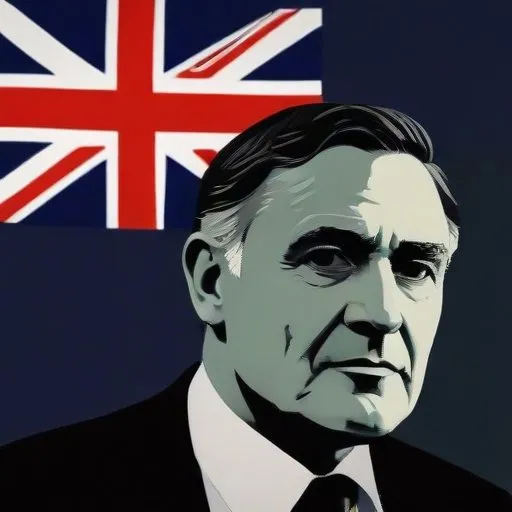
George Waterhouse: A Statesman of Two Nations
A Premier of Two Colonies
George Waterhouse is renowned for being the seventh Premier of New Zealand, serving from 1872 to 1873, and the Premier of South Australia from 1861 to 1863. This extraordinary feat showcases his remarkable ability to navigate the complexities of colonial politics, earning him a unique place in the annals of Australasian history.
Early Life and Family
Born on April 6, 1824, George Waterhouse was the son of Reverend John Waterhouse, a prominent figure in the Wesleyan Missions in Australia and Polynesia. This strong spiritual foundation influenced George's values and worldview. At the age of 15, George accompanied his family as they migrated to Hobart, Tasmania, and later settled in Adelaide, South Australia.
A Life in Politics
Waterhouse entered politics in 1851, when he was elected to the South Australian Legislative Council. His early political career was marked by a strong belief in free trade, which he advocated as a means of stimulating economic growth in the colony. He served as Chief Secretary in the First Reynolds Ministry from May 1860 to February 1861, and later formed his own government in 1861.
The South Australian Premiership
As Premier of South Australia, Waterhouse focused on resolving the contentious issue surrounding Justice Benjamin Boothby, a judge who objected to the legitimacy of the Appeals Court under the new Constitution. After successfully finalizing this motion, Waterhouse resigned, only to be persuaded to form another government, which lasted until July 1863.
The New Zealand Premiership
In 1869, Waterhouse migrated to New Zealand, where he was appointed to the New Zealand Legislative Council in 1870. He served in the Fox Ministry from 1871 to 1872 and eventually became the seventh Premier of New Zealand without portfolio in October 1872. However, he resigned in March 1873, citing the difficulties of being a member of the upper house.
Legacy and Impact
George Waterhouse's remarkable political career spanned two colonies, demonstrating his ability to adapt to changing circumstances and navigate complex political landscapes. While his premierships were marked by controversy and financial irregularities, his commitment to free trade and economic development left a lasting impact on the development of both South Australia and New Zealand.
Personal Milestones and Key Life Events
- Waterhouse resigned from South Australian politics in 1864 and spent time in England.
- He migrated to New Zealand in 1869, marking a new chapter in his political career.
- Waterhouse passed away on August 6, 1906, leaving behind a rich legacy in the history of Australasian politics.
By examining the life and career of George Waterhouse, we gain insight into the complexities of colonial politics and the challenges faced by early statesmen in Australasia. His remarkable achievements serve as a testament to his dedication to public service and his ability to navigate the intricacies of politics across two nations.
FAQ
What was George Waterhouses role in the politics of New Zealand?
George Waterhouse was an English-New Zealand politician who served as the 7th Prime Minister of New Zealand from 1872 to 1873. He was a key figure in the countrys early history and played a significant role in shaping its political landscape.
What was George Waterhouses stance on land reform in New Zealand?
George Waterhouse was a strong advocate for land reform in New Zealand, and he worked to promote the rights of small landholders and to reduce the power of large landowners.
How did George Waterhouses leadership impact the development of New Zealand?
George Waterhouses leadership had a significant impact on the development of New Zealand, as he worked to promote economic growth, improve education, and expand infrastructure.
What was George Waterhouses relationship with the indigenous Māori people?
George Waterhouse was known for his conciliatory approach to the indigenous Māori people, and he worked to promote reconciliation and understanding between Māori and European settlers.
How did George Waterhouses legacy shape New Zealands identity?
George Waterhouses legacy had a profound impact on New Zealands identity, as he helped to shape the countrys values and institutions. He is remembered as a champion of social justice and equality.