


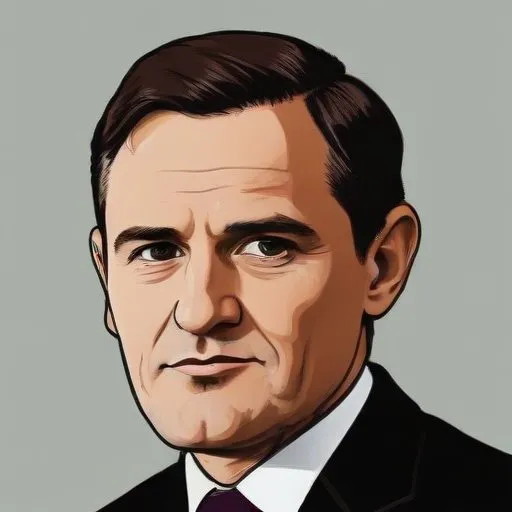
The 9th Prime Minister of New Zealand, serving from 1876 to 1882, known for his efforts to strengthen the country's economy and infrastructure. He implemented policies to promote trade, immigration, and public works.
Daniel Pollen, a man of many talents, is most notably recognized as the ninth premier of New Zealand, serving from 6 July 1875 to 15 February 1876. During his brief but impactful tenure, Pollen left an indelible mark on the country's political landscape.
Born on 2 June 1813 in Ringsend, Dublin, Pollen was the son of Hugh Pollen, a dock master. Little is known about his early life, but it is believed that he grew up in Ireland and the United States. Pollen claimed to hold an MD degree, although the institution from which he graduated remains unknown.
In the late 1830s, Pollen traveled to New South Wales, eventually settling in North Auckland in January 1840. He was a witness to the historic proceedings of the Treaty of Waitangi. Pollen began practicing medicine in Parnell, Auckland, in 1841, and soon after, he was appointed as a coroner, a position he held for four years.
Pollen's entry into politics was marked by his contributions to The New Zealander, where he supported the agitation for responsible government. He was also a vocal advocate for temperance, scientific, and library movements.
With the enactment of the New Zealand Constitution Act 1852, Pollen became the chief clerk in the Auckland Superintendent's office. He rose through the ranks, eventually becoming the ninth premier of New Zealand.
Daniel Pollen's legacy extends far beyond his brief premiership. He was a true visionary, leaving an indelible mark on New Zealand's politics, medicine, and industry. His contributions continue to inspire generations, a testament to his unwavering commitment to the betterment of society.
Born in 1845
The 15th Prime Minister of New Zealand, a dominant figure in the country's early 20th-century politics, known for his progressive reforms and strong leadership during a time of significant social change.
Born in 1851
The 16th Prime Minister of New Zealand, serving from 1906 to 1908, is most known for his progressive social reforms and his role in shaping the country's early 20th-century politics. He's also remembered for his diplomatic efforts during the Imperial Conference of 1907.
Born in 1853
A Scottish-New Zealand cartographer and politician who served as the 18th Prime Minister of New Zealand, known for his contributions to the country's early development and mapping. He played a significant role in shaping New Zealand's infrastructure and politics during the late 19th century.
Born in 1856
A pioneering entrepreneur and statesman who played a crucial role in shaping New Zealand's economy and politics, particularly in the early 20th century. He's most famous for his efforts in establishing the country's welfare state and implementing key economic reforms.
Born in 1869
The 22nd Prime Minister of New Zealand, serving from 1930 to 1931, is most known for his role in shaping the country's economy and responding to the Great Depression. He implemented policies to reduce unemployment and stimulate growth.
Born in 1872
A pioneering politician who championed social welfare and unity, leading New Zealand through the Great Depression and World War II, implementing groundbreaking reforms and earning a revered legacy.
Born in 1884
Scottish-New Zealand journalist and politician who served as the 24th Prime Minister of New Zealand, leading the country through significant social and economic reforms. He's known for his progressive policies and strong leadership during wartime.
Born in 1893
Led the country through a period of significant economic growth and social change, implementing policies that shaped modern New Zealand. He's remembered for his strong leadership and nation-building efforts.
