


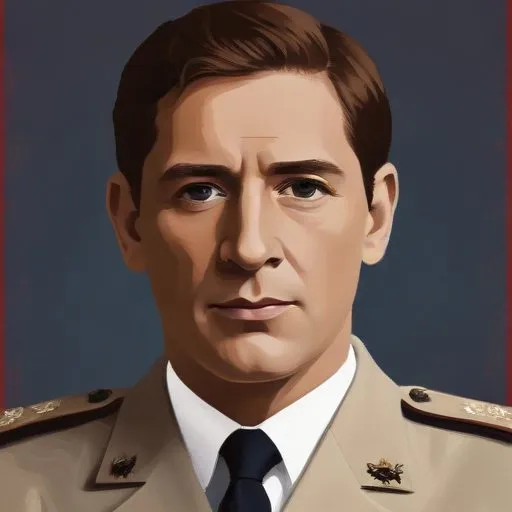
Led the country through a period of significant economic growth and social change, implementing policies that shaped modern New Zealand. He's remembered for his strong leadership and nation-building efforts.
Sir Sidney George Holland, the 25th Prime Minister of New Zealand, is renowned for playing a pivotal role in shaping the country's political landscape during the mid-20th century. His leadership of the National Party from 1940 to 1957 marked a significant shift in New Zealand's governance, economy, and foreign policy.
Holland was born on October 18, 1893, in Greendale, Canterbury, to a family of eight children. His father, Henry Holland, was a farmer, merchant, and politician who served as the Mayor of Christchurch and later as a Member of Parliament. This family background instilled in Sidney a strong sense of public service and politics.
In 1935, Holland was elected to the New Zealand Parliament, and by 1940, he became the second Leader of the National Party and the Leader of the Opposition. During World War II, he briefly served in the War Cabinet in 1942, but soon returned to attacking the Labour government's interventionist economic policies.
In 1949, Holland led the National Party to its first election victory, and he went on to implement moderate economic reforms, dismantling many state controls. One of his significant achievements was the abolition of the Legislative Council, the upper house of parliament, in 1950, deeming it ineffectual.
Holland's government faced significant challenges, including industrial unrest and labor disputes. In 1951, he called a snap election and was re-elected Prime Minister, following a confrontation with dockers and coal miners. During his second term, the National government signed the ANZUS defence agreement with Australia and the United States.
In 1954, Holland led his party to a third consecutive election victory. However, his leadership was not without controversies. He faced criticism for his handling of industrial disputes and his stance on trade unions.
In 1957, due to ill health, Holland stepped down as Prime Minister, handing over the reins to Keith Holyoake. He passed away on August 5, 1961, leaving behind a legacy that continues to shape New Zealand's politics and economy.
Holland's political ideology was rooted in conservatism, with a strong emphasis on individual freedom, limited government intervention, and economic liberalism. He believed in the importance of a strong economy and a prosperous nation, which guided his policymaking decisions.
Holland's legacy continues to shape New Zealand's politics, economy, and society. His leadership of the National Party paved the way for future generations of politicians, and his economic reforms laid the foundation for the country's modern economy.
Today, Sidney Holland is remembered as a pivotal figure in New Zealand's history, whose contributions to politics, economy, and society continue to have a lasting impact.
Born in 1904
A farmer-turned-politician who served as Prime Minister of New Zealand, known for his leadership during a period of significant economic and social change. He's remembered for his pragmatic and consensus-driven approach to governance.
Born in 1882
A lawyer-turned-politician who served as New Zealand's Prime Minister, implementing significant economic and social reforms, including the establishment of the country's welfare state.
74 Years Old
A renowned cancer researcher and professor who made significant contributions to the understanding and treatment of cancer, particularly in the field of p53 tumor suppressor gene.
77 Years Old
Leader of the New Zealand Labour Party, serving as Prime Minister from 1990 to 1991, known for his strong union background and advocacy for workers' rights.
91 Years Old
The 35th Prime Minister of New Zealand, serving from 1990 to 1997, known for leading the country through significant economic reforms and free trade agreements. He's also recognized for his role in shaping New Zealand's modern economy.
74 Years Old
The first female Prime Minister of New Zealand, serving from 1997 to 1999, known for her conservative economic policies and reform efforts. She played a significant role in shaping the country's social and economic landscape.
76 Years Old
The first female Prime Minister of New Zealand, serving three consecutive terms from 1999 to 2008, known for her progressive policies and commitment to social justice.
82 Years Old
A German-Canadian singer-songwriter, guitarist, and producer, known for his eclectic style blending rock, folk, and blues, and as the frontman of the rock band Steppenwolf. He's famous for hits like "Born to Be Wild" and "Magic Carpet Ride".
