


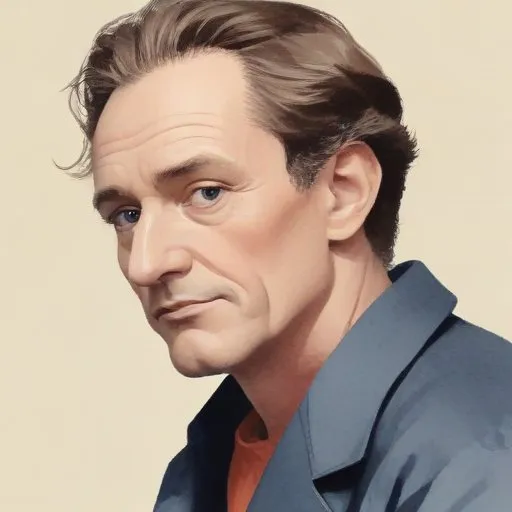
A celebrated poet and translator, known for his lyrical and accessible style, which explores themes of love, nature, and the human condition.
James Wright, the celebrated American poet, is revered for his profound and evocative works that expertly weave together the intricacies of human experience, the beauty of nature, and the complexities of the human condition. He is perhaps best known for his pioneering role in shaping the Midwestern neosurrealist and deep image poetic movements, which earned him a prominent place in the annals of American literary history.
Born on December 13, 1927, in Martins Ferry, Ohio, Wright grew up in a family of modest means, with his father working in a glass factory and his mother in a laundry. Despite the lack of formal education in his family, Wright's innate talent and dedication earned him a scholarship to Kenyon College, where he studied under the tutelage of renowned poet John Crowe Ransom.
Wright's literary career took off in 1956 with the publication of his debut collection, The Green Wall, which won the prestigious Yale Younger Poets Prize. This initial success was followed by a Fulbright Fellowship to Vienna, where he honed his craft and absorbed the influences of Spanish language surrealists. Upon his return to the United States, Wright went on to earn a master's and Ph.D. from the University of Washington, studying with Theodore Roethke and Stanley Kunitz.
Wright's most iconic work, The Branch Will Not Break (1963), marked a significant departure from his earlier formalist style, embracing a more free-spirited and imagistic approach. This collection not only cemented Wright's status as a leading poet of his generation but also positioned him as a counterpoint to the Beats and New York School, paving the way for the emergence of Midwestern neosurrealist and deep image poetics.
Wright's unique voice and vision have inspired generations of poets, including his friend and collaborator Robert Bly. Together, they worked on translating world poets, which fertilized Wright's perspective and helped put the Midwest back on the poetic map. His influence can be seen in the works of poets such as W.S. Merwin, Mark Strand, and Michael Ryan, among others.
Wright married Liberty Kardules, a native of Martins Ferry, in 1952. He suffered a nervous breakdown in 1943 and graduated a year late from high school in 1946.
Wright's poetry is characterized by its profound exploration of the human condition, delving into themes of identity, morality, and the quest for meaning. His work embodies a deep sense of empathy, compassion, and connection to the natural world.
"I have wasted my whole life / trying to get to the place / where I could be proud of myself."
"The moon is a blind guide, / leading us through the dark / where we stumble and fall."
Wright's poetry is a testament to the power of art to capture the essence of an era. His work reflects the turbulence and transformation of post-war America, offering a glimpse into the hopes, fears, and anxieties of a nation in flux.
James Wright's legacy extends far beyond his own remarkable body of work, having inspired a new generation of poets to explore the complexities of the human experience. His poetry continues to resonate with readers, offering a powerful and enduring testament to the transformative power of art.
Born in 1874
Pulitzer Prize-winning poet and playwright celebrated for rural New England-inspired works that explore human nature, morality, and the American experience.
Born in 1883
A physician-turned-writer, known for his modernist poetry and short stories that explored the everyday lives of ordinary people, often using imagery and experimental styles. His work blurred the lines between poetry and prose, creating a unique literary voice.
Born in 1914
A Pulitzer Prize-winning poet and scholar, known for his confessional and autobiographical poetry, exploring themes of identity, mortality, and the human condition.
Born in 1917
A confessional poet who pioneered the personal, free-verse style, exploring themes of family, history, and mental illness in his work. He's known for his raw, introspective, and emotionally charged poetry.
93 Years Old
A confessional and emotionally intense writer who explored themes of mental illness, mortality, and femininity in her work, leaving a lasting impact on contemporary literature.
97 Years Old
A confessional poet who explored themes of mental illness, family, and femininity through her raw and intimate writing style, earning a Pulitzer Prize in 1967.
Born in 1926
A Pulitzer Prize-winning poet known for confessional and autobiographical poetry that explores themes of family, relationships, and the human condition.
99 Years Old
A Pulitzer Prize-winning poet and professor, known for his lyrical and introspective style, exploring themes of love, nature, and the human condition.
